Category
page 1History of evolutionary biology

Thomas Robert Malthus
British political economist (1766–1834)

Darwinism
thumb|Charles Darwin in 1868

Ernst Mayr
German-American evolutionary biologist (1904-2005)

Lamarckism
thumb|upright=1.8|Jean-Baptiste Lamarck|Lamarck argued, as part of his theory of [[heredity, that a blacksmith's sons inherit the strong muscles the blacksmith acquires from his work.]]
Lamarckism, also known as Lamarckian inheritance or neo-Lamarckism, is the notion that an organism can pass on to its offspring physical characteristics that the parent organism acquired through use or disuse during its lifetime. It is also called the inheritance of acquired characteristics or more recently soft inheritance. The idea is named after the French zoologist Jean-Baptiste Lamarck (1744–1829), who inc

recapitulation theory
biological hypothesis

modern evolutionary synthesis
early-20th-century scientific theory combining Darwinian evolution and Mendelian inheritance

Darwin's finches
group of related bird species in the Galápagos Islands

Lev Berg
Russian and Soviet geographer, biologist and ichthyologist (1876–1950)
history of evolutionary thought
aspect of history of science

orthogenesis
thumb|Evolutionary progress as a tree of life (biology)|tree of life. [[Ernst Haeckel, 1866]]
thumb|upright=1.4|Lamarck's two-factor theory involves 1) a complexifying force that drives animal body plans towards higher levels (orthogenesis) creating a ladder of phyla, and 2) an adaptive force that causes animals with a given body plan to adapt to circumstances (use and disuse, [[inheritance of acquired characteristics), creating a diversity of species and genera. Popular views of Lamarckism only consider an aspect of the adaptive force.]]
Orthogenesis is an obsolete biological hypothesis that
Second voyage of HMS Beagle
exploration associated with the theory of evolution (1831-1836)
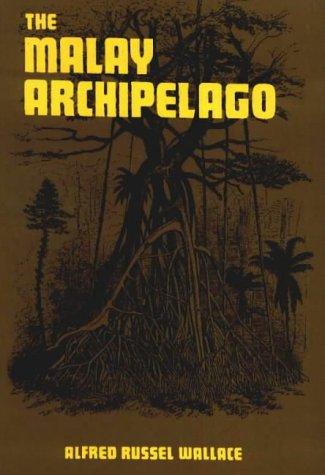
The Malay Archipelago
book by Alfred Russel Wallace

Genetics and the Origin of Species
essay by Theodosius Dobzhansky
alternatives to evolution by natural selection
list of alternatives to Darwinian Natural Selection
Precambrian rabbit
hypothetical fossil that would falsify evolution
Evolutionary ideas of the Renaissance and Enlightenment
changes in thinking about evolution from religious and spiritual to more mechanistic and biological over the 17th and 18th centuries
Bathybius haeckelii
substance
Great Hippocampus Question
19th-century scientific controversy
Coloration evidence for natural selection
early evidence for Darwinism from animal coloration
publication of Darwin's theory
publication

Lord Morton's mare
equid hybrid notable in the history of evolutionary theory
The Naturalist on the River Amazons
book by the British naturalist Henry Walter Bates