Category
page 1History of road transport

traffic light
signalling device to control competing flows of traffic
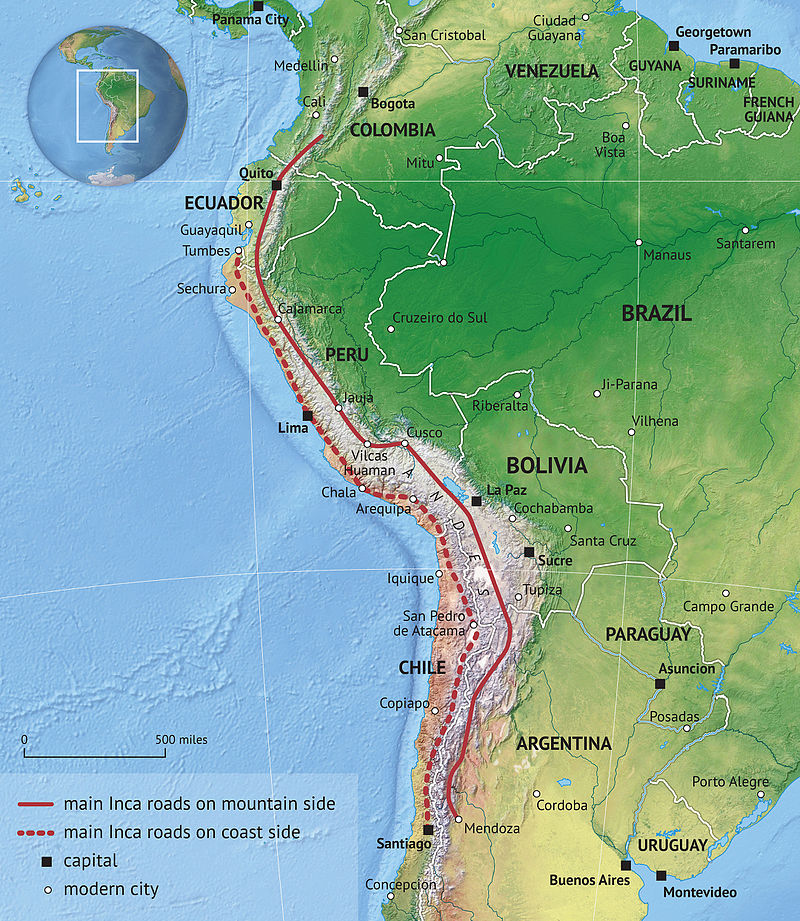
Inca road system
transportation system of the Inca empire

stagecoach
A stagecoach (also: stage coach, stage, road coach, '''''') is a four-wheeled public transport coach used to carry paying passengers and light packages on journeys long enough to need a change of horses. It is strongly sprung and generally drawn by four horses although some versions are drawn by six horses.
coach
large four-wheeled closed carriage used by 1: royalty or people of quality or 2: a similar plainer vehicle with seats inside and outside for public conveyance of passengers
covered wagon
wooden wagon with cloth covering used in American transporation and exploration
landau
four-wheeled open boat-shaped carriage with two doors, two facing benches for four to six persons, with convertible hood on both sides and seperate raised bench. Primarily for passenger transport

chaussee
thumb|The chaussee over the Saint Gotthard Pass|Sankt Gotthard was built in 1827–1830
Chaussee is an historic term used in German-speaking countries for early, metalled, rural highways, designed by road engineers, as opposed to the hitherto, traditional, unpaved country roads. The term is no longer used in modern road construction in Western Europe, but survives in road names and is used by historians. In Eastern Europe and the post-Soviet states it remains a generic term for a common paved highway outside of built-up areas, but they may transition into prospekts within towns and cities.
barouche
thumbnail|Barouche in Livrustkammaren, Stockholm, Sweden
Inca Trail to Machu Picchu
Ancient trail in Peru
Conestoga wagon
type of heavy covered wagon

history of steam road vehicles
Wikimedia history article
safe driving distance
distance that should be maintained between vehicles so the trailing vehicle can safely stop without hitting the car in front
history of road transport
aspect of history
wainwright
one who makes or repairs wagons and carts; craftsman who makes wheels, wagons and agricultural implements out of wood
Ichirizuka
thumb|right|300px|Ichirizuka at Tarui-juku, one of the 69 Stations of the [[Nakasendō; only one of the two mounds survives, to a height of ; designated a national Historic Site]]
thumb|right|300px|Ichirizuka at Shōno-juku, one of the 53 Stations of the Tōkaidō; woodblock print by [[Hiroshige, c. 1842, from an alternative series of The Fifty-three Stations of the Tōkaidō (Kyōkairi Tōkaidō or Sanoki edition); the mound is explicitly labelled ichirizuka in a later print by Hiroshige II ([http://www.HiroshigeII.net/images/TokaidoEki/46L.jpg ])]]
are historic Japanese distance markers akin to mile
stage station
place of rest provided for stagecoach travelers