Category
page 1History of Schleswig-Holstein
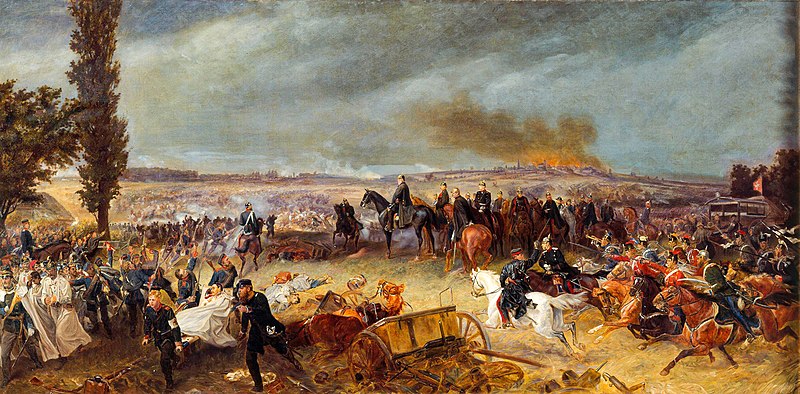
Austro-Prussian War
1866 military conflict between the Kingdom of Prussia and the Austrian Empire

Duchy of Saxony
(804-1260) duchy of Holy Roman Empire

Duchy of Schleswig
a Danisch duchy, existing until 1864/1866 now divided between Germany and Denmark

Hedeby
Hedeby (, Old Norse: Heiðabýr, German: Haithabu) was an important Danish Viking Age (8th to the 11th centuries) trading settlement near the southern end of the Jutland Peninsula, now in the Schleswig-Flensburg district of Schleswig-Holstein, Germany. Around 965, chronicler Ibrahim ibn Yaqub visited Hedeby and described it as "a very large city at the very end of the world's ocean."

Holstein
thumb|130px|Coat of arms of Holstein: a stylised nettle leaf; similar to the coat of arms of Schaumburg

Danevirke
The Danevirke or Danework (modern Danish spelling: Dannevirke; in Old Norse: Danavirki, in German: Danewerk, literally meaning earthwork of the Danes) is a system of Danish fortifications in Schleswig-Holstein, Germany. This historically important linear defensive earthwork across the neck of the Cimbrian peninsula was initiated by the Danes in the Nordic Iron Age about AD 650. It was later expanded multiple times during Denmark's Viking Age and High Middle Ages. The Danevirke was last used for military purposes in 1864 during the Second War of Schleswig.
Nordic Bronze Age
Bronze Age in Scandinavia
Gottorf Castle
château in Schleswig, Germany

Rungholt
thumb|North Frisian coastline before 1362
thumb|The island of Strand (island)|Strand after the Grote Mandrenke (Danish: Den Store Manddrukning) with German and Danish place names
thumb|Rungholt and Strand in the Middle Ages, on a map from 1850
Rungholt was a low-lying settlement in North Frisia, in what was then the Danish Duchy of Schleswig. The area today lies in Germany. Rungholt was flooded, with massive erosion, when a storm tide (known as Grote Mandrenke or Den Store Manddrukning) hit the coast on 15 or 16 January 1362.
St. Lucia's flood
storm tide that affected the Netherlands and Northern Germany on 14 December 1287
Viking Museum Haithabu
museum in Schleswig, Germany
Treaty of Ribe
1460 proclamation by King Christian I of Denmark
The Treaty of Zarskoje Selo
treaty
Treaty of Heiligen
treaty
All Saints' Day Flood of 1436
Storm in the Atlantic Ocean
1872 Baltic Sea flood
sea flood in 1872
Gau Schleswig-Holstein
former German administrative division
Skamlingsbanken
Skamlingsbanken is a large hill located in Vejstrup Parish, Jutland, Denmark, between Kolding and Christiansfeld. With a peak rising to above sea level, it is the highest point in Southern Jutland.
Kiel Castle
castle in Kiel, Germany
Slesvigske Fodregiment
military unit
history of Schleswig-Holstein
aspect of history
Die Heimat
journal about natural history and regional culture of Schleswig-Holstein (1891–)
Eidum
Eidum or Eydum (, North Frisian: Eidem) was a historic place on the German (former: Danish) island of Sylt in the North Sea. It was several hundred metres west of the present coast line of the present-day village of Westerland.