Category
page 1Mammals of Africa
%20(white%20background).jpg)
zebra
Zebras (, ) (subgenus Hippotigris) are African equines with distinctive black-and-white striped coats. There are three living species: Grévy's zebra (Equus grevyi), the plains zebra (E. quagga), and the mountain zebra (E. zebra). Zebras share the genus Equus with horses and asses, the three groups being the only living members of the family Equidae. Zebra stripes come in different patterns, unique to each individual. Several theories have been proposed for the function of these patterns, with most evidence supporting them as a deterrent for biting flies. Zebras inhabit eastern and southern Afr

cheetah
The cheetah (Acinonyx jubatus) is a species of large feline and the only living member of the genus Acinonyx. An iconic pursuit predator, it is the fastest land animal, capable of running at ; it has evolved for speed, having powerful hindlimb muscles, long limbs and a flexible spine. The cheetah has a tawny to creamy white or pale buff fur that is marked with evenly spaced, solid black spots. The head is small and rounded, with a short snout and black tear-like facial streaks. It reaches at the shoulder, and the head-and-body length is between . Adults weigh between .
Nile hippopotamus
The hippopotamus (Hippopotamus amphibius; ; : hippopotamuses), often shortened to hippo (: hippos), further qualified as the common hippopotamus, Nile hippopotamus and river hippopotamus, is a large semiaquatic mammal native to sub-Saharan Africa. It is one of only two extant species in the family Hippopotamidae, the other being the pygmy hippopotamus (Choeropsis liberiensis or Hexaprotodon liberiensis). Its name comes from the Ancient Greek for "river horse" ().

Hyaenidae
thumb|Aardwolf, smallest member of the hyena family, skeleton (Museum of Osteology)

Herpestidae
A mongoose is a small terrestrial carnivorous mammal belonging to the family Herpestidae. This family has two subfamilies, the Herpestinae and the Mungotinae. The Herpestinae comprises 23 living species that are native to southern Europe, Africa and Asia, whereas the Mungotinae comprises 11 species native to Africa. The Herpestidae originated about in the Early Miocene and genetically diverged into two main lineages between 19.1 and . There is a large introduced population on the islands of Hawaii. Mongoose diets are varied but consist of mainly insects, hatchlings, reptiles and birds.

caracal
The caracal (Caracal caracal; ) is a wild cat native to Africa, the Middle East, Central Asia, and arid areas of Pakistan and northwestern India. It is characterised by a robust build, long legs, a short face, long tufted ears, relatively short tail, and long canine teeth. Its coat is uniformly reddish tan or sandy, while the ventral parts are lighter with small reddish markings. It reaches at the shoulder and weighs . It was first scientifically described by German naturalist Johann Christian Daniel von Schreber in 1776. Three subspecies are recognised.

aardvark
The aardvark (; Orycteropus afer) is a medium-sized, burrowing, nocturnal mammal native to Africa. The aardvark is the only living member of the genus Orycteropus, the family Orycteropodidae and the order Tubulidentata.
jackal
Jackals are canids native to Africa and Eurasia. While the word has historically been used for many canines of the subtribe canina, in modern use it most commonly refers to three species: the closely related black-backed jackal (Lupulella mesomelas) and side-striped jackal (Lupulella adusta) of Central and Southern Africa, and the golden jackal (Canis aureus) of south-central Europe and Asia. The African golden wolf (Canis lupaster) was also formerly considered a jackal.

serval
The serval (Leptailurus serval) is a wild small cat native to Africa. It is widespread in sub-Saharan countries, where it inhabits grasslands, wetlands, moorlands and bamboo thickets. Across its range, it occurs in protected areas, and hunting it is either prohibited or regulated in range countries.
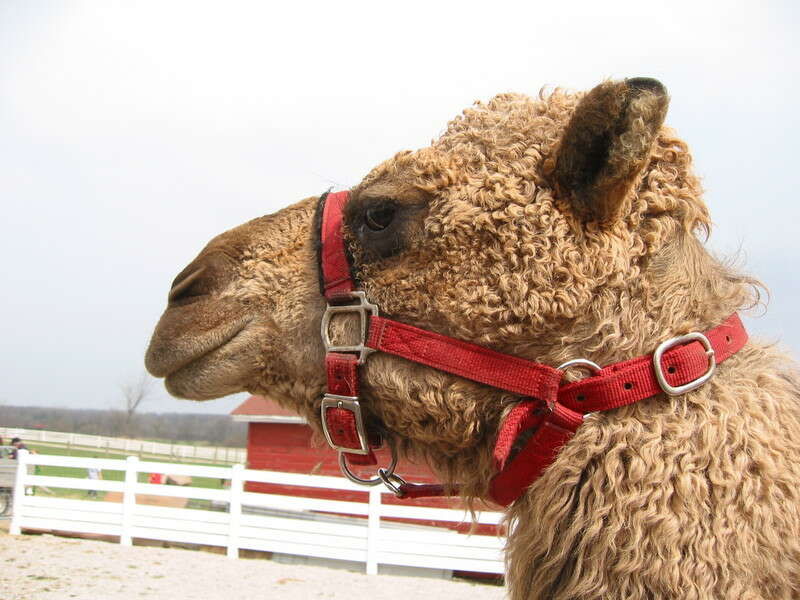
Camelus dromedarius
The dromedary (Camelus dromedarius), also known as the dromedary camel, Arabian camel and one-humped camel, is a large camel of the genus Camelus with one hump on its back. It is the tallest of the three camel species; adult males stand at the shoulder, while females are tall. Males typically weigh between , and females weigh between .
The dromedary's distinctive features include its long, curved neck, narrow chest, a single hump, and long hairs on the throat, shoulders, and hump. The coat is generally a shade of brown. The hump, tall or more, is made of fat bound together by fibrous tissue.
.jpg)
Giraffa
Giraffes (genus Giraffa) are large African hoofed mammals. They are the tallest living terrestrial animals and the largest ruminants on Earth. They are classified under the family Giraffidae, along with their closest extant relative, the okapi. Traditionally, giraffes have been thought of as one species, Giraffa camelopardalis, with nine subspecies. Most recently, researchers proposed dividing them into four extant species, with seven subspecies, which can be distinguished morphologically by their fur coat patterns. Six valid extinct species of Giraffa are known from the fossil record.

wildebeest
Wildebeest (, ; , ,), also called gnu (, or , ), are antelopes of the genus Connochaetes and native to Eastern and Southern Africa. They belong to the family Bovidae, which includes true antelopes, cattle, goats, sheep, and other even-toed horned ungulates. There are two species of wildebeest: the black wildebeest or white-tailed gnu (C. gnou), and the blue wildebeest or brindled gnu (C. taurinus).

honey badger
species of mammal

Capra
genus of mammals

Dama dama
species of mammal

Mustela putorius
species of mustelid
.jpg)
Aardwolf
The aardwolf (Proteles cristatus) is an insectivorous hyaenid species, native to East and Southern Africa. Its name means 'earth-wolf' in Afrikaans and Dutch. It is also called the maanhaar-jackal (Afrikaans for 'mane-jackal'), termite-eating hyena and civet hyena, based on its habit of secreting substances from its anal gland, a characteristic shared with the African civet.

hartebeest
The hartebeest (; Alcelaphus buselaphus), also known as kongoni or kaama, is an African antelope. It is the only member of the genus Alcelaphus. Eight subspecies have been described, including two sometimes considered to be independent species. A large antelope, the hartebeest stands just over at the shoulder, and has a typical head-and-body length of . The weight ranges from . It has a particularly elongated forehead and oddly-shaped horns, a short neck, and pointed ears. Its legs, which often have black markings, are unusually long. The coat is generally short and shiny. Coat colour varies b

genet
genus of mammals
.jpg)
Oryx
Oryx ( ) is a genus consisting of four large antelope species called oryxes. Their pelage is pale with contrasting dark markings in the face and on the legs, and their long horns are almost straight and annulated. The exception is the scimitar oryx, which lacks dark markings on the legs, only has faint dark markings on the head, has an ochre neck, and has horns that are clearly decurved. All oryx species prefer near-desert conditions and can survive without water for long periods.

Procavia capensis
species of mammal
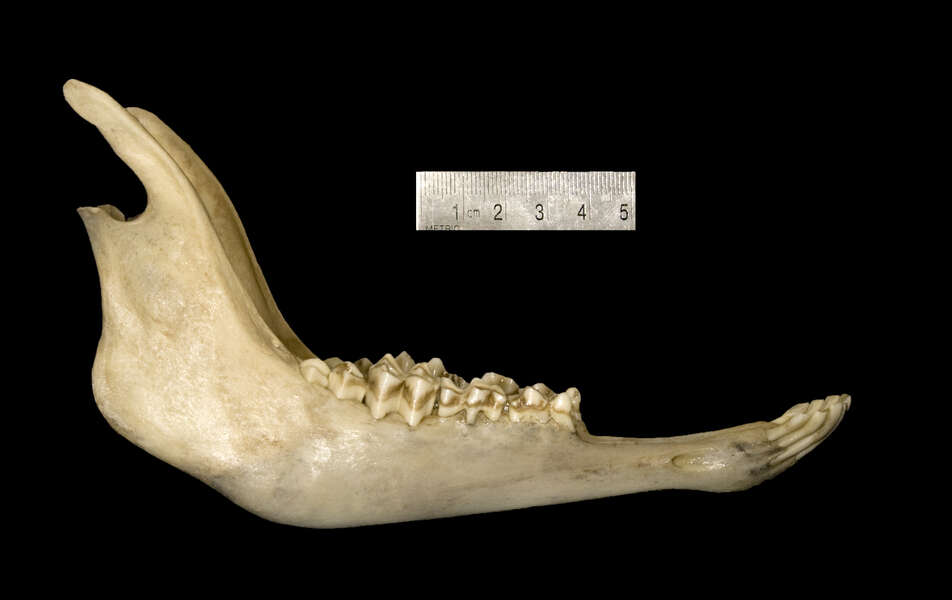
Barbary sheep
species of mammal

Lepus capensis
species of mammal

Afrotheria
Afrotheria (; from Latin Afro- "of Africa" + theria "wild beast") is a superorder of placental mammals, the living members of which belong to groups that are either currently living in Africa or of African origin: golden moles, elephant shrews (also known as sengis), otter shrews, tenrecs, aardvarks, hyraxes, elephants, sea cows, and several extinct clades. Most groups of afrotheres share little or no superficial resemblance, and their similarities have only become known in recent times due to genetics and molecular studies. Many afrothere groups are found mostly or exclusively in Africa, refl

Crested porcupine
species of mammal

Pale fox
species of mammal

common genet
species of mammal

African golden wolf
Canis lupaster
.jpg)
gundi
Gundis or comb rats are a group of small, stocky, African rodents in the family Ctenodactylidae. They live in rocky deserts across Northern Africa. The family comprises four living genera and five species (Speke's gundi, Felou gundi, Val's or desert gundi, common or North African gundi and Mzab gundi), as well as numerous extinct genera and species. They are in the superfamily Ctenodactyloidea. Local people in northern Africa have always known about gundis, however they first came to the notice of Western naturalists in Tripoli in 1774, and were given the name gundi mice. While they are not re

African savanna hare
species of mammal

White-tailed mongoose
species of mammal

Dendrohyrax dorsalis
species of mammal
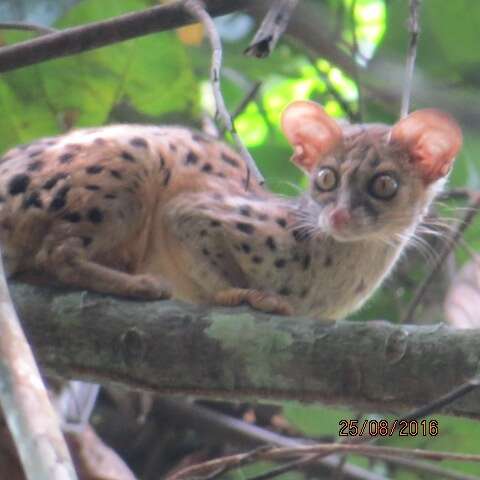
Poiana
genus of mammals
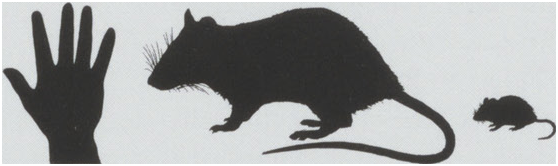
Nesomyidae
The Nesomyidae are a family of African rodents in the large and complex superfamily Muroidea. It includes several subfamilies, all of which are native to either continental Africa or to Madagascar. Included in this family are Malagasy rodents, climbing mice, African rock mice, swamp mice, pouched rats, and the white-tailed rat.

Paenungulata
Paenungulata, also known as Uranotheria, is a clade of sub-ungulates, which groups three extant mammal orders: Proboscidea (including elephants), Sirenia (sea cows, including dugongs and manatees), and Hyracoidea (hyraxes). At least two more possible orders are known only as fossils, namely Embrithopoda and Desmostylia.

Raphicerus
Raphicerus is a genus of small antelopes of the tribe Neotragini (subfamily Antilopinae).

gazelle
A gazelle is one of many antelope species in the genus Gazella . There are also seven species included in two further genera; Eudorcas and Nanger, which were formerly considered subgenera of Gazella. A third former subgenus, Procapra, includes three living species of Asian gazelles.
.jpg)
civet
A civet () is a small, lean, mostly nocturnal mammal native to tropical Asia and Africa, especially the tropical forests. The term civet applies to over a dozen different species, mostly from the family Viverridae. Most of the species's diversity is found in southeast Asia. Civets do not form a monophyletic group, as they consist only of certain members of the Viverridae and Eupleridae.
Atelerix
Atelerix is a genus of hedgehog in the family Erinaceidae. It contains four species, all native to Africa.
Big five game
term used by big-game hunters to refer to large African animals
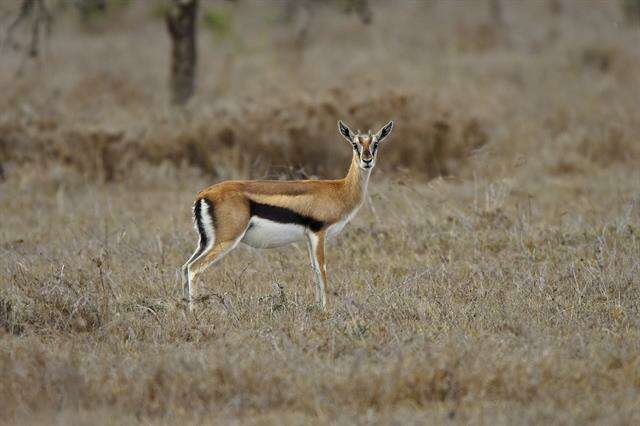
Eudorcas
Eudorcas is a genus of antelope; the species are commonly called gazelles. Eudorcas was originally considered a subgenus of the genus Gazella but has since been elevated to generic status. The five species within the genus Eudorcas are:
Sylvisorex
The forest shrews are the members of the genus Sylvisorex. They are mammals in the family Soricidae and are found only in Africa. The genus name comes from the Latin world "silva" which means "forest" and "sorex", which means "shrew-mouse". This reflects the nature of these shrews, which prefer forest habitats. All shrews are carnivorous, and eat continually to satisfy their high metabolic rate.
Afroinsectiphilia
Afroinsectiphilia (African insectivores) is a clade of afrotherian mammals that includes the golden moles, otter shrews, tenrecs, elephant shrews and aardvarks.

Pedetidae
The Pedetidae are a family of rodents. The two living species, the springhares, are distributed throughout much of Southern Africa and also around Kenya, Tanzania, and Uganda. Fossils have been found as far north as Turkey. Together with the anomalures and zenkerella, Pedetidae forms the suborder Anomaluromorpha. The fossil genus Parapedetes is also related.

African giant shrew
species of mammal

Dendromus insignis
species of mammal
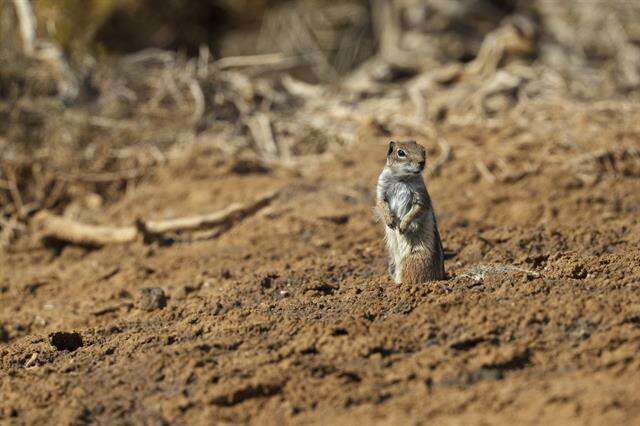
Xerini
Xerini is a tribe of ground squirrels occurring in Africa and Asia. With the tribes Marmotini (Holarctic ground squirrels) and Protoxerini (African tree squirrels), they form the subfamily Xerinae. There are five living genera—Xerus, the unstriped ground squirrel; Euxerus, the striped ground squirrel; Geosciurus, the Cape and mountain ground squirrels; Atlantoxerus, containing the living Barbary ground squirrel of North Africa and some extinct species; and Spermophilopsis, containing the long-clawed ground squirrel of Central Asia.

ibex
thumb|Male Alpine ibex
An ibex ( : ibex, ibexes or ibices) also known as the Old World Mountain goat, is any of several species of wild goat (genus Capra), distinguished by the male's large curved horns, which are transversely ridged in front. Ibex are found in Eurasia, North Africa and East Africa.
Antilopini
Antilopini is a tribe of bovids often referred as true antelopes like gazelles. They live in and around the Sahara, Horn of Africa, throughout eastern and southern Africa, and Eurasia, with the type species being the blackbuck of south Asia. Depending on species, the females have either very short or thin horns compared with the males, or no horns at all. They have smooth and glossy tan and white coats. Most species in the group have black stripes and facial markings. They have a territorial male as a leader in herds and sometimes group with other species, such as Grant's gazelle joining with
.jpg)
Kudu
thumb|300x300px|A large male greater kudu
thumb|A female greater kudu
thumb|Greater kudu male with females
thumb|Lesser kudu male
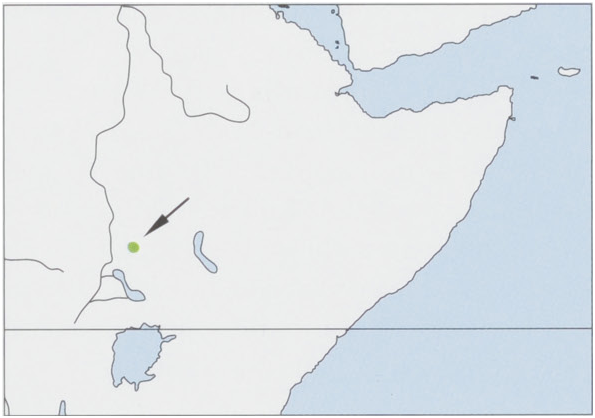
Dendromus ruppi
species of mammal
wildcat
The wildcat is a species complex comprising two small wild cat species: the European wildcat (Felis silvestris) and the African wildcat (F. lybica). The European wildcat inhabits forests in Europe, Anatolia and the Caucasus, while the African wildcat inhabits semi-arid landscapes and steppes in Africa, the Arabian Peninsula, Central Asia, into western India and western China.
The wildcat species differ in fur pattern, tail, and size: the European wildcat has long fur and a bushy tail with a rounded tip; the smaller African wildcat is more faintly striped, has short sandy-gray fur and a taperin