Category
page 1Neolithic sites of Europe

Bjelovar
Bjelovar (, , Czech: Bělovar or Bělovár, Kajkavian: Belovar, Latin: Bellovarium) is a city in central Croatia. In the 2021 census, its population was 36,316.
It is the administrative centre of Bjelovar-Bilogora County, as well as one of the youngest cities in Croatia, officially founded in 1756.

Newgrange
Newgrange () is a prehistoric monument in County Meath in Ireland, placed on a rise overlooking the River Boyne, west of the town of Drogheda. It is an exceptionally grand passage tomb built during the Neolithic Period, around 3100 BC, making it older than Stonehenge and the Egyptian pyramids. Newgrange is the main monument in the Brú na Bóinne complex, a World Heritage Site that also includes the passage tombs of Knowth and Dowth, as well as other henges, burial mounds and standing stones.
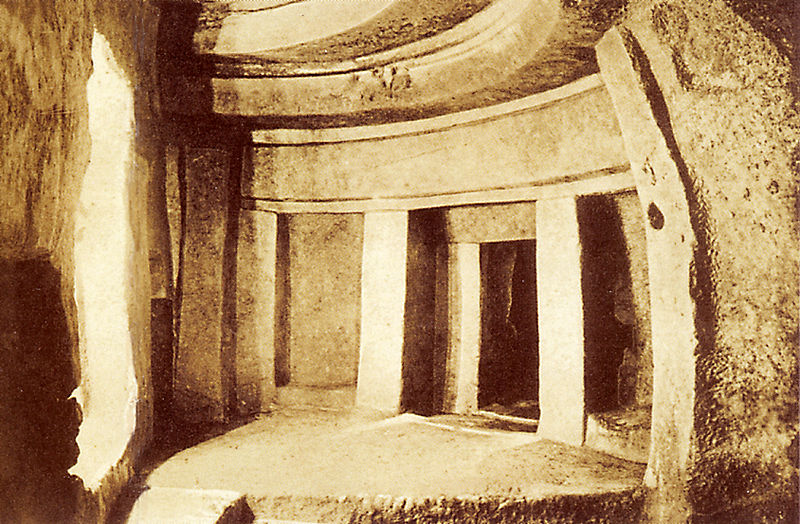
Hypogeum of Ħal Saflieni
Neolithic subterranean structure in Malta

Brú na Bóinne
archaeological site
Woodbridge
town in Suffolk, England

Krzemionki
Krzemionki, also Krzemionki Opatowskie (, "Opatów silica-mine"), is a Neolithic and early Bronze Age complex of flint mines for the extraction of Upper Jurassic (Oxfordian) banded flints located about eight kilometers north-east of the Polish city of Ostrowiec Świętokrzyski. It is one of the largest known complexes of prehistoric flint mines in Europe together with Grime's Graves in England and Spiennes in Belgium.

Barnenez
The Cairn of Barnenez (also: Barnenez Tumulus, Barnenez Mound; in Breton Karn Barnenez; in French: Cairn de Barnenez or Tumulus de Barnenez) is a Neolithic monument located near Plouezoc'h, on the Kernéléhen peninsula in northern Finistère, Brittany, France. It dates to the early Neolithic, around 4000 BC. Along with the Tumulus of Bougon and Locmariaquer megaliths, also located in Great West France, it is one of the earliest megalithic monuments in Europe and one of the oldest man-made structures in the world. It is also remarkable for the presence of megalithic art.
Durankulak archaeological complex
archaeological site in Bulgaria

Aartswoud
Aartswoud (West Frisian: Ierswoud) is a village in the Dutch province of North Holland, part of the municipality of Opmeer. It lies about northeast of Heerhugowaard.

Hohlenstein-Stadel
Hohlenstein-Stadel is a cave located in the Hohlenstein cliff (not to be confused with the Hohle Fels) at the southern rim of the Lonetal (valley of the Lone) in the Swabian Jura in Germany. While first excavations were started after the second half of the 19th century, the significance of some of the findings was not realized until 1969. The most significant finding was a small ivory statue called the Löwenmensch, which is one of the oldest pieces of figurative art ever found.
Neolithic site Okolište
Largest neolithic Butmir culture site
La Hougue Bie
historic site, with museum, in the Parish of Grouville, Jersey
Cocev Kamen
archaeological site in North Macedonia
Monknewton
Monknewtown (), historically called Rathenskin, is a townland 3 km east of Slane in County Meath, Ireland. It stands on the right bank of the Mattock River, which feeds several historic watermills nearby and which forms approximately the townland's eastern boundary with Keerhan and Sheepgrange townlands in County Louth. Neighbouring townlands to the south are Balfeddock, Knowth, and Crewbane, to the west Cashel, Mooretown, and Knockmooney. The northern boundary of Monknewtown with Kellystown is formed by a tributary of the Mattock River, while the southern boundary is formed by the N51 ro
Cashtal yn Ard
archaeological site on the Isle of Man
Long Meg and Her Daughters
Neolithic stone circle near Penrith, England
Schnidejoch
thumb|Descending to Wildhorn (March 2007).
thumb|Early Bronze Age pins, the one found at Schnidejoch in the middle.
The Schnidejoch is a mountain pass in the Bernese Alps, at above sea level, cutting across the ridge connecting the Schnidehorn and the Wildhorn.
Xagħra Stone Circle
archaeological site
Tombeau de Merlin
grave in Paimpont, France
Ville-ès-Nouaux
Ville-ès-Nouaux is a Neolithic site, located in the parish of Saint Helier on the island of Jersey. It consists of a gallery tomb and a dolmen surrounded by a stone circle.
Bylany
archaeological site
Sømarkedyssen
thumb|Polygonal dolmen seen from above
Runik
Runik () is a village in the Skenderaj municipality of Kosovo. It is located in the Drenica region and has 1,137 inhabitants as of 2024. The village has a football club, KF Përparimi Runik. Runik is the site of an important Neolithic settlement in Kosovo and the wider region. The excavated finds at the site include a baked-clay ocarina, one of the oldest musical instruments which have been in the Balkans and the oldest in Kosovo.
Gomolava
thumb|A statuette from Gomolava
Gomolava is a Vinča culture site on the Sava River in Serbia. It is dated to 4000–3800 B.C.