Category
page 1Paleozoic life of Ontario

Pterygotus
Pterygotus is an extinct genus of giant predatory eurypterid, a group of extinct aquatic arthropods. Fossils of Pterygotus have been discovered in deposits ranging in age from Middle Silurian to Late Devonian, and have been referred to several different species. Fossils have been recovered from five continents; Australia, Asia, Europe, North America and South America, which indicates that Pterygotus might have had a nearly cosmopolitan (worldwide) distribution. The type species, P. anglicus, was described by Swiss naturalist Louis Agassiz in 1839, who gave it the name Pterygotus, meaning "wing

Cooksonia
Cooksonia is an extinct group of primitive land plants, treated as a genus, although probably not monophyletic. The earliest Cooksonia date from the middle of the Silurian (the Wenlock epoch); the group continued to be an important component of the flora until the end of the Early Devonian, a total time span of . While Cooksonia fossils are distributed globally, most type specimens come from Britain, where they were first discovered in 1937. Cooksonia includes the oldest known plant to have a stem with vascular tissue and is thus a transitional form between the primitive non-vascular bryophyte

Q2061593
Prototaxites is an extinct genus of large macroscopic eukaryote dating from the Late Silurian until the Late Devonian periods. Prototaxites formed large trunk-like structures up to wide, reaching in height, made up of tiny interwoven tubules around in diameter, making it by far the largest land-dwelling organism of its time.

Cameroceras
Cameroceras, from Ancient Greek καμάρα (kamára), meaning "chamber", and κέρας (kéras), meaning "horn", is an extinct genus of endocerid cephalopod which lived in equatorial oceans during the entire Ordovician period. Like other endocerids, it was an orthocone, meaning that its shell was fairly straight and pointed. It was particularly abundant and widespread in the Late Ordovician, inhabiting the shallow tropical seas in and around Laurentia, Baltica and Siberia (equivalent to modern North America, Europe, and Asia).

Hyolitha
Hyoliths are an extinct group of invertebrates with small conical shells, known from fossils from the Palaeozoic era. They are at least considered lophotrochozoans, possibly being lophophorates, a group which includes the brachiopods (hyoliths may even be brachiopods themselves), while others consider them as being basal lophotrochozoans, or even molluscs.
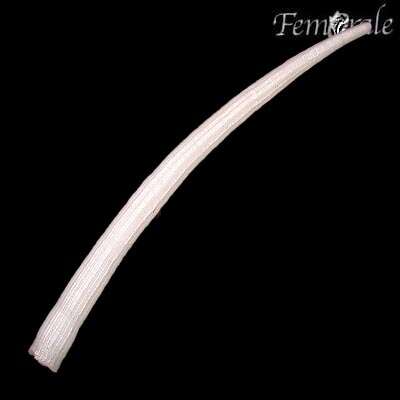
Dentalium
genus of molluscs

Phacops
Phacops is a genus of trilobites in the order Phacopida, family Phacopidae, that lived in Europe, northwestern Africa, North and South America and China from the Late Ordovician until the very end of the Devonian, with a broader time range described from the Late Ordovician. It was a rounded animal, with a globose head and large eyes, and probably fed on detritus. Phacops is often found rolled up ("volvation"), a biological defense mechanism that is widespread among smaller trilobites but further perfected in this genus.

Endoceras
Endoceras, from Ancient Greek ἔνδον (éndon), meaning "inside", and κέρας (kéras), meaning "horn", is an extinct genus of large, straight-shelled cephalopods that gives its name to the Nautiloid order Endocerida. The genus lived during the middle and upper Ordovician 470 to 443 million years ago. The cross section in the mature portion is slightly wider than high, but is narrower laterally in the young. Sutures are straight and transverse. Endoceras has a large siphuncle, located close to the ventral margin, composed of concave segments, especially in the young but which may be tubular in the a
%20(Upper%20Ordovician%3B%20Cincinnati%20area%2C%20USA).jpg)
Isotelus
is an extinct genus of large asaphid trilobites from the Middle and Late Ordovician Period, fairly common in the northeastern United States into eastern Canada. Isotelus is the state fossil of Ohio, and through multiple specimens from the 1800s into the modern day has held the title of largest trilobite fossil in the world, reaching over long. Isotelus was carnivorous and a burrower which lived in warm shallow seas, feeding on worms and other soft-bodied animals on and below the substrate. As larvae, Isotelus was planktonic, drifting in the water column with a morphology very different from th
Favosites
Favosites is an extinct genus of tabulate coral characterized by polygonal closely packed corallites (giving it the common name "honeycomb coral"). The walls between corallites are pierced by pores known as mural pores which allowed transfer of nutrients between polyps. Favosites, like many corals, thrived in warm sunlit seas, feeding by filtering microscopic plankton with their stinging tentacles and often forming part of reef complexes. The genus had a worldwide distribution from the Late Ordovician to Late Permian.
==Distribution==
Favosites had a vast distribution, and its fossils can be

Nucula
Nucula is a genus of very small saltwater clams. They are part of the family Nuculidae.

Halysites
thumb|right|Thin-section view of Halysites corallum

Psilophyton
thumb|Fossil of Psilophyton dawsonii
Atrypa
Atrypa is a genus of brachiopod with round to short egg-shaped shells covered with many fine radial ridges (or costae). Growth lines form perpendicular to the costae and are spaced approximately 2 to 3 times further apart than the costae.. The pedunculate valve is slightly convex, but oftentimes levels out or becomes slightly concave toward the anterior margin (opposite the hinge and pedicle). The brachial valve is highly convex. Neither valve contains an interarea (a flat area bordering the hinge line, approximately perpendicular with the rest of the valve). Atrypa had a large geographic rang
Baragwanathia
Baragwanathia is a genus of extinct lycopsid plants of Late Silurian to Early Devonian age (), fossils of which have been found in Australia, Canada, China and Czechia. The name derives from William Baragwanath who discovered the first specimens of the type species, Baragwanathia longifolia, at Thomson River (Victoria, Australia).
Calymene
Calymene is a genus of trilobites in the order Phacopida, suborder Calymenina, that are found throughout North America, North Africa, and Europe in primarily Silurian outcrops. Calymene is closely related to Flexicalymene, and both genera are frequently found enrolled.
Calymene trilobites are small, typically 2 cm in length. The cephalon is the widest part of the animal and the thorax usually has 13 segments.
Pleurotomaria
Pleurotomaria is an extinct genus of sea snails, marine gastropod molluscs in the family Pleurotomariidae.
Leptaena
Leptaena is an extinct genus of mid-sized brachiopod that existed from the Dariwilian epoch to the Emsian epoch, though some specimens have been found in strata as late in age as the Tournasian epoch. Like some other Strophomenids, Lepteana were epifaunal, meaning they lived on top of the seafloor, not buried within it, and were suspension feeders.
Spirorbis
Spirorbis is a genus of very small () polychaete worms, usually with a white coiled shell. Members of the genus live in the lower littoral and sublittoral zones of rocky shores. Spirorbis worms usually live attached to seaweeds, but some species live directly on rocks, shells or other hard substrates. Spirorbis was once thought to have a fossil record extending back into the Early Paleozoic, but now all pre-Bathonian (Middle Jurassic) spirorbins are known to be microconchids. The earliest members of genus appeared in the Miocene, but Oligocene finds may
also be possible. The genus contains the
Dalmanites
Dalmanites is a genus of trilobite in the order Phacopida. They lived from the Late Ordovician to Middle Devonian. It was named for the Swedish naturalist Johan Wilhelm Dalman.
Sawdonia
Sawdonia is an extinct genus of early vascular plants, known from the Upper Silurian to the Lower Carboniferous (). Sawdonia is best recognized by the large number of spikes (enations) covering the plant. These are vascular plants that do not have vascular systems in their enations. The first species of this genus (Sawdonia ornata) was described in 1859 by Sir J. William Dawson and, was originally attributed to the genus Psilophyton. He named this plant Psilophyton princeps. In 1971 Francis Hueber proposed a new genus for this species due to its "Divergent technical characters from the generic
Platystrophia
Platystrophia is an extinct genus of brachiopods that lived from the Ordovician to the Silurian in Asia, Europe, North America, and South America. It has a prominent sulcus and fold. It usually lived in marine lime mud and sands.
Carcinosoma
Carcinosoma (meaning "crab body") is a genus of eurypterid, an extinct group of aquatic arthropods. Fossils of Carcinosoma are likely restricted to deposits of late Silurian to early Devonian (Llandovery to Lochkovian) age,'''' although an Early Ordovician specimen has been classified as ?Carcinosoma aurorae, which would make this the earliest known eurypterid genus. Classified as part of the family Carcinosomatidae, which the genus lends its name to, Carcinosoma'' contains several species from North America and Great Britain.
Spirifer
Spirifer is a genus of marine brachiopods belonging to the order Spiriferida and family Spiriferidae. Species belonging to the genus lived in the Carboniferous (certainly in the Tournaisian and in the Visean, possibly also in the Serpukhovian and the Bashkirian).
Cheirurus
Cheirurus (from Greek χείρ, cheir meaning "hand" and ουρά, oura meaning "tail") is a genus of phacopid trilobites that lived from the Ordovician to the Devonian. Its remains have been found in Africa, Asia, Australia, Europe, and North America. Cheirurus is the type genus of Cheiruridae.
Pentamerus
The gall mite genus Pentamerus, established by Roivainen in 1951, is invalid and needs to be renamed. Until this happens, use Pentamerus (mite).
Fenestella
extinct genus of bryozoans
Strophomena
thumb|240px|right|Strophomena costellata from Bromide Formation, Oklahoma, USA
Triarthrus
Triarthrus is a genus of Upper Ordovician ptychopariid trilobite found in New York, Ohio, Kentucky, and Indiana, eastern and northern Canada, China and Scandinavia. It is the last of the Olenid trilobites, a group which flourished in the Cambrian period. The specimens of T. eatoni that are found in the Beecher's Trilobite Bed, Rome, New York area are exquisitely preserved showing soft body parts in iron pyrite. Pyrite preservation has given scientists a rare opportunity to examine the gills, walking legs, antennae, digestive systems, and eggs of trilobites, which are rarely preserved. Triarthr
Mucrospirifer
Mucrospirifer is a genus of extinct brachiopods in the class Rhynchonellata (Articulata) and the order Spiriferida. They are sometimes known as "butterfly shells". Like other brachiopods, they were filter feeders. These fossils occur mainly in Middle Devonian strata and appear to occur around the world, except in Australia and Antarctica.
Protosalvinia
Protosalvinia is a prehistoric plant found commonly in shale from shoreline habitats of the Upper Devonian period. The name Protosalvinia is a misnomer. The name literally means early Salvinia, and was given in the erroneous belief that the fossils were an earlier form of the living aquatic fern Salvinia. It is no longer believed that the fossils come from a fern, but deciding exactly what the fossils represent is still a matter of debate.
Bellerophon
genus of molluscs (fossil)
Chonetes
Chonetes is an extinct genus of brachiopods. It ranged from the Late Ordovician to the Middle Jurassic.
Euomphalus
Euomphalus is a genus of fossil marine gastropods known to have lived from the Silurian to the Middle Permian.
Acidaspis
Acidaspis is an extinct genus of odontopleurid trilobite from the Ordovician to Silurian of North America and Europe. Although small, it had long spines along its body.
Tentaculites
Tentaculites is an extinct genus of conical fossils of uncertain affinity, class Tentaculita, although it is not the only member of the class. It is known from Lower Ordovician to Upper Devonian deposits both as calcitic shells with a brachiopod-like microstructure and carbonaceous 'linings'. The "tentaculites" (i.e. tentaculita) are also referred to as the styliolinids.

Arctinurus boltoni
Arctinurus boltoni is a large (up to 30 cm) lichid trilobite of the mid-Silurian. This trilobite reached about eight inches in length, though the normal adult carapace was about four inches. It lived in moderately deep-water in semi-tropical regions. Arctinurus fossils have been found in Europe and North America.
Encrinurus
Encrinurus is a long-lived genus of phacopid trilobites that lived in what are now Africa, Asia, Australia, Europe, North America, and South America from the middle Ordovician to the early Devonian from 472 to 412.3 mya, existing for approximately .
Rhynchonella
Rhynchonella is an extinct genus of brachiopods known from the Late Jurassic (Oxfordian) to the Early Cretaceous (Valanginian, possibly Barremian). Formerly this genus was understood much more widely (more or less an equivalent of the Rhynchonellida order in the present-day taxonomy) and less critical sources still list species of Rhynchonella from the Ordovician to the Eocene. Like most brachiopods, Rhynchonella was a stationary epifaunal suspension feeder.
Catenipora
Catenipora is an extinct genus of tabulate corals in the family Halysitidae, known from the Ordovician to the Silurian.
Protichnites
Protichnites is an ichnogenus of trace fossil consisting of the imprints made by the walking activity of certain arthropods. It consists of two rows of tracks and a medial furrow between the two rows. This furrow, which may be broken, set at an angle, and of varying width and depth, is thought to be the result of the tail region contacting the substrate.
Scenella
Scenella is an extinct genus of fossil invertebrate animal which is generally considered to be a mollusc; at various times it has been suggested that this genus belongs with the gastropods, the monoplacophorans, or the helcionellids, although no firm association with any of these classes has been established. An affinity with the hydrozoa (as a flotation device) has been considered, although some authors oppose this hypothesis. A gastropod affinity is defended on the basis of six pairs of internal muscle scars, whilst the serially-repeated nature of these scars suggests to other authors a mono
Michelinoceras
Michelinoceras is the oldest known genus of the Michelinocerida, more commonly known as the Orthocerida, characterized by long, slender, nearly cylindrical orthocones with a circular cross section, long camerae, very long body chambers, and a central or near central tubular siphuncle free of organic deposits. Septal necks are straight; connecting rings cylindrical and thin. Cameral deposits are well developed. A radula has been found in one species, with seven teeth per row. It had ten arms, two of which formed longer tentacles.
Bumastus
thumb|upright|Bumastus barriensis, from the [[Silurian Wenlock series, found at Dudley, Worcestershire.]]
Ozarkodina
Ozarkodina is an extinct genus of conodonts in the family Spathognathodontidae.
Ceraurus
Ceraurus is a genus of cheirurid trilobite of the middle and, much more rarely, the upper Ordovician. They are commonly found in strata of the lower Great Lakes region. These trilobites have eleven thoracic segments, a very small pygidium and long genal and pygidial spines.
Acanthopyge
Acanthopyge is an extinct genus of lichid trilobite that lived during the Devonian. Very few A. consanguinea from the Devonian of Oklahoma have been found, and only a handful of complete specimens from Morocco, and many so-called Acanthopyge-specimens from Morocco are fake.
Pleurocystites
Pleurocystites (meaning rib bag or side bladder) is a genus of rhombiferan echinoderm (a cystoid) that lived in the Late Ordovician. Its fossils are known from Europe and North America. Pleurocystites grew to a height of 2 centimeters (3/4 of an inch) and fed on plankton.
Eospirifer
Eospirifer is a genus of extinct brachiopod in the class Rhynchonellata (Articulata) and the order Spiriferida. Their fossils occur most commonly in marine calcareous, microbialitic mudstones with extensive mudcracks or shelly packstones, generally mid-Silurian to early-Devonian in age.
Heliophyllum
Heliophyllum is an extinct genus of corals that existed predominantly in the Devonian. Heliophyllum is of the order Rugosa and can be referred to as horn corals. They were mostly solitary animals, although some were colonial. The genus had a wide distribution. Fossils of H. halli have been found in the fossil rich Floresta Formation of the Altiplano Cundiboyacense, Colombia. This genus used its nematocysts to stun prey.
Syringopora
Syringopora is an extinct genus of phaceloid tabulate coral. It has been found in rocks ranging in age from the Ordovician to the Permian, although it was most widespread during the Silurian, Devonian, and Carboniferous periods. Among other places, it has been found in the Columbus Limestone in Ohio, and in the Spring Branch Member of the Lecompton Limestone in Kansas.
Illaenus
Illaenus is a genus of trilobites from Russia and Morocco, from the middle Ordovician.