Category
page 1Parasitic nematodes of humans

Ascaris lumbricoides
species of worm

trichinosis
trichuriasis

Trichinella spiralis
species of worm
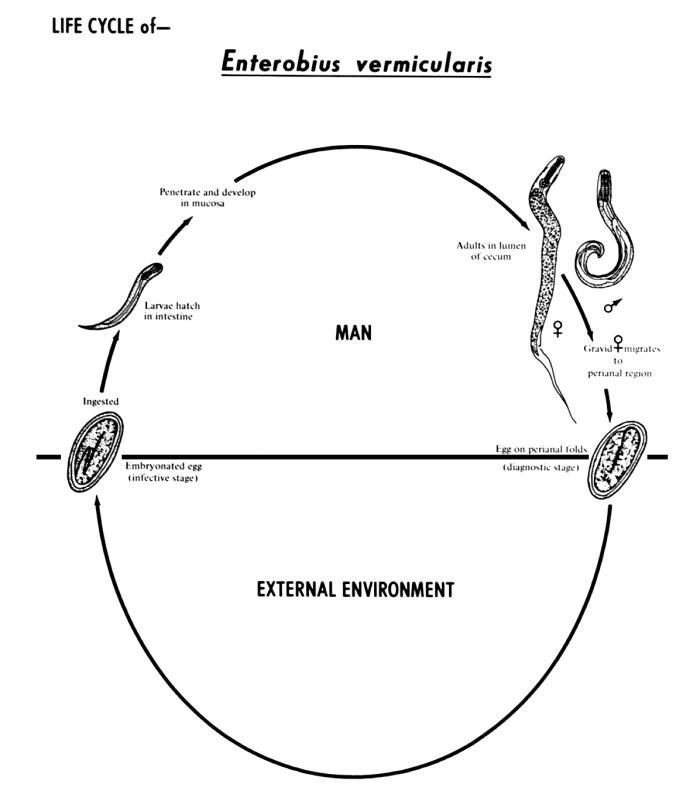
Enterobius vermicularis
species of worm
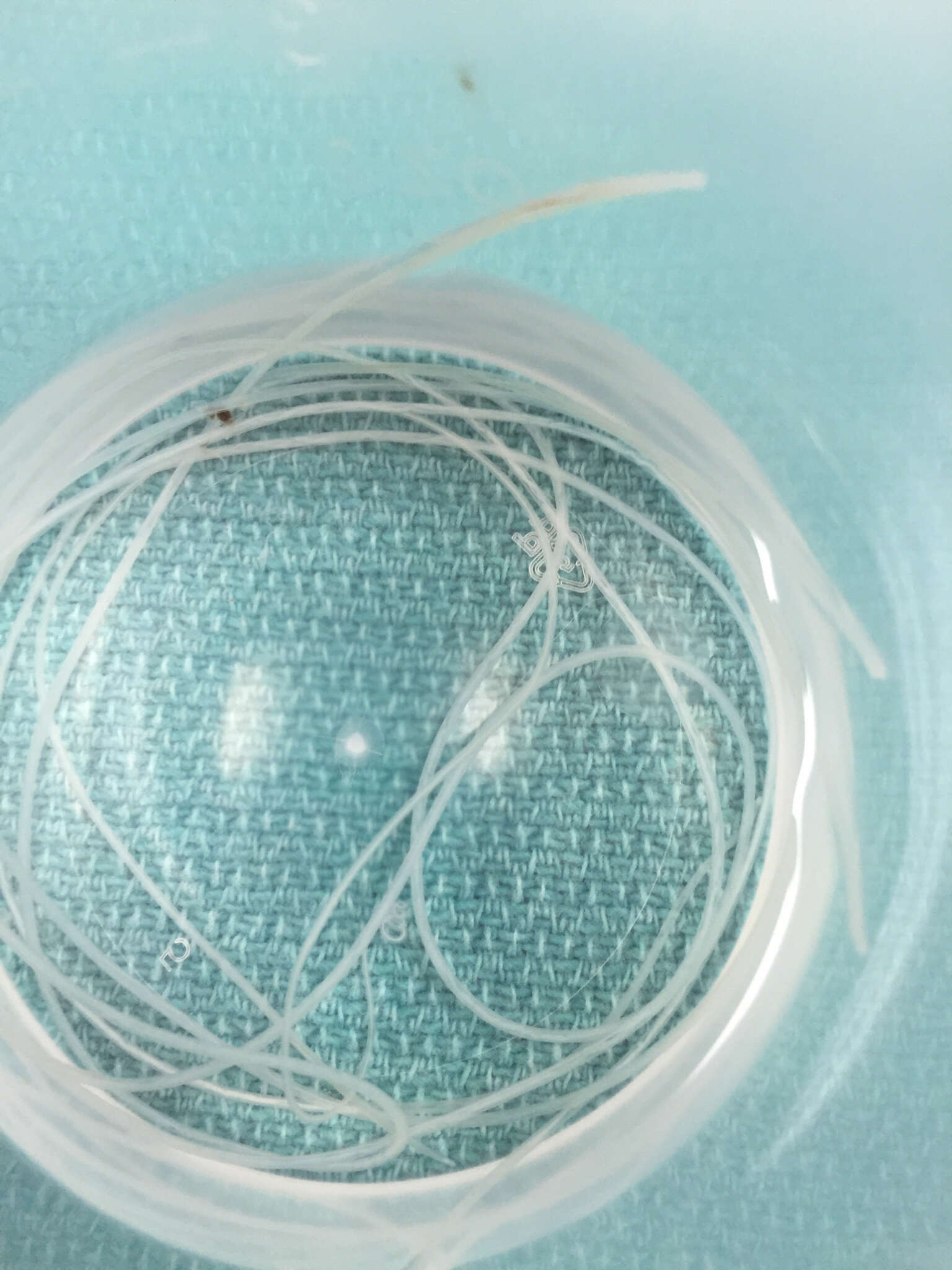
Dirofilaria immitis
species of worm
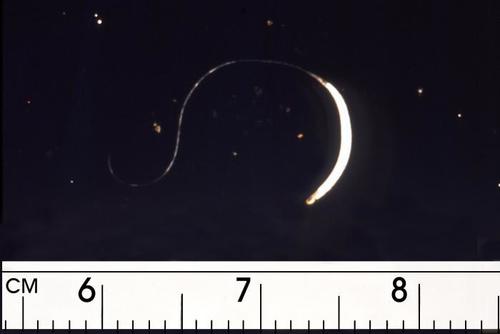
Trichuris trichiura
species of worm
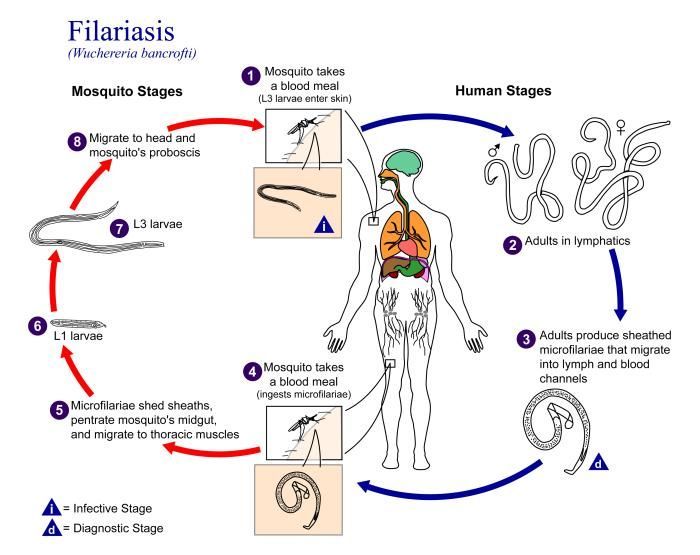
Wuchereria bancrofti
species of parasitic worm
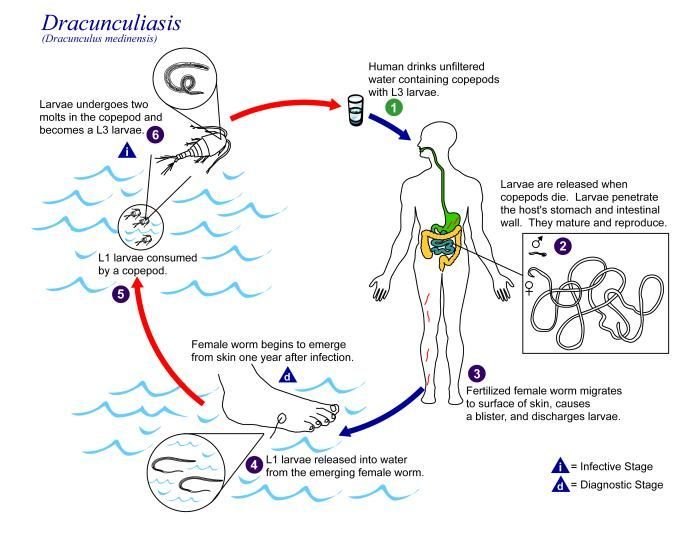
Dracunculus medinensis
species of nematode
Strongyloides stercoralis
species of worm

Loa loa
species of worm
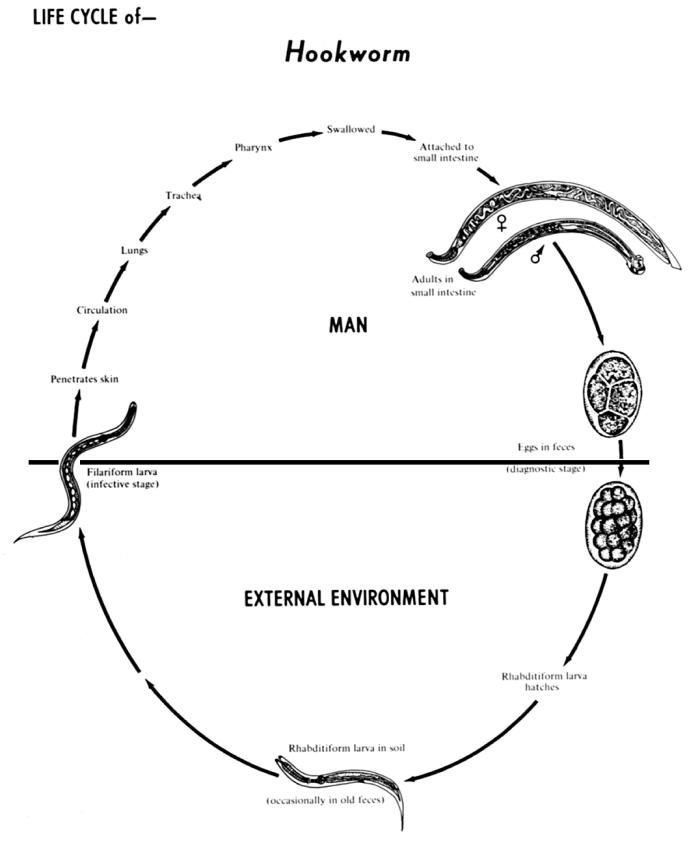
Ancylostoma duodenale
species of worm

Necator americanus
species of worm

strongyloidiasis
Strongyloidiasis is a human parasitic disease caused by the nematode called Strongyloides stercoralis, or sometimes the closely related S. fülleborni. These helminths belong to a group of nematodes called roundworms. These intestinal worms can cause a number of symptoms in people, principally skin symptoms, abdominal pain, diarrhea and weight loss, but also many other specific and vague symptoms in disseminated disease, and severe life-threatening conditions through hyperinfection. In some people, particularly those who require corticosteroids or other immunosuppressive medication, Strongyloid

Brugia malayi
species of parasitic worm
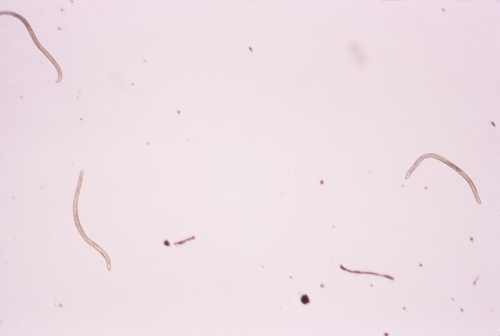
Onchocerca volvulus
species of nematode

Anisakis simplex
species of worm

gnathomiasis
Gnathostomiasis, also known as larva migrans profundus, is the human infection caused by any of six species of nematodes in the genus Gnathostoma, which infect vertebrates as second intermediate and primary hosts.
Gongylonema pulchrum
species of worm
Thelazia callipaeda
species of worm
Baylisascaris
Baylisascaris is a genus of roundworms that infect more than fifty animal species.
Capillaria philippinensis
species of worm
Brugia timori
species of worm
Mansonella streptocerca
species of worm
Gnathostoma spinigerum
parasitic nematode that causes gnathostomiasis in humans