Category
page 1Parasitic nematodes of mammals

trichinosis

Trichinella spiralis
species of worm
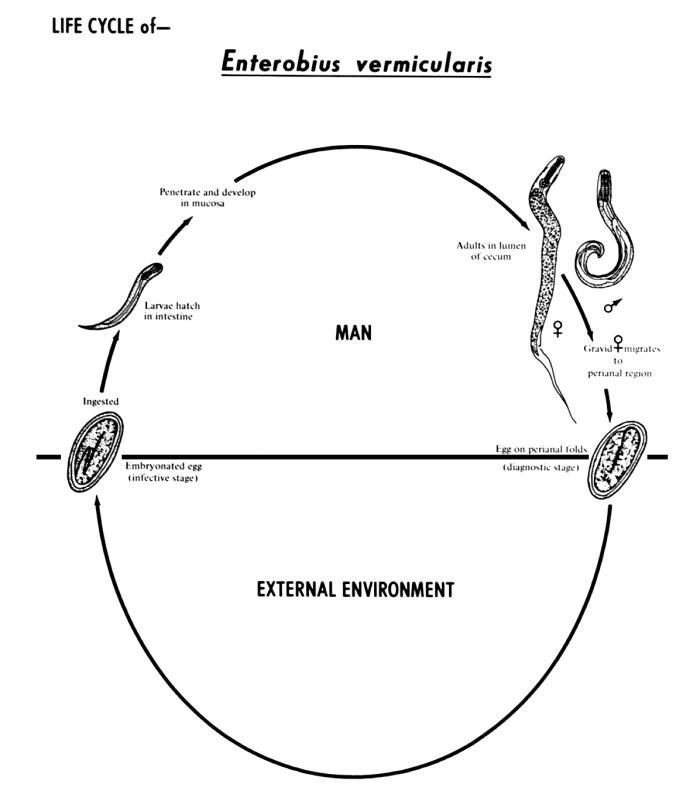
Enterobius vermicularis
species of worm
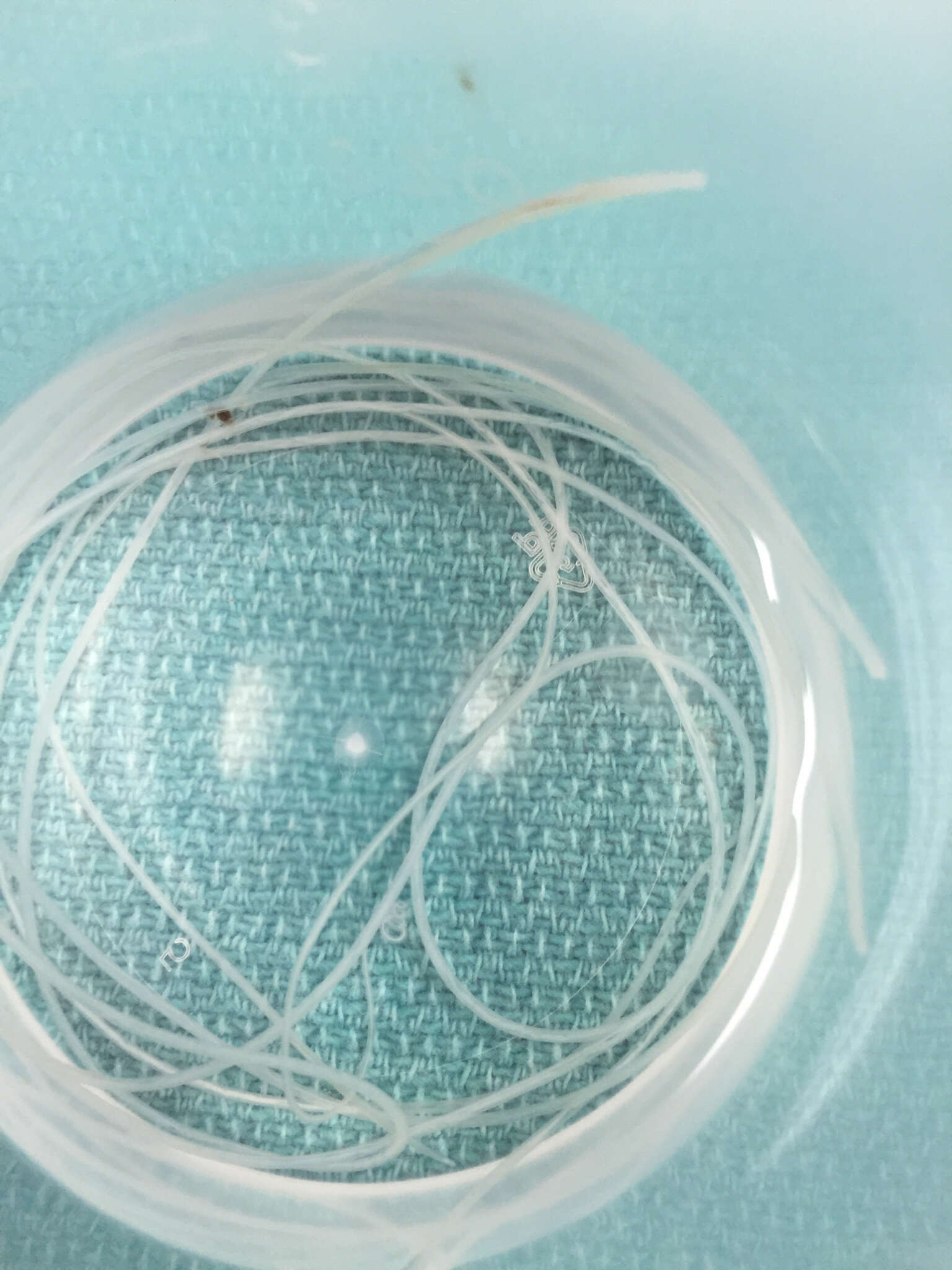
Dirofilaria immitis
species of worm
Strongyloides stercoralis
species of worm

Necator americanus
species of worm

Anisakis
Anisakis ( ) is a genus of parasitic nematodes that have life cycles involving fish and marine mammals. They are infective to humans and cause anisakiasis. People who produce immunoglobulin E in response to this parasite may subsequently have an allergic reaction, including anaphylaxis, after eating fish infected with Anisakis species.

Haemonchus contortus
very common parasite of ruminants that attatch to the abomasal mucosa and feed on the blood

Ascaris suum
species of worm
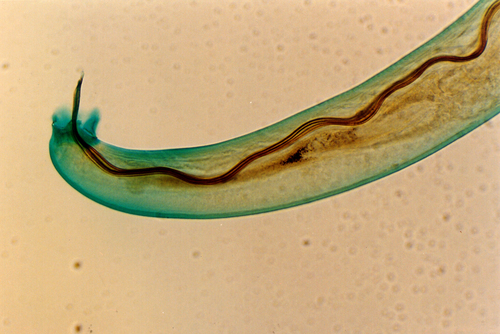
Angiostrongylus cantonensis
species of worm
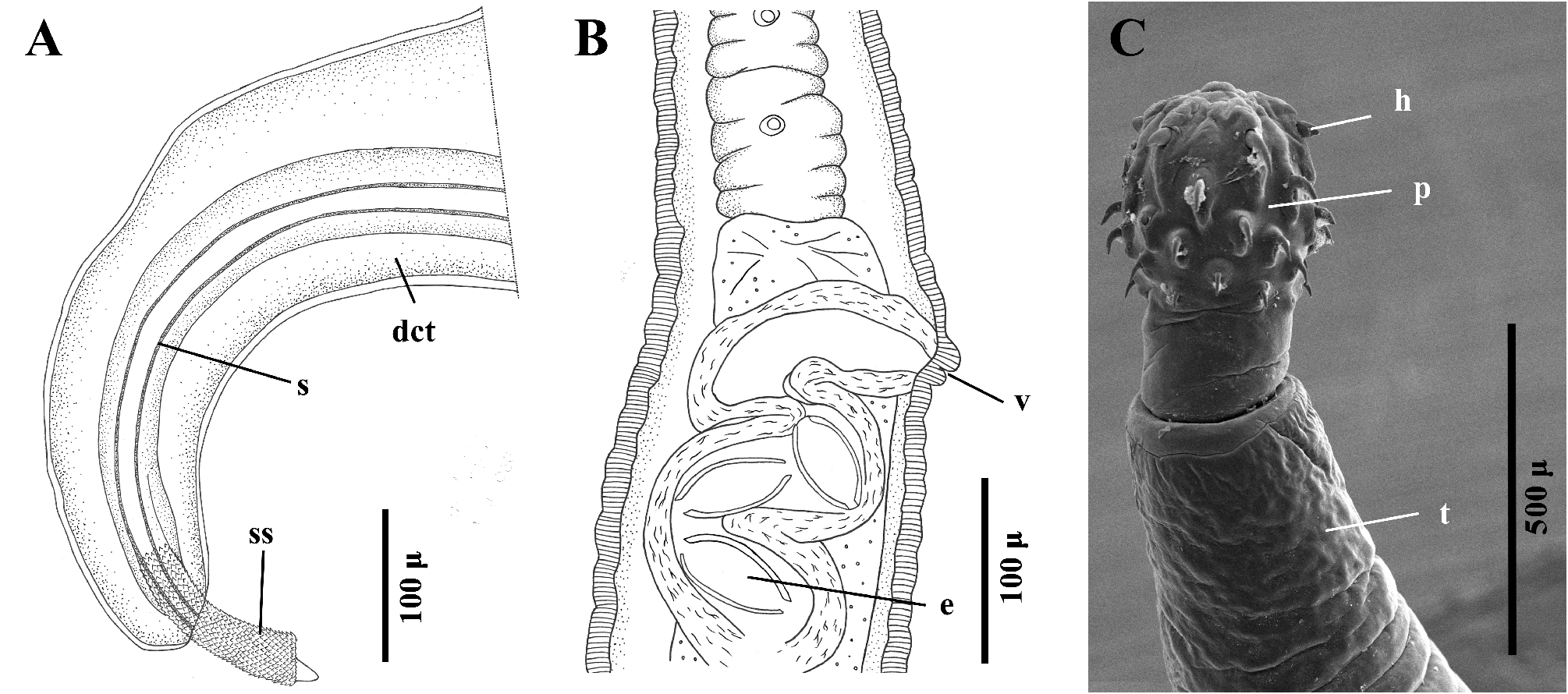
Trichuris
Trichuris (synonym Trichocephalus), often referred to as whipworms or the silent serpent (which typically refers to T. trichiura only in medicine, and to any other species in veterinary medicine), is a genus of parasitic helminths from the roundworm family Trichuridae. The name whipworm refers to the shape of the worm; they look like whips with wider "handles" at the posterior end.

hookworm
Hookworms are intestinal, blood-feeding, parasitic roundworms that cause types of infection known as helminthiases. Hookworm infection is found in many parts of the world, and is common in areas with poor access to adequate water, sanitation, and hygiene. In humans, infections are caused by two main species of roundworm, belonging to the genera Ancylostoma and Necator. In other animals the main parasites are species of Ancylostoma. Hookworm is closely associated with poverty because it is most often found in impoverished areas, and its symptoms promote poverty through the educational and healt
Onchocercidae
The Onchocercidae are a family of nematodes in the superfamily Filarioidea. This family includes some of the most devastating human parasitic diseases, such as lymphatic filariasis, onchocerciasis, loiasis, and other filariases.

Anisakis simplex
species of worm

Dioctophyme renale
species of worm

Dirofilaria repens
species of worm
Capillaria
genus of nematodes
Metastrongylus
Metastrongylus is a genus of nematodes of the family Metastrongylidae, usually found as lungworms in pigs and sometimes causing parasitic bronchitis. It causes a disease called metastrongylosis.

Strongyloides
Strongyloides (from Greek strongylos, round, + eidos, resemblance), anguillula, or threadworm is a genus of small nematode parasites, belonging to the family Strongylidae, commonly found in the small intestine of mammals (particularly ruminants), that are characterized by an unusual lifecycle that involves one or several generations of free-living adult worms.

Toxocaridae
thumb|Toxocara canis adult worms
The Toxocaridae are a zoonotic family of parasitic nematodes that infect canids and felids and which cause toxocariasis in humans (visceral larva migrans and ocular larva migrans). The worms are unable to reproduce in humans.
Placentonema gigantissima
species of Secernentea, a parasite of the placenta of sperm whales
Ancylostoma caninum
species of worm

Onchocerca
Onchocerca is a genus of parasitic roundworm. It contains one human parasite – Onchocerca volvulus – which is responsible for the neglected disease Onchocerciasis, also known as "river blindness" because the infected humans tend to live near rivers where host black flies live. Over 40 million people are infected in Africa, Central America, and South America. Other species affect cattle, horses, etc.
Strongylidae
Strongyles (from Greek strongulos 'round'), or alternatively, strongyls, are nematode worms of the family Strongylidae, order Strongylida. They are often parasitic in the gastrointestinal tract of mammals, especially grazers such as sheep, cattle, and horses.
Baylisascaris procyonis
species of worm
Mansonella
Mansonella is a genus of parasitic nematodes. It includes three species that are responsible for the disease mansonelliasis: Mansonella ozzardi, M. perstans, and M. streptocerca. A potential fourth species has been identified in Gabon in 2015 and proposed as a new species Mansonella sp. "DEUX". Whole-genome sequences from Mansonella perstans, Mansonella ozzardi, and the newly proposed species Mansonella sp. "DEUX" have been assembled.
Spirocerca lupi
species of worm
Capillaria aerophila
species of worm
Dracunculus
genus of roundworms
Ancylostoma tubaeforme
species of worm

Strongylus vulgaris
species of worm
Ostertagia ostertagi
species of worm
Thelazia callipaeda
species of worm
Dictyocaulus viviparus
species of worm
Trichuris vulpis
species of worm
Capillaria hepatica
species of worm
Heligmosomoides polygyrus
species of worm
Nippostrongylus brasiliensis
species of worm
Mastophorus muris
species of worm

Gongylonema neoplasticum
species of Secernentea
Capillaria plica
species of worm
Bunostomum
Bunostomum is a genus of nematodes of the small intestine of ruminants and camelids. Important species include B. phlebotomum in calves and B. trigonocephalum in lambs. The worms are stout and measure in length. Young animals are most commonly affected and only several hundred worms are necessary to cause morbidity. Adults often carry worms without showing clinical signs.
Capillaria feliscati
species of worm
Skrjabingylus nasicola
species of worm
Brugia
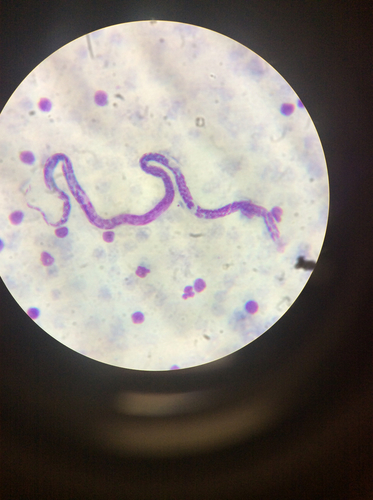
Brugia is a genus for a group of small roundworms. They are among roundworms that cause the parasitic disease filariasis. Specifically, of the five species known, Brugia malayi and Brugia timori cause lymphatic filariasis in humans; and Brugia pahangi and Brugia patei infect domestic cats, dogs and other animals. Brugia buckleyi specifically infects the Indian hare (Lepus nigricollis singhala). They are transmitted by the bite of mosquitos.
Eucoleus
Eucoleus is a genus of nematodes belonging to the family Capillariidae. Dwelling primarily in the airways of foxes, it can be found worldwide in dogs and cats.
Chabertia ovina
species of nematodes
Onchocerca tubingensis
species of worm
Skrjabinema ovis
species of worm