Category
page 1Philosophers of psychology

Aristotle
Aristotle (; 384–322 BC) was an ancient Greek philosopher and polymath. His writings cover a broad range of subjects spanning the natural sciences, philosophy, linguistics, economics, politics, psychology, and the arts. As the founder of the Peripatetic school of philosophy in the Lyceum in Athens, he began the wider Aristotelian tradition that followed, which set the groundwork for the development of modern science.

René Descartes
French philosopher, mathematician, and scientist (1596–1650)

Avicenna
Ibn Sina ( – 22 June 1037), commonly known in the West as Avicenna ( ), was a preeminent philosopher and physician of the Muslim world. He was a seminal figure of the Islamic Golden Age, serving in the courts of various Iranian rulers, and was influential to medieval European medical and Scholastic thought.

Noam Chomsky
Avram Noam Chomsky is an American intellectual, philosopher, linguist, political activist, and social critic. Sometimes called "the father of modern linguistics", Chomsky is also a major figure in analytic philosophy and one of the founders of the field of cognitive science. He is a laureate professor of linguistics at the University of Arizona and an institute professor emeritus at the Massachusetts Institute of Technology (MIT). Among the most cited living authors, Chomsky has written more than 150 books on topics such as linguistics, war, and politics. In addition to his work in linguistics, since the 1960s, Chomsky has been an influential voice on the American Left as a consistent critic of the foreign policy of the United States, contemporary capitalism, and corporatocracy.

Arthur Schopenhauer
German philosopher (1788-1860)
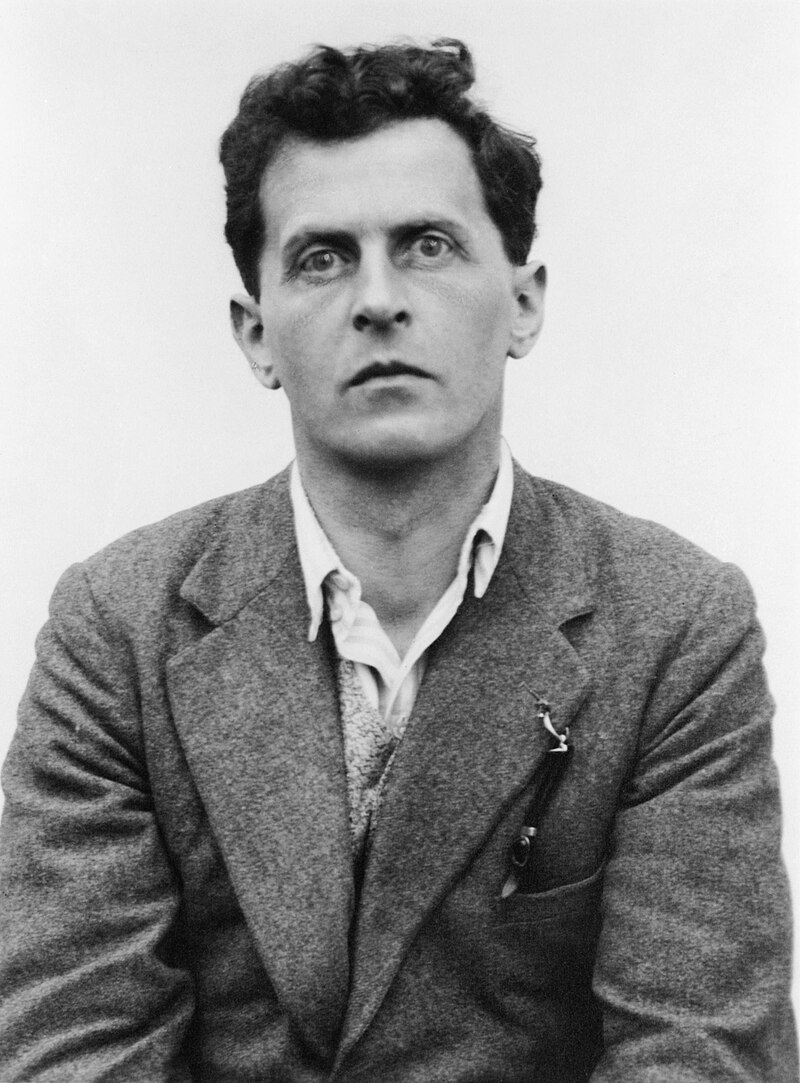
Ludwig Wittgenstein
Austrian philosopher and logician (1889–1951)

John Stuart Mill
British philosopher and political economist (1806–1873)

Henri Poincaré
French mathematician, physicist and engineer (1854–1912)

Averroes
Ibn Rushd (14 April 112611 December 1198), Latinized as Averroes, was an Andalusian polymath and jurist who was proficient in a variety of intellectual fields, including philosophy, theology, medicine, astronomy, physics, psychology, mathematics, neurology, Islamic jurisprudence and law, and linguistics. The author of more than 100 books and treatises, his philosophical works include numerous commentaries on Aristotle, for which he was known in the Western world as "The Commentator" and "Father of Rationalism".

Ferdinand de Saussure
Swiss linguist and philosopher (1857–1913)

Edmund Husserl
German philosopher, known as the father of phenomenology (*1859 – †1938)
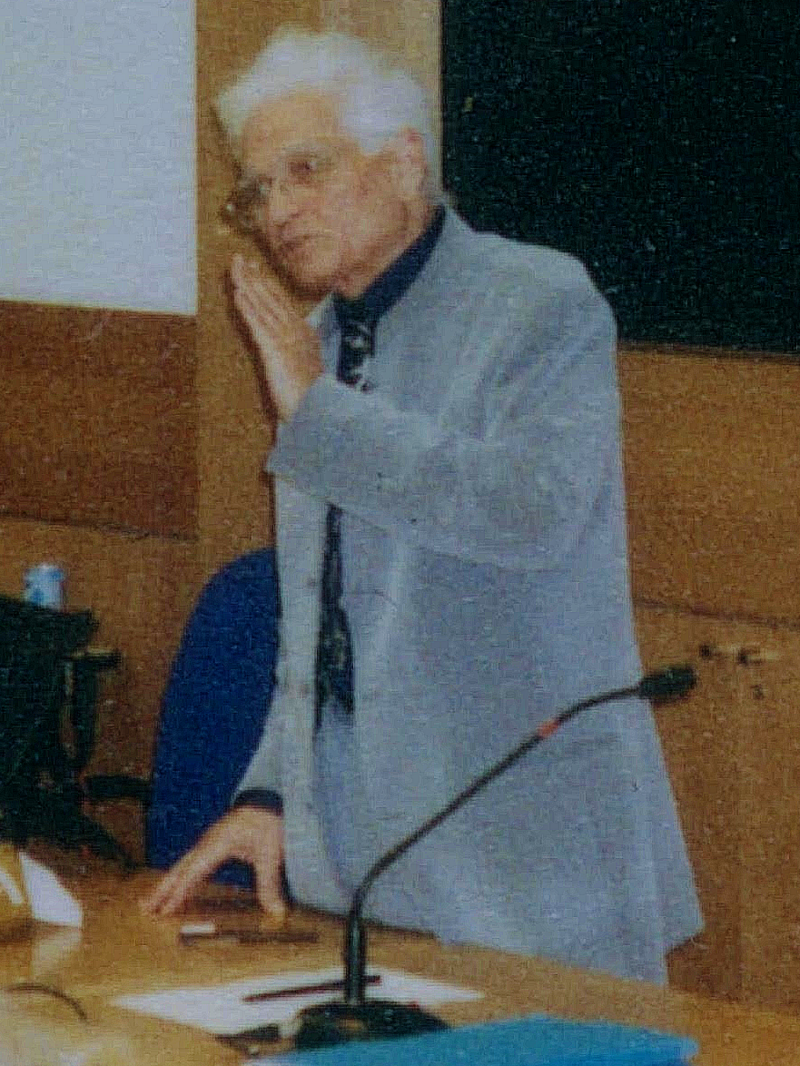
Jacques Derrida
French philosopher (1930–2004)

Slavoj Žižek
Slovenian philosopher (born 1949)

Karl Jaspers
German-Swiss psychiatrist and philosopher (1883–1969)

Farabi
thumbnail|200px|Postage stamp of the USSR, issued on the 1100th anniversary of the birth of Al-Farabi (1975)
Abu Nasr Muhammad al-Farabi (; – 14 December 950–12 January 951), known in the Latin West as Alpharabius, was an early Islamic philosopher and music theorist. He has been designated as "Father of Islamic Neoplatonism", and the "Founder of Islamic Political Philosophy".

B. F. Skinner
American behaviorist (1904–1990)

Gilles Deleuze
French philosopher (1925–1995)

Al-Kindi
Abū Yūsuf Yaʻqūb ibn ʼIsḥāq aṣ-Ṣabbāḥ al-Kindī (; ; ; ) was an Arab polymath who was active as a philosopher, mathematician, physician, and music theorist. Al-Kindi was the first of the Islamic peripatetic philosophers, and is hailed as the "father of Arab philosophy".

Jacques Lacan
French psychoanalyst and writer (1901–1981)

Wilhelm Reich
Austrian-American psychiatrist, psychoanalyst, sex educator and sociologist (1897–1957)

Mozi
Mozi, personal name Mo Di,

Friedrich Schleiermacher
German theologian, philosopher, and biblical scholar (1768-1834)

Maurice Merleau-Ponty
French phenomenological philosopher

Johann Friedrich Herbart
German philosopher, psychologist, and founder of pedagogy as an academic discipline (1776-1841)

Étienne Bonnot de Condillac
French academic
Guy Debord
French Marxist theorist, writer, filmmaker (1931–1994)

Wilhelm Dilthey
German historian, psychologist, sociologist, student of hermeneutics, and philosopher (1833–1911)

Franz Brentano
German philosopher and psychologist as well as refounder of the theory of intentionality (1838–1917)
Luce Irigaray
Belgian-born French feminist, philosopher, linguist, psycholinguist, psychoanalyst and cultural theorist (born 1930)

Martha Nussbaum
American philosopher (born 1947)

Adam Ferguson
Scottish philosopher and historian; (1723-1816)

Wilhelm Windelband
German philosopher (1848–1915)

Rudolf Otto
German theologian, philosopher, and comparative religionist (1869-1937)

Mario Bunge
Argentine-Canadian philosopher (1919-2020)

Jerry Fodor
American philosopher (1935–2017)

David Hartley
British philosopher

Mulla Sadra
17th-century Iranian Shia philosopher and theologian

Maine de Biran
French philosopher (1766-1824)
Samuel Alexander
Australian-born British philosopher (1859-1938)
Alexius Meinong
Austrian philosopher (1853–1920)
Kazimierz Twardowski
Polish philosopher, psychologist and logician (1866–1938)

Ludwig Klages
German psychologist and philosopher (1872–1956)
Hubert Dreyfus
American philosopher (1929–2017)
Paul Rée
Prussian Doctor (1849–1901)

Félix Ravaisson-Mollien
French academic (1813–1900)
Norman Malcolm
American philosopher (1911-1990)
Julius Bahnsen
German philosopher (1830–1881)
Bracha L. Ettinger
Israeli artist, painter, photographer, theorist and psychoanalyst (born 1948)
Michel Weber
Belgian philosopher
Ruth Millikan
American philosopher (1933-)
Eugène Minkowski
French psychiatrist (1885–1972)
Anton Marty
Swiss philosopher and educationist (1847-1914)
Patrick Suppes
philosopher from United States of America
Renaud Barbaras
French philosopher
Moritz Geiger
German philosopher (1880–1937)

Tyler Burge
American philosopher

Richard Boyd
American philosopher (1942-2021)
Richard Brandt
American philosopher (1910–1997)
Adolph Stöhr
Austrian philosopher and psychologist (1855–1921)
Friedrich August Carus
German physician, psychologist and philosopher