Category
page 1Populated places disestablished in the 7th century

Carthage
thumb|upright=1.8|right|The layout of the Punic city-state Carthage, before its fall in 146 BC
Carthage (, '''') was an ancient city in Northern Africa, on the eastern side of the Lake of Tunis in what is now Tunisia. Carthage was one of the most important trading hubs of the Ancient Mediterranean and one of the most affluent cities of the classical world. It became the capital city of the civilization of Ancient Carthage and later Roman Carthage.
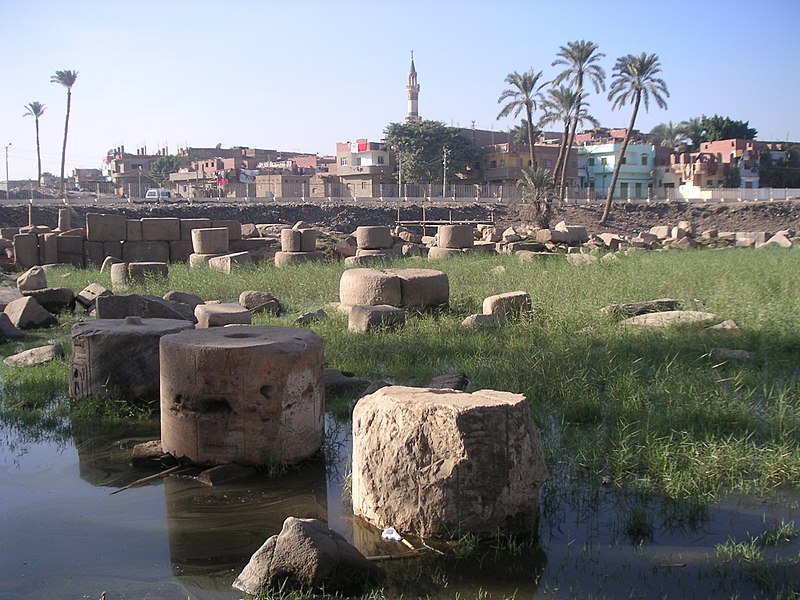
Memphis
ancient capital of Inebu-hedj, Egypt
Uruk
Uruk, the archeological site known today as Warka, was an ancient city in the Near East or West Asia, located east of the current bed of the Euphrates River, on an ancient, now-dried channel of the river in Muthanna Governorate, Iraq. The site lies 93 kilometers (58 miles) northwest of ancient Ur, 108 kilometers (67 miles) southeast of ancient Nippur, and 24 kilometers (15 miles) northwest of ancient Larsa.

Sirmium
Sirmium was a city in the Roman province of Pannonia, located on the Sava river, on the site of modern Sremska Mitrovica in the Vojvodina autonomous province of Serbia. First mentioned in the 4th century BC and originally inhabited by Illyrians and Celts, it was conquered by the Romans in the 1st century BC and subsequently became the capital of the Roman province of Pannonia Inferior. In 293 AD, Sirmium was proclaimed one of the four capitals of the Roman Empire. It was also the capital of the Praetorian prefecture of Illyricum and of Pannonia Secunda. The site is protected as an archaeologic

Gamzigrad
Gamzigrad (, ) is an archaeological site, spa resort, and UNESCO World Heritage Site of Serbia, located south of the Danube river, in the city of Zaječar. It is the location of the ancient Roman complex of palaces and temples Felix Romuliana (), built by Emperor Galerius in Dacia Ripensis. The main area covers .
The gate area.|thumb
thumb|Mosaic of Greek god Dionysus.
Ruins of East Gate.|thumb
Palace one.|thumb
Utica
archaeological site in Tunisia
%2004.jpg)
Tipasa
Tipasa, sometimes distinguished as Tipasa in Mauretania, was a colonia in the Roman province Mauretania Caesariensis, nowadays called Tipaza, and located in coastal central Algeria. Since 1982, it has been declared by UNESCO a World Heritage Site. It was declared a World Heritage Site in danger in 2002, but was removed from the danger list in 2006 following conservation efforts.

Berytus
Berytus (; ; ; ; ), briefly known as Laodicea in Phoenicia (; ) or Laodicea in Canaan from the 2nd century to 64 BC, was the ancient city of Beirut (in modern-day Lebanon) from the Roman Republic through the Roman Empire and Early Byzantine period/late antiquity. Berytus became a Roman colonia that would be the center of Roman presence in the Eastern Mediterranean shores south of Anatolia.
Madauros
Madauros (Madaurus, Madaura) was a Roman-Berber city and a former diocese of the Catholic Church in the old state of Numidia, in present-day Algeria. It had one of the oldest universities, The University of Madaurus is often considered one of the earliest, if not the oldest, centers of higher learning in North Africa and the first in Africa, dating back to the Roman era (around 75 BC to 2nd century AD).

Anemurium
thumb|right|290px
Anemurium (), also called Animurium, is an ancient city whose ruins, now called Eski Anamur or Anemuryum, are close to the modern Turkish city of Anamur. It was in the Roman province of Cilicia, later Isauria, and was situated near a high promontory (Cape Anamur) that marks the southernmost point of Asia Minor, only 64 km from Cyprus. In the Middle Ages, it was called Stallimur.
Laodicea
Hellenistic coastal city, the modern Latakia
Rapidum
Rapidum was a Roman settlement and fort located in Mauretania Caesariensis, nearly 100 km south of Icosium (Algiers).
Roman Carthage
city of Ancient Rome