
File:Montage_ville_de_Carthage.png · Wikimedia Commons · See Wikimedia Commons
Carthage
Sign in to saveAlso known as Carthago, Colonia Julia Carthago
thumb|upright=1.8|right|The layout of the Punic city-state Carthage, before its fall in 146 BC Carthage (, '''') was an ancient city in Northern Africa, on the eastern side of the Lake of Tunis in what is now Tunisia. Carthage was one of the most important trading hubs of the Ancient Mediterranean and one of the most affluent cities of the classical world. It became the capital city of the civilization of Ancient Carthage and later Roman Carthage.
Carthage was an ancient city in what is now Tunisia that served as one of the most important trading centers and wealthy cities of the ancient Mediterranean world. It functioned as the capital of the Carthaginian civilization and later came under Roman control before falling in 146 BC.
AI-generated from the Wikipedia summary — may contain errors.
Key facts
- Ancient site.name
- Carthage
- Ancient site.image
- Montage ville de Carthage.png
- Ancient site.caption
- Top: Carthage Saint-Louis Cathedral, Malik-ibn Anas Mosque. Middle: Carthage Palace. Bottom: Baths of Antoninus, Amphitheatre of Carthage (all items from left to right).
- Ancient site.map_type
- Tunisia
- Ancient site.map_size
- 250
- Ancient site.region
- Tunis Governorate
- Ancient site.designation1
- WHS
- Ancient site.designation1_date
- 1979 (3rd session)
- Ancient site.designation1_type
- Cultural
- Ancient site.designation1_criteria
- ii, iii, vi
- Ancient site.designation1_number
- 37
- Ancient site.designation1_free1name
- Region
- Ancient site.designation1_free1value
- North Africa
via Wikipedia infobox
Described at
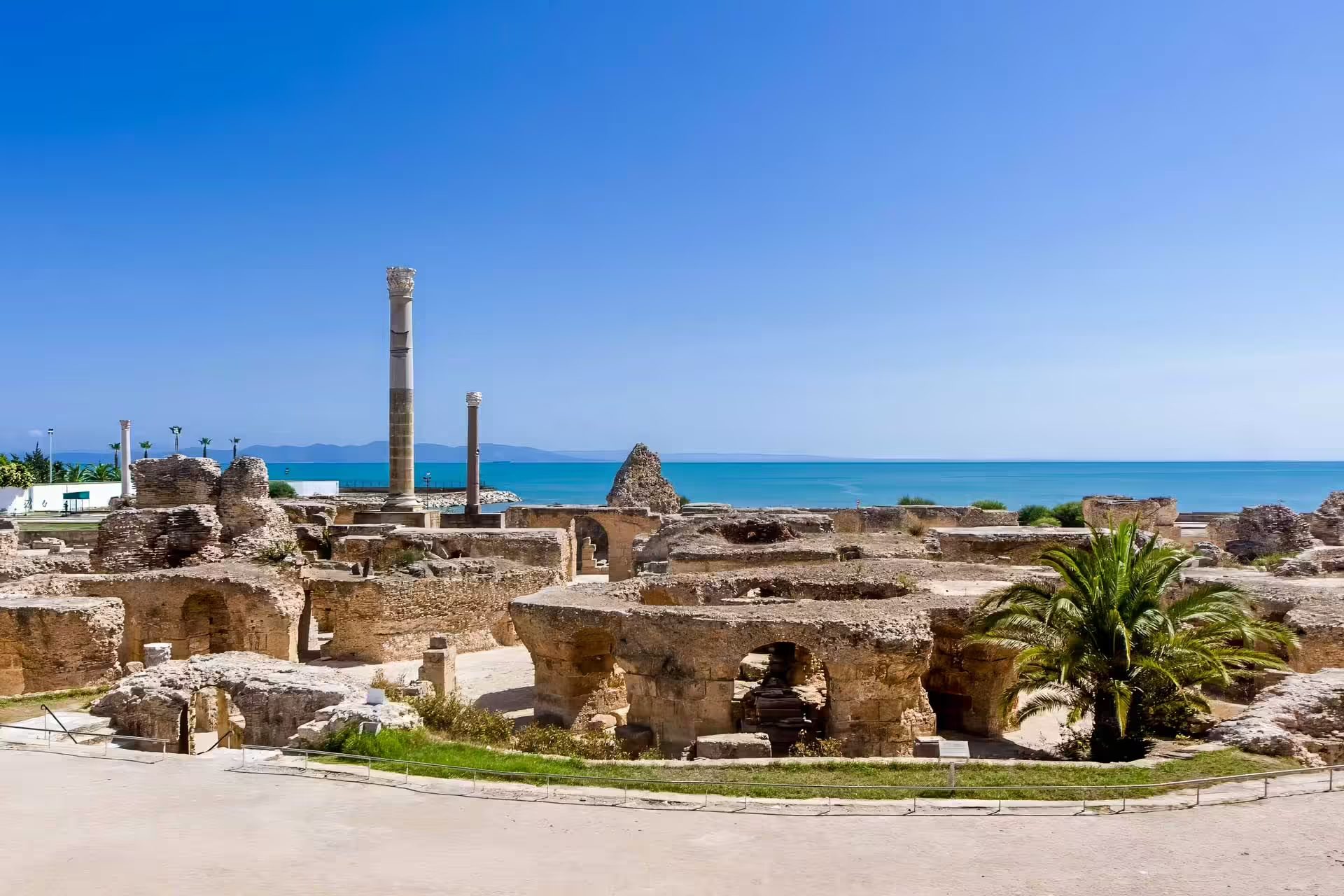
Kartágo: Carthago delenda est - Tunisko - PlaceMania
Túžba Rimanov zničiť Kartágo viedla k jeho pádu. Toto bývalé obchodné centrum sa stalo ikonou histórie, inšpiráciou pre román "Salambo" a pohrebiskom svojej slávy.
placemania.sk →Kartágo musí byť zničené. Pamätné slová pripisované Katónovi Staršiemu sa až groteskne odráža neskrotná túžba Rimanov rozdrviť svojho odvekého rivala. Pri pohľade na ruiny starovekého Kartága, roztrúsené po celom Tunise, je ťažké predstaviť si veľmoc, ktorá nedala Rimanom spať a niekoľko storočí vládla Stredomoriu. Pre inšpiráciu je najlepšie prečítať si román Gustava Flauberta Salambo . Spisovateľ sa ponoril do štúdia antických textov a zostal v Tunise, aby nasal jeho atmosféru. Jeho príbeh rozpráva o vzbure žoldnierov v službách Kartágincov počas prvej púnskej vojny. Hoci autor píše v duchu romantizmu a čitateľovi predkladá zmyselný obraz Orientu, v súlade s dobovými trendmi, udalosti zodpovedajú skutočnosti. Román opisuje osudy mesta počas vojny. Historik Strabón opísal Kartágo ako “kotviacu loď”. Tento obraz je vzhľadom na geografickú polohu mesta, založeného na polostrove v roku 814 pred n. l., celkom výstižný. Je takmer celé obklopené morom a jazerami, s kontinentom ho spája len šija. História mesta je úzko spätá s vodou, najmä so Stredozemným morom, ktoré bolo stredobodom antického sveta. V 19. storočí už vyplienené mesto nemalo nič zo svojej niekdajšej slávy. Na predpokladanom mieste smrti francúzskeho kráľa Ľudovíta IX. počas ôsmej križiackej výpravy bola postavená robustná katedrála, ktorá sa dnes trochu stráca medzi zvyškami hradieb zatienených cyprusmi. Výhľad odkazuje na všadeprítomný ruch súčasného Tunisu. Na nasatie atmosféry starobylej fénickej obchodnej stanice sa lepšie hodia staré mapy… alebo čítanie Flauberta. Zakladateľ projektu PlaceMania.sk a zodpovedá za jeho obsah, technické fungovanie a dlhodobý rozvoj. Cestovné zápisky na webe vychádzajú z vlastnej skúsenosti z ciest; faktografické záznamy o miestach vznikajú kombináciou verejných zdrojov, automatizovaného spracovania dát a redakčného overovania. Zameriava sa na netradičné lokality, ich historický a geografický kontext a menej známe súvislosti. Things to do near Kartágo: Carthago delenda est, Archaeological Site of Carthage, Carthage, قرطاج, Karthago, Cartago, Cartagine, Kartagina, Archeologické nálezisko, Historické miesto, Historická pamiatka, Site archéologique de Carthage, Tunis, Tunisia, تونس, Tunisko. Find tours, guided tours, local activities, attractions, tickets, excursions, sightseeing, day trips and travel experiences nearby. Coordinates: 36.8540616, 10.332765. Tento kostol z 19. storočia bol postavený pre sicílskych prisťahovalcov, prežil druhú svetovú vojnu a dnes stojí na skládke odpadu. Úžasná oáza v tvare basketbalového koša zásobuje vodou jedno z najposvätnejších tuniských miest. Pozrite si ďalšie zaujímave miesta vo svete, ktoré stoja za naplánovanie ďalšej cesty. Táto antická korintská prilba je jediným národným pokladom Južnej Kórey západného pôvodu. Tento kostol z 19. storočia bol postavený pre sicílskych prisťahovalcov, prežil druhú svetovú vojnu a dnes stojí na skládke odpadu. Chcete vidieť ďalšie úchvatné miesta ako Kartágo: Carthago delenda est? Nájdeš ich u nás na mape. Objav s nami ďalšie úžasné miesta na zemi.
Excerpt from a page describing this subject · 18,079 chars · not written by Vinony
Wikidata facts
- Demonym
- cartaxineso
- Participant in
- Pyrrhic War
- Country
- Fatimid Caliphate
- Located in
- Exarchate of Africa
- Continent
- Africa
- Body of water
- Mediterranean Sea
- Capital of
- Ancient Carthage
- Image
- Tunisie Carthage Ruines 08.JPG
- Significant event
- Battle of Carthage
Show 8 more facts
- inception
- 0801-00-00
- dissolved, abolished or demolished date
- 0146-00-00
- native label
- 𐤒𐤓𐤕𐤇𐤃𐤔𐤕
- Commons category
- Carthage
- on focus list of Wikimedia project
- Wikipedia:Vital articles/Level/4
- twinned administrative body
- Uccle
- P12749
- Carl Mayer
Sources (8)
via Wikidata · CC0
~57 min read
Encyclopedic overview
21 sectionsContents
- Etymology
- Topography, layout, and society
- Overview
- Layout
- Society and local economy
- Ancient history
- Punic Republic
- Salting legend
- Roman Carthage
- Islamic period
- Modern history
- Archaeological sites
- Commune
- Trade and business
- Constitution of state
- Contemporary sources
- See also
- Notes
- References
- Bibliography
- External links
thumb|upright=1.8|right|The layout of the Punic city-state Carthage, before its fall in 146 BC Carthage (, '') was an ancient city in Northern Africa, on the eastern side of the Lake of Tunis in what is now Tunisia. Carthage was one of the most important trading hubs of the Ancient Mediterranean and one of the most affluent cities of the classical world. It became the capital city of the civilization of Ancient Carthage and later Roman Carthage.
The city developed from a Phoenician colony into the capital of a Punic empire which dominated large parts of the Southwest Mediterranean during the first millennium BC. The legendary Queen Elissa, Alyssa or Dido, originally from Tyre, is regarded as the founder of the city, though her historicity has been questioned. In the myth, Dido asked for land from a local tribe, which told her that she could get as much land as an oxhide could cover. She cut the oxhide into strips and laid out the perimeter of the new city. As Carthage prospered at home, the polity sent colonists abroad as well as magistrates to rule the colonies.
Excerpted from Wikipedia’s “Carthage” article, available under the CC BY-SA 4.0 licence.
Gallery (52)
On the map
3 mapped locations
Available in 106 languages
- Español
- Français
- Deutsch
- 中文
- Русский
- Português
- Italiano
- العربية
- हिन्दी
- Afrikaans
- Albanian
- Aramaic
- Armenian
- Asturian
- azb
- Azerbaijani
- Bahasa Indonesia
- Bambara
Show 87 more
- Bangla
- Basque
- be_x_old
- Belarusian
- Bosnian
- Breton
- Burmese
- Catalan
- cdo
- Cebuano
- Croatian
- Czech
- Danish
- Egyptian Arabic
- Esperanto
- Estonian
- Faroese
- Filipino
- Finnish
- Galician
- Georgian
- Greek
- Hebrew
- Hungarian
- hyw
- Icelandic
- Ido
- Interlingua
- Interlingue
- Irish
- Javanese
- Kara-Kalpak
- Kazakh
- Kurdish
- Kyrgyz
- Ladino
- Latin
- Latvian
- Lingua Franca Nova
- Lithuanian
- Low German
- Luxembourgish
- Macedonian
- Malagasy
- Malay
- Maltese
- Mingrelian
- Mongolian
- Moroccan Arabic
- Neapolitan
- Nederlands
- Norwegian
- Norwegian Nynorsk
- Old English
- Pashto
- Polski
- Sardinian
- Scots
- Serbian
- Serbian (Latin)
- Sicilian
- simple
- skr
- Slovak
- Slovenian
- Svenska
- Swahili
- Tachelhit
- Tamil
- Tibetan
- Tiếng Việt
- Türkçe
- Tyap
- Ukrainian
- Urdu
- Uzbek
- Venetian
- Waray
- Welsh
- Western Frisian
- Wu Chinese
- zh_classical
- zh_min_nan
- zh_yue
- فارسی
- ไทย
- 한국어
via Wikidata sitelinks · CC0