Category
page 1Presidency of John F. Kennedy

Cold War
1947–1991 tension between the Soviet Union and the United States and their respective allies

Vietnam War
The Vietnam War was an armed conflict in Vietnam, Laos, and Cambodia fought between North Vietnam and South Vietnam and their allies. North Vietnam was supported by the Soviet Union and China, while South Vietnam was supported by the United States and other anti-communist nations. The conflict was the second of the Indochina wars and a proxy war of the Cold War between the Soviet Union and US. The Vietnam War was one of the postcolonial wars of national liberation, a theater in the Cold War, and a civil war, with civil warfare a defining feature from the outset. Direct US military involvement escalated from 1965 until US forces were withdrawn in 1973. The fighting spilled into the Laotian and Cambodian civil wars, which ended with all three countries becoming communist in 1975.

Cuban Missile Crisis
October 1962 confrontation between the Soviet Union, Cuba and the United States

space race
competition to explore space between USA and USSR

Assassination of John F. Kennedy
John F. Kennedy, the 35th president of the United States, was assassinated while riding in a presidential motorcade through Dealey Plaza in Dallas, Texas, on Friday, November 22, 1963. Kennedy was in the vehicle with his wife Jacqueline, Texas governor John Connally, and Connally's wife Nellie, when he was fatally shot from the nearby Texas School Book Depository by Lee Harvey Oswald, a former U.S. Marine. The motorcade rushed to Parkland Memorial Hospital, where Kennedy was pronounced dead about 30 minutes after the shooting; Connally was also wounded in the attack but recovered. Vice President Lyndon B. Johnson was hastily sworn in as president two hours and eight minutes later aboard Air Force One at Dallas Love Field.
United States Agency for International Development
US government civilian foreign aid agency
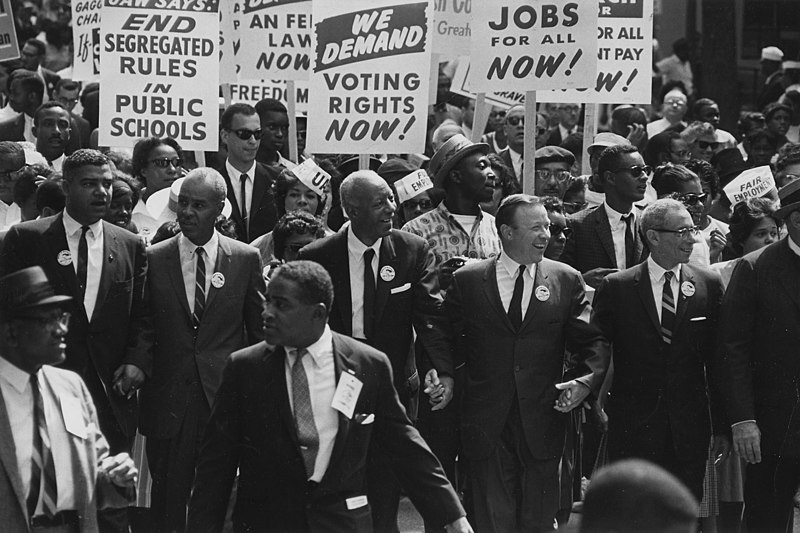
civil rights movement
1954–1968 U.S. nonviolent social movement

Presidential Medal of Freedom
The Presidential Medal of Freedom is the joint-highest civilian award of the United States, alongside the Congressional Gold Medal. It is an award bestowed by decision of the president of the United States to "any person recommended to the President for award of the Medal or any person selected by the President upon his own initiative", and was created to recognize people who have made "an especially meritorious contribution tothe security or national interests of the United States, or
world peace, or
cultural or other significant public or private endeavors."
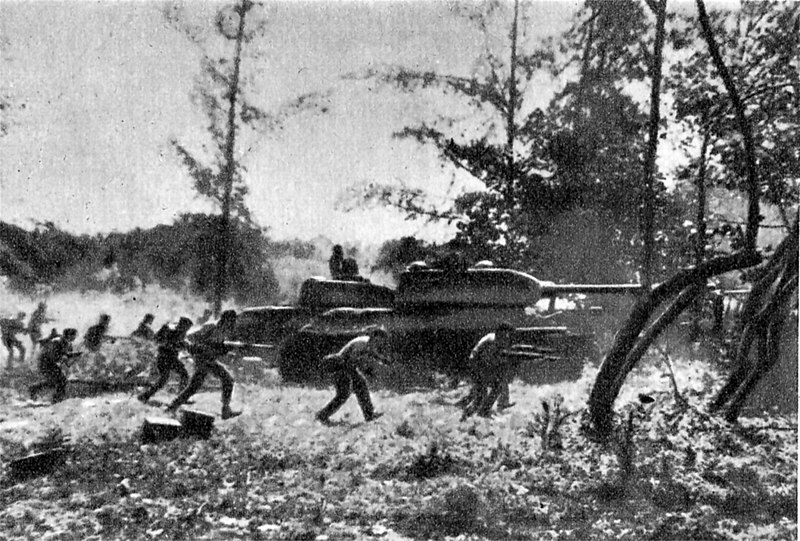
Bay of Pigs invasion
failed landing operation of Cuba in 1961

Ich bin ein Berliner
speech given by John F. Kennedy in West Berlin in June 1963

Peace Corps
independent agency and volunteer program run by the United States Government
Partial Nuclear Test Ban Treaty
1963 limited test ban treaty
1960 United States presidential election
44th quadrennial U.S. presidential election
Moscow–Washington hotline
system that allows direct communication between the leaders of the United States and Russia
Cuban Project
CIA anti-Castro effort aka Operation Mongoose
Twenty-third Amendment to the United States Constitution
1961 amendment granting presidential electors to the District of Columbia
Krulak Mendenhall mission
US government mission to South Vietnam in 1963
Stand in the Schoolhouse Door
1963 protest against racial integration of schools in Alabama
We choose to go to the Moon
September 1962 speech by John F. Kennedy
Alliance for Progress
plan for economic cooperation between the USA and Latin America
inauguration of John F. Kennedy
44th United States presidential inauguration
Kennedy Doctrine
foreign policy doctrine of President John F. Kennedy
presidency of John F. Kennedy
35th presidential administration and cabinet of the USA (1961-1963)
Clean Air Act
United States federal law designed to control air pollution on a national level
Equal Pay Act of 1963
United States labor law abolishing wage disparity based on sex
Ole Miss riot of 1962
dispute over integration at University of Mississippi
Vienna summit
summit meeting in Vienna, Austria
flexible response
defense strategy implemented by John F. Kennedy in 1961 to address the Kennedy administration's skepticism of Dwight Eisenhower's New Look and its policy of massive retaliation
EXCOMM
right|thumb|250px|EXCOMM meeting in the White House Cabinet Room during the [[Cuban Missile Crisis on October 29, 1962]]
The Executive Committee of the National Security Council (commonly referred to as simply the Executive Committee or ExComm) was a body of United States government officials that convened to advise President John F. Kennedy during the Cuban Missile Crisis in 1962. It was composed of the regular members of the National Security Council, along with other men whose advice the President deemed useful during the crisis. EXCOMM was formally established by National Security Action M
Nassau Agreement
treaty negotiated between United States and United Kingdom 22 December 1962
Valachi hearings
1963 congressional hearings investigating organized crime and the Mafia
Cold War (1953–1962)
phase of the Cold War
New Frontier
progressive political term
Richard Paul Pavlick
American failed assassin (1887-1975)
Cold War (1962–1979)
phase of the Cold War between 1962–1979
Community Mental Health Act
1963 American law
Consolidation of the Cuban Revolution
period of Cuban history (1959–1970)