Category
page 1Taxa named by Antoine Laurent de Jussieu

Cucurbitaceae
The Cucurbitaceae ( ), also called cucurbits or the gourd family, are a plant family consisting of about 965 species in 101 genera. Some commonly cultivated cucurbits include:
Cucurbita – squash, pumpkin, zucchini (courgette), some gourds.
Lagenaria – calabash (bottle gourd) and other, ornamental gourds.
Citrullus – watermelon (C. lanatus, C. colocynthis), plus several other species.
Cucumis – cucumber (C. sativus); various melons and vines.
Momordica – bitter melon.
Luffa – commonly called 'luffa' or ‘luffa squash'; sometimes spelled loofah. Young fruits may be cooked; when fully ripened, th

Rubiaceae
Rubiaceae () is a family of flowering plants, commonly known as the coffee, madder, or bedstraw family. It consists of terrestrial trees, shrubs, lianas, or herbs that are recognizable by simple, opposite leaves with interpetiolar stipules and sympetalous actinomorphic flowers. The family contains about 14,200 species in about 615 genera, which makes it the fourth-largest angiosperm family by number of species. Rubiaceae has a cosmopolitan distribution; however, the largest species diversity is concentrated in the tropics and subtropics. Economically important genera include Coffea, the source

Cyperaceae
The Cyperaceae () are a family of graminoid (grass-like), monocotyledonous flowering plants known as sedges. The family contains around 5,500 described species in about 90 generathe largest being the "true sedges" (Carex), with over 2,000 species.

Vitaceae
The Vitaceae, also called the grape family, is a family of flowering plants that has 20 genera and around 910 known species in its monotypic order Vitales, including common plants such as grapevines (Vitis spp.) and Virginia creeper (Parthenocissus quinquefolia). The family name is derived from the genus Vitis.

Papaveraceae
The Papaveraceae (), informally called the poppy family, are an economically important family of about 42 genera and approximately 775 known species of flowering plants in the order Ranunculales. The family is cosmopolitan, occurring in temperate and subtropical climates (mostly in the northern hemisphere) like Eastern Asia as well as California in North America. It is almost unknown in the tropics. Most are herbaceous plants, but a few are shrubs and small trees. The family currently includes two groups that have been considered to be separate families: Fumariaceae and Pteridophyllaceae. Papa
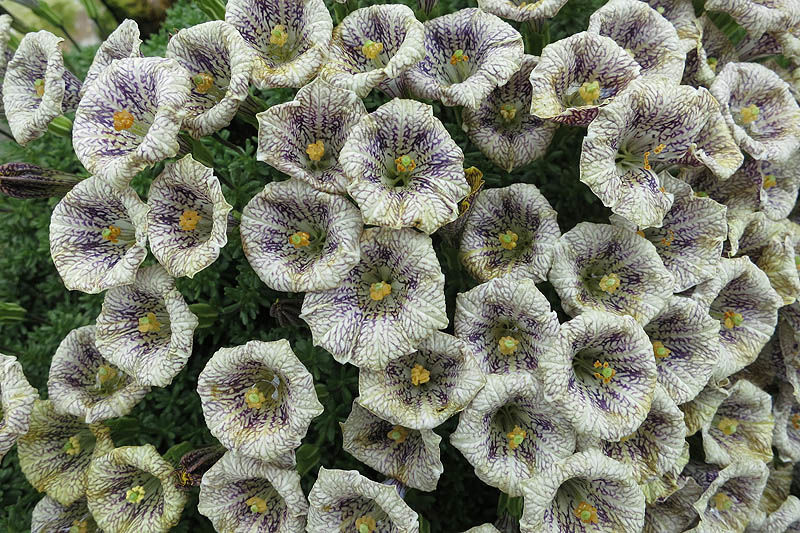
Petunia
Petunia is a genus of 20 species of flowering plants of South American origin. The popular flower of the same name derived its epithet from the French, which took the word , 'tobacco', from a Tupi–Guarani language. A tender perennial plant, most of the varieties seen in gardens are hybrids (Petunia × atkinsiana, also known as Petunia × hybrida).
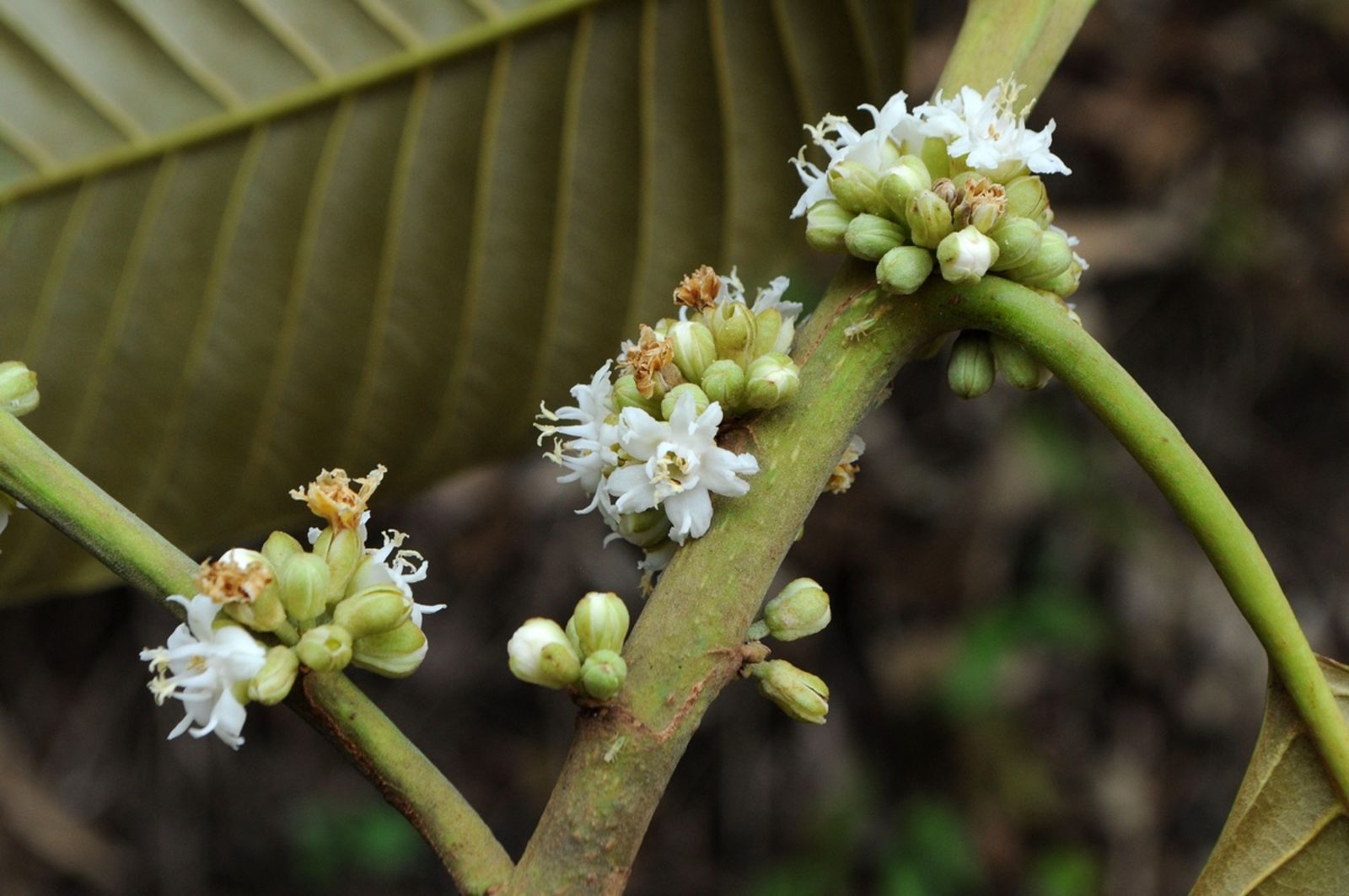
Sapotaceae
thumb|right|240px|Madhuca longifolia var. latifolia in [[Narsapur, Medak district, India]]
The Sapotaceae are a family of flowering plants belonging to the order Ericales. The family includes approximately 800 species of evergreen trees and shrubs in about 65 genera (35–75, depending on generic definition). Their distribution is pantropical.

Annonaceae
The Annonaceae are a family of flowering plants consisting of trees, shrubs, or rarely lianas commonly known as the custard apple family or soursop family. With 108 accepted genera and about 2400 known species, it is the largest family in the Magnoliales. Several genera produce edible fruit, most notably Annona, Anonidium, Asimina, Rollinia, and Uvaria. Its type genus is Annona. The family is concentrated in the tropics, with few species found in temperate regions. About 900 species are Neotropical, 450 are Afrotropical, and the remaining are Indomalayan.

Hydrocharitaceae
Hydrocharitaceae is a flowering plant family which includes 14 accepted genera and a total of ca 135 known species (Christenhusz & Byng 2016). The family holds a number of species of aquatic plants, including tape-grass, the well-known Canadian waterweed, and frogbit.

Hypericaceae
Hypericaceae is a plant family in the order Malpighiales, comprising six to nine genera and up to 700 species, and commonly known as the '''St. John's wort family'. Members are found throughout the world apart from extremely cold or dry habitats. Hypericum and Triadenum'' occur in temperate regions but other genera are mostly tropical.
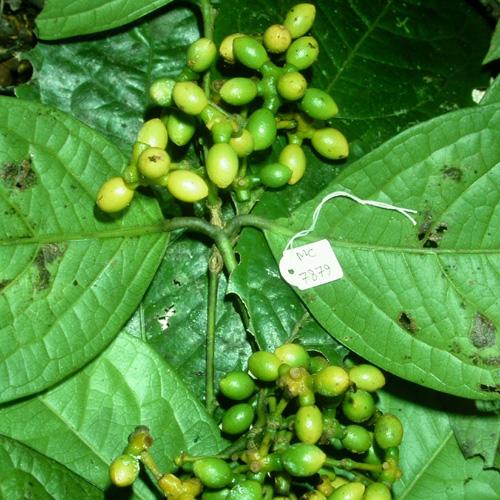
Monimiaceae
The Monimiaceae is a family of flowering plants in the magnoliid order Laurales. It is closely related to the families Hernandiaceae and Lauraceae. It consists of shrubs, small trees, and a few lianas of the tropics and subtropics, mostly in the southern hemisphere. The largest center of diversity is New Guinea, with about 75 species. Lesser centres of diversity are Madagascar, Australia, and the neotropics. Africa has one species, Xymalos monospora, as does Southern Chile (Peumus boldus). Several species are distributed through Malesia and the southwest Pacific.

Phacelia
Phacelia (phacelia, scorpionweed, heliotrope) is a genus of about 200 species of annual or perennial herbaceous plants in the family Hydrophyllaceae, native to North and South America. California is particularly rich in species with over 90 recorded in the region.

Tecoma
Tecoma is a genus of seven species of shrubs or small trees in the trumpet vine family, Bignoniaceae. They are native to the Americas, ranging from the extreme southern United States through Central America and the Antilles south through Andean South America to northern Argentina. Even though Tekoma trees are not originally native to Malaysia, they have adapted extremely well to the Southeast Asian climate, especially in Malaysia. Over time, they have become a familiar and iconic seasonal sight in many Malaysian towns and cities. Because of their stunning pink blooms that resemble cherry bloss
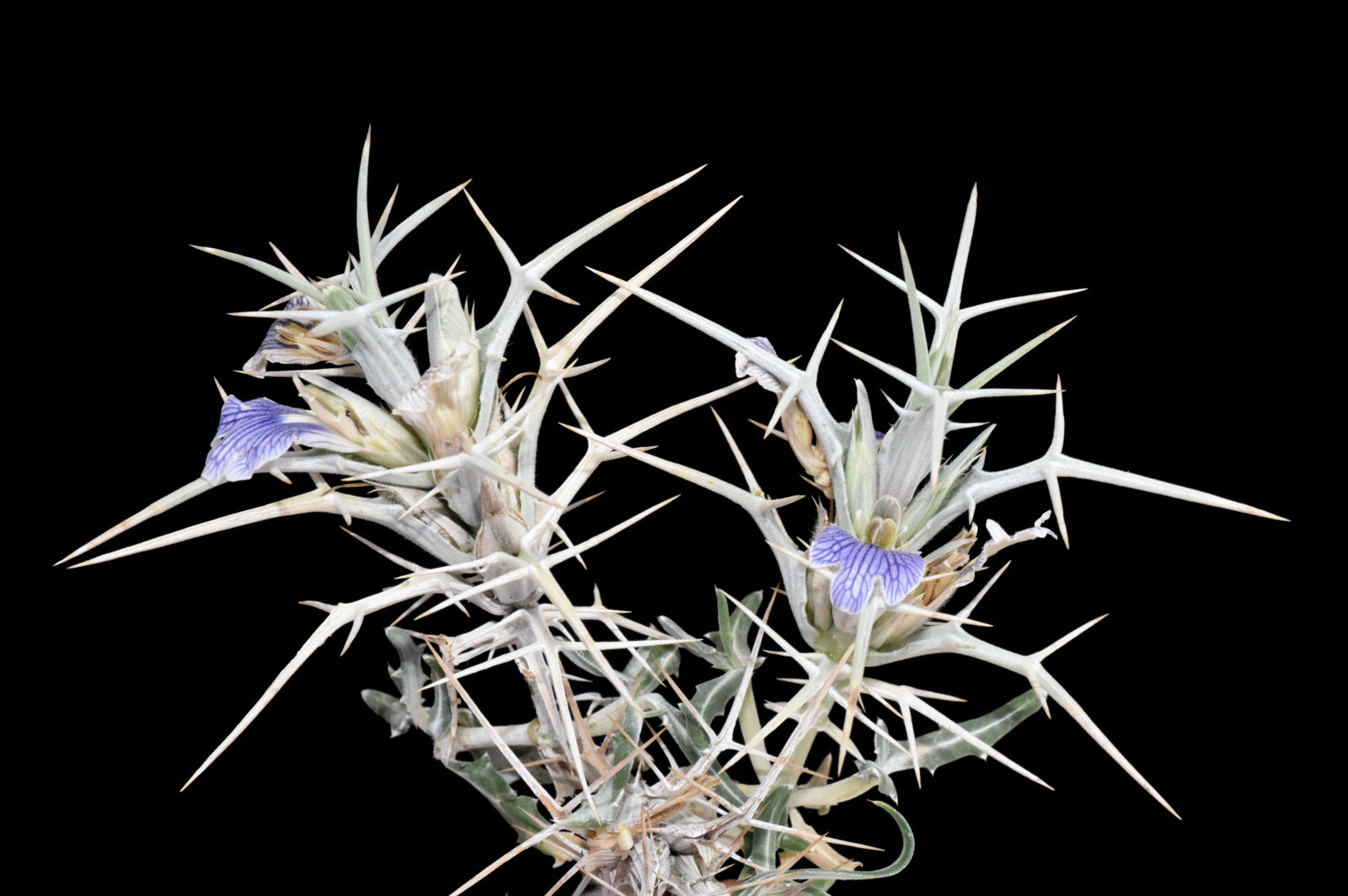
Blepharis
Blepharis is a genus of plant in family Acanthaceae. It contains around 128 species found in seasonally dry to arid habitats from Africa through Arabia to Southeast Asia. In section Acanthodium, there are 13–15 species that use the carbon fixation pathway. Phylogenetic analysis suggests that this pathway evolved up to three times independently in the genus over the last five million years.
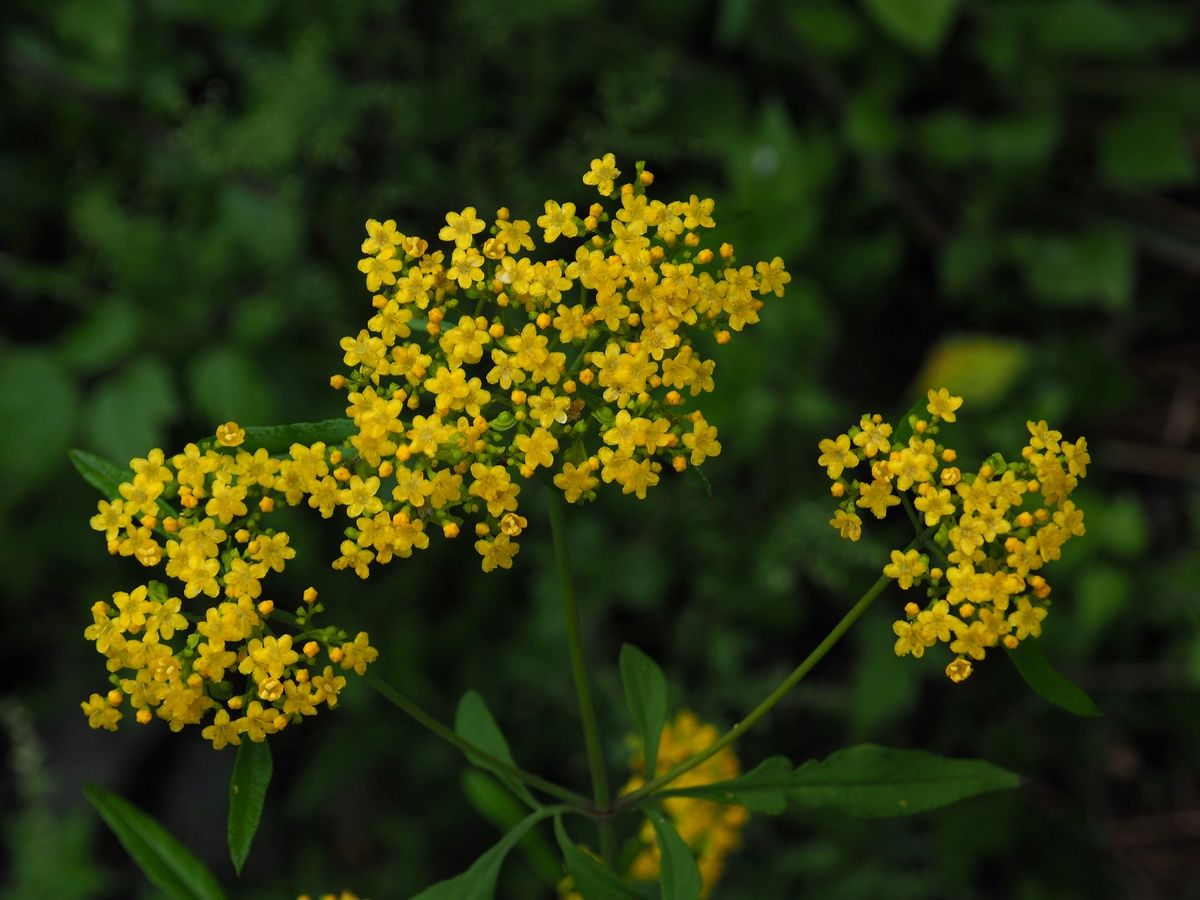
Patrinia
Patrinia is a genus of herbaceous plants in the honeysuckle family (Caprifoliaceae). It includes 14 species native to grassy mountain habitats from eastern European Russia to China, Siberia, Korea, and Japan. These are unassuming clump-forming perennial plants having thin, erect stems with few leaves and bearing a terminal inflorescence with yellow or white flowers.
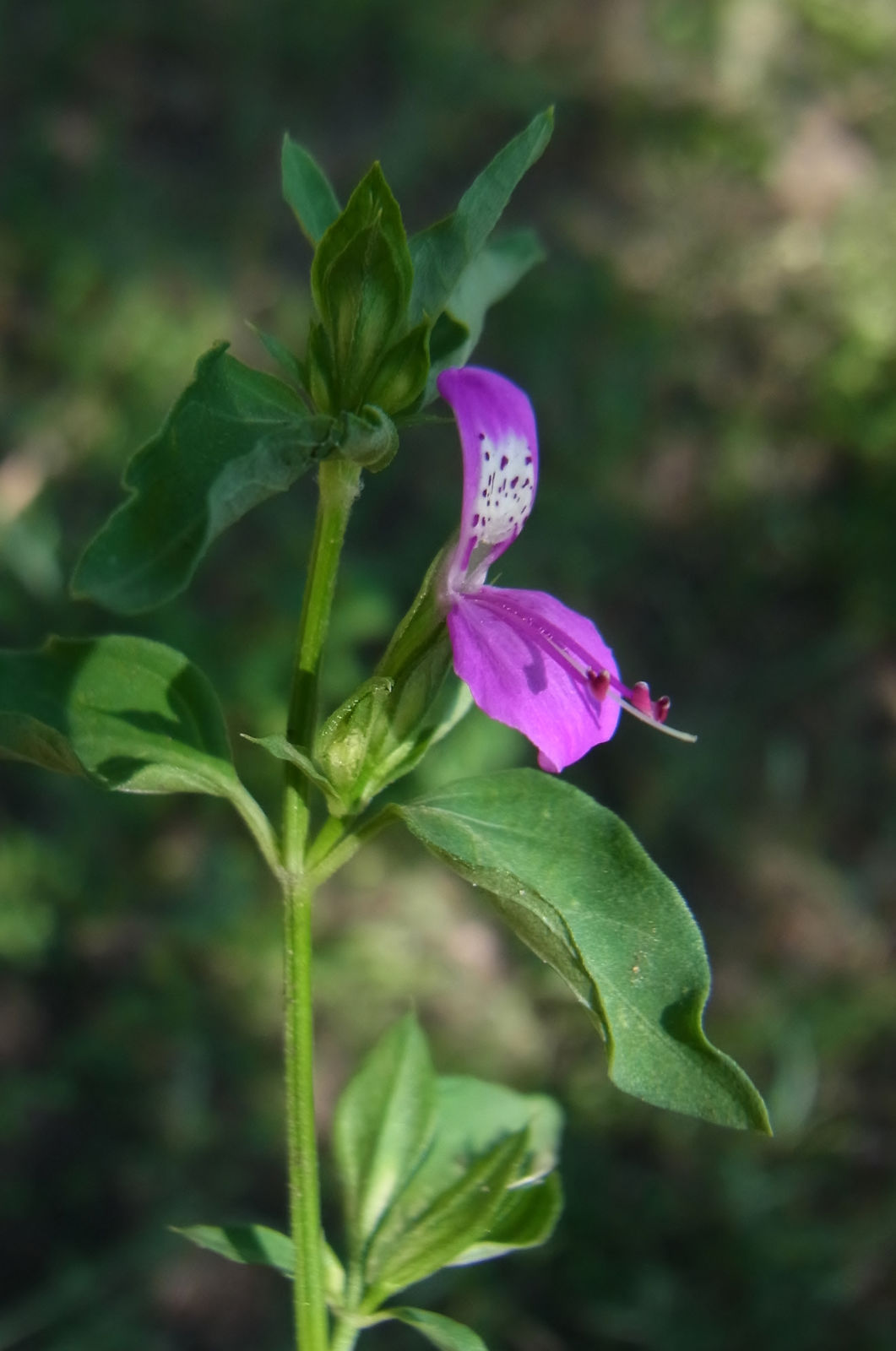
Dicliptera
Dicliptera is a genus of flowering plants in the bear's breeches family, Acanthaceae. It includes 223 species native to the tropics and subtropics worldwide. Well-known synonyms include Peristrophe and Dactylostegium.
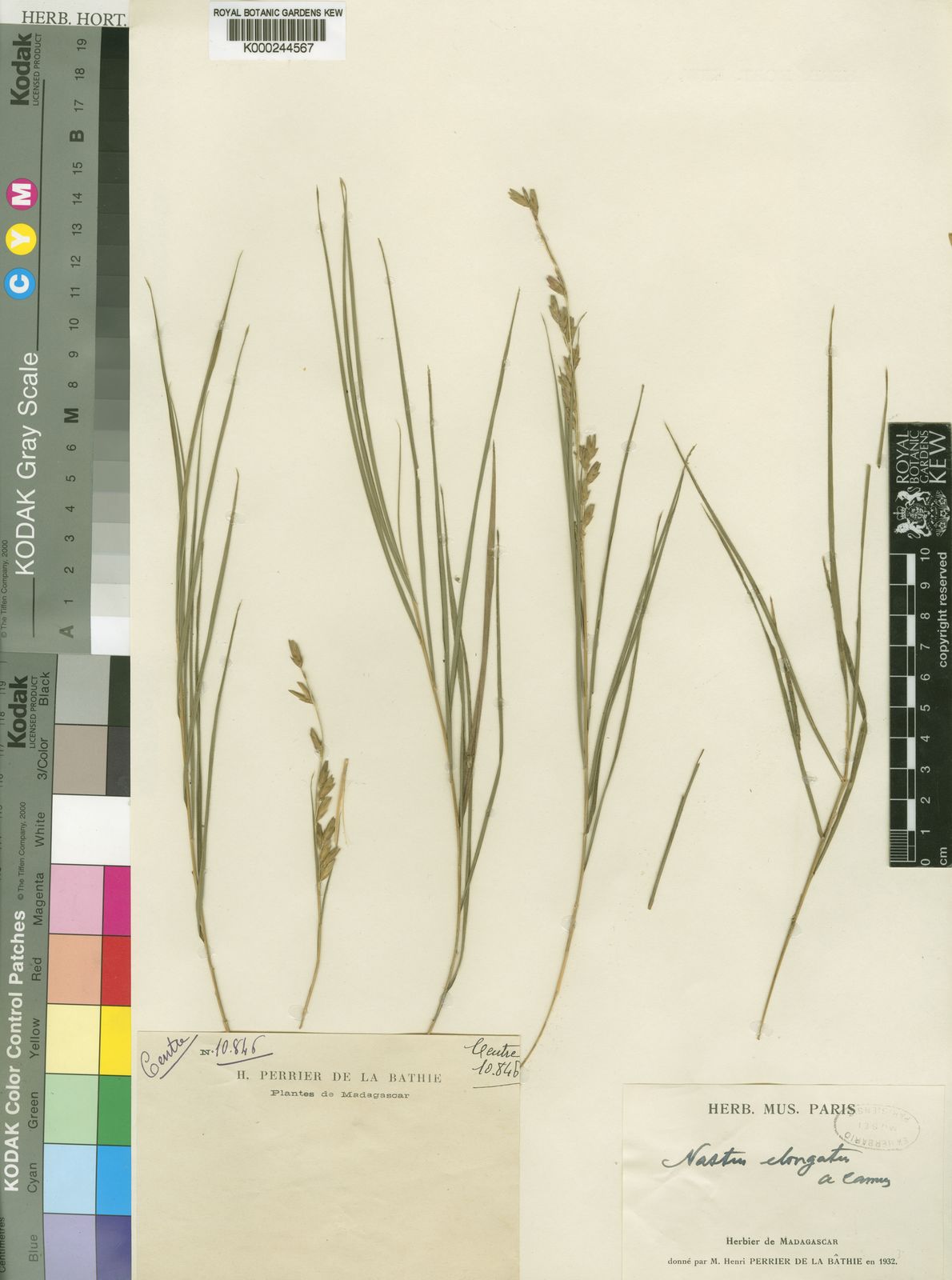
Nastus
Nastus is a genus of slender, erect, scrambling or climbing bamboos in the grass family Poaceae. It includes 12 species native to Madagascar and Réunion.
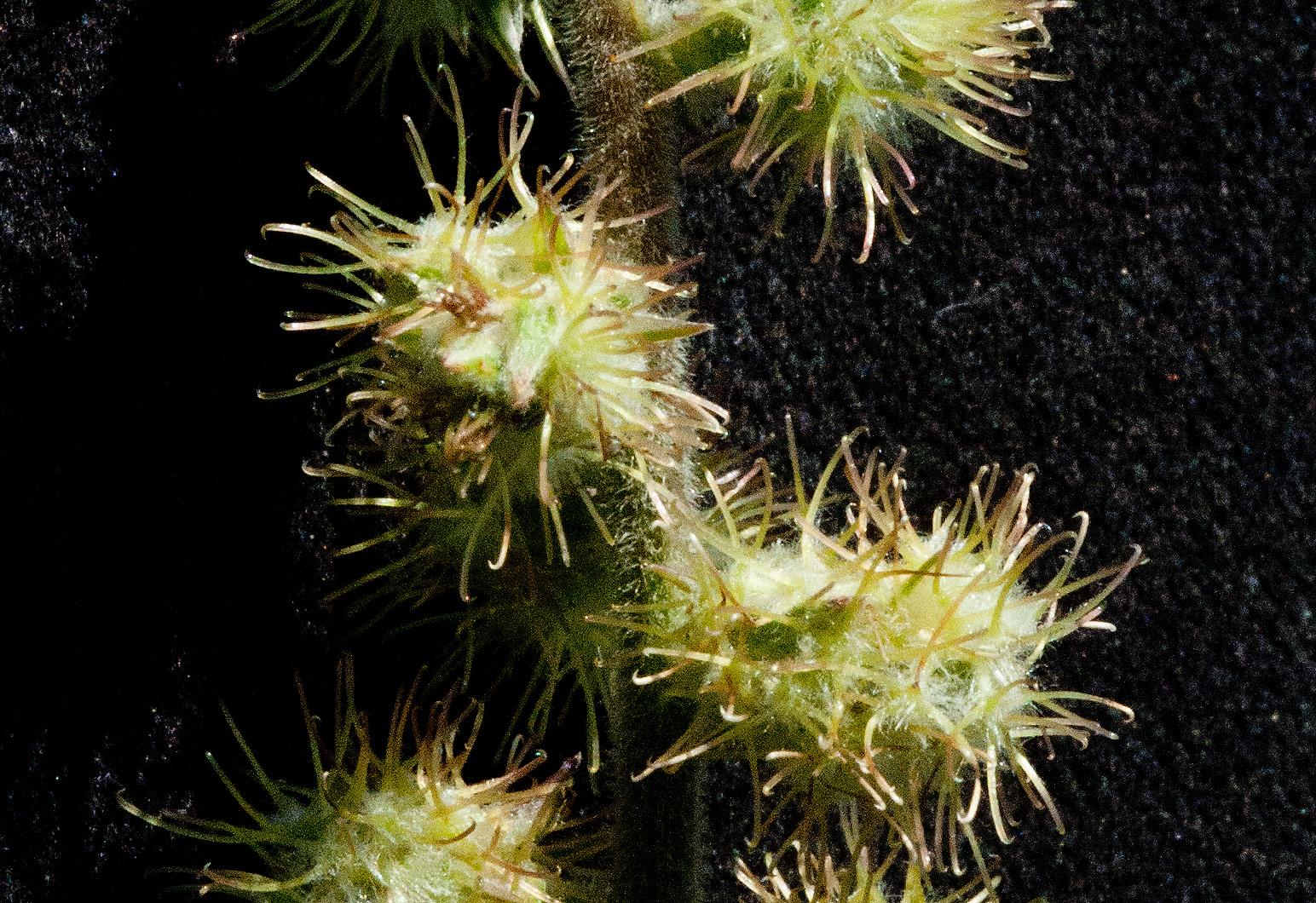
Pupalia
thumb | right | Pupalia lappacea
Pupalia is a genus of flowering plants belonging to the family Amaranthaceae.
Badula
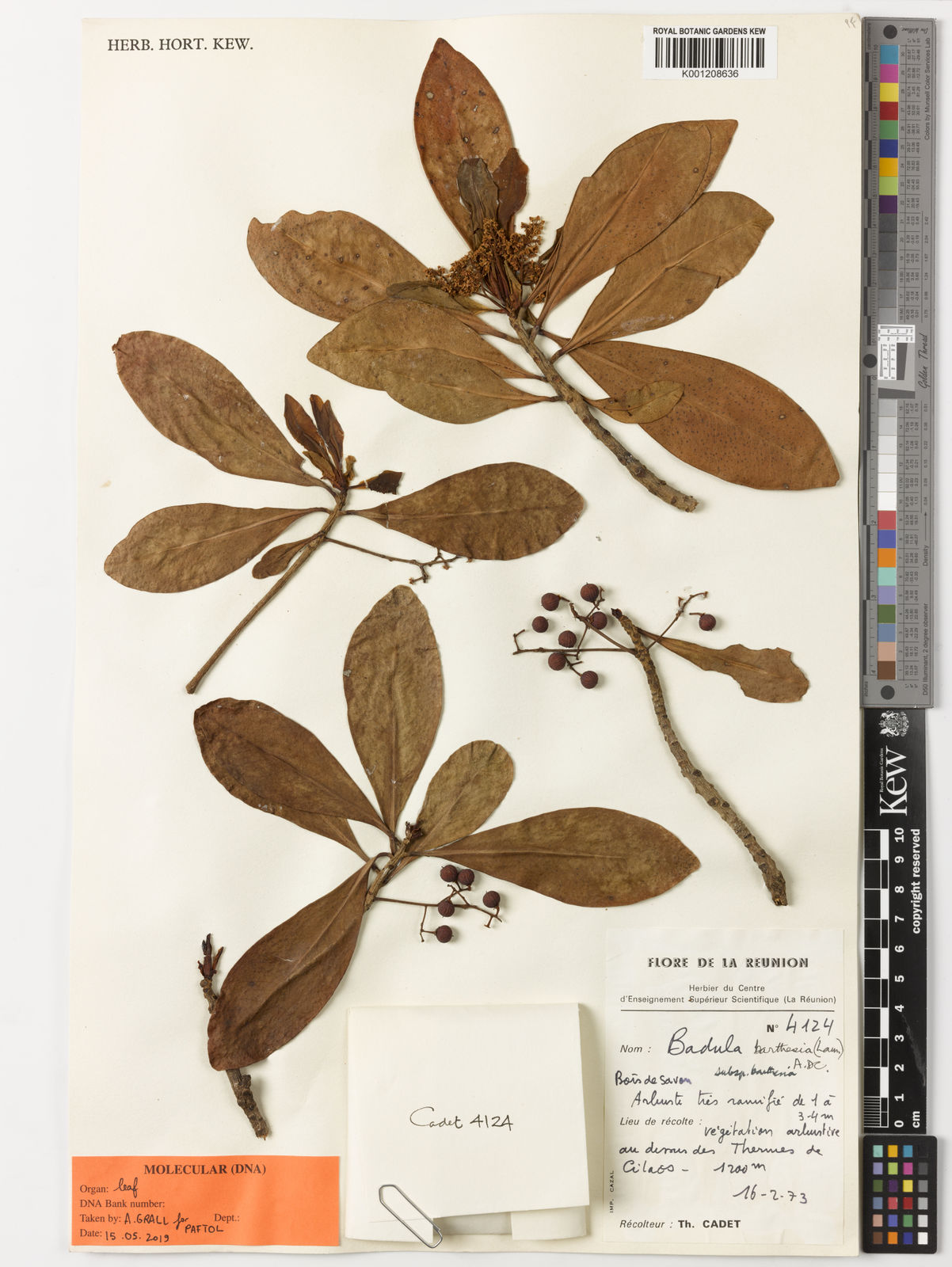
Badula is a small genus of 14–17 species of tropical shrubs, placed formerly in the plant family Myrsinaceae (now subsumed in Primulaceae as subfamily Myrsinoideae). The genus is largely endemic to Madagascar and the Mascarene Islands.
Polycardia
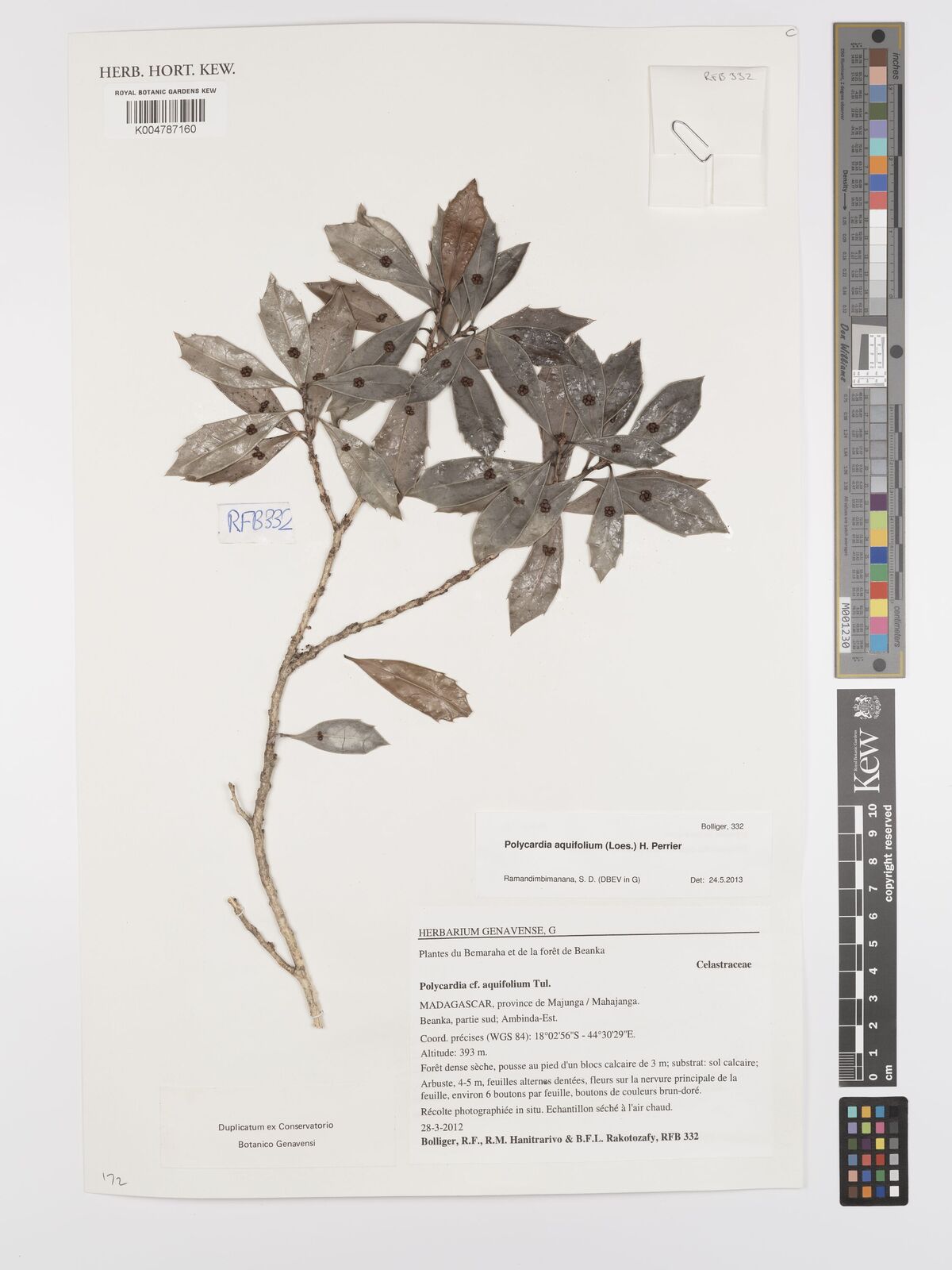
Polycardia is a genus of flowering plants belonging to the family Celastraceae. Its native range is Madagascar.
Lagetta
Lagetta is a genus of trees in the family Thymelaeaceae. It was described by Antoine Laurent de Jussieu, and was published in 1789 by Jean-Baptiste Lamarck. It is found on the Caribbean islands.
Boopis
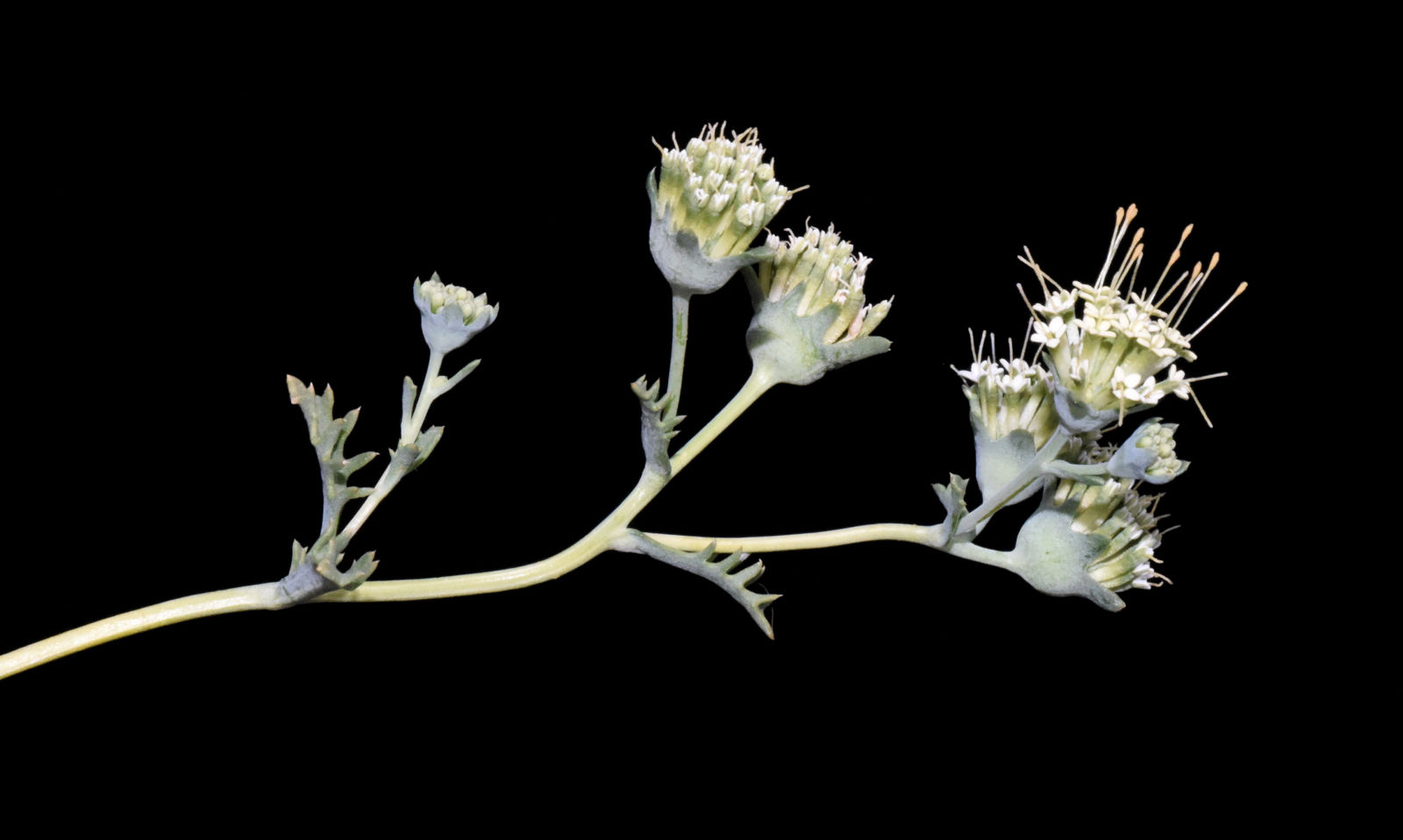
Boopis is a genus of flowering plants in the family Calyceraceae, which includes eight species native to Chile and western Argentina.

Leionema diosmeum
species of plant