Category
page 1Taxa named by Johann Georg Wagler

Anseriformes
Anseriformes is an order of birds also known as waterfowl that comprises 178 living species of birds in three families: Anhimidae (three species of screamers), Anseranatidae (the magpie goose), and Anatidae, the largest family, which includes the other 174 species of waterfowl, among them the ducks, geese, and swans. Most modern species in the order are highly adapted for an aquatic existence at the water surface. With the exception of screamers, males have penises, a trait that has been lost in the Neoaves, the clade consisting of all other modern birds except the galliformes and paleognaths.
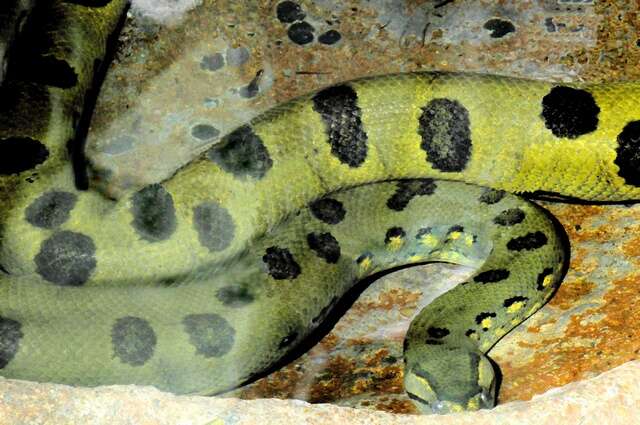
Anaconda
Anacondas or water boas are a group of large boas of the genus Eunectes. They are a semiaquatic group of snakes found in tropical South America. Three to five extant and one extinct species are currently recognized, including one of the largest snakes in the world, E. murinus, the green anaconda.
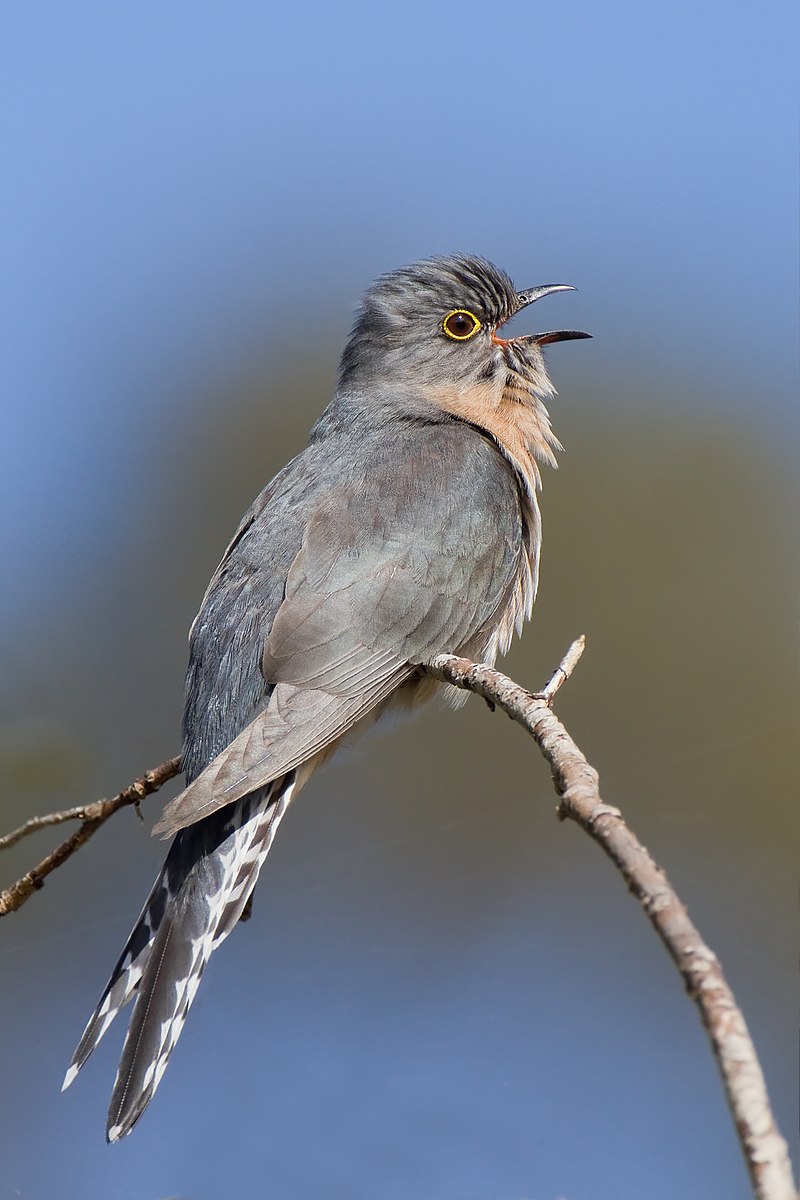
Cuculiformes
REDIRECT Cuckoo

Intermediate Egret
species of bird

Spix's Macaw
species of bird
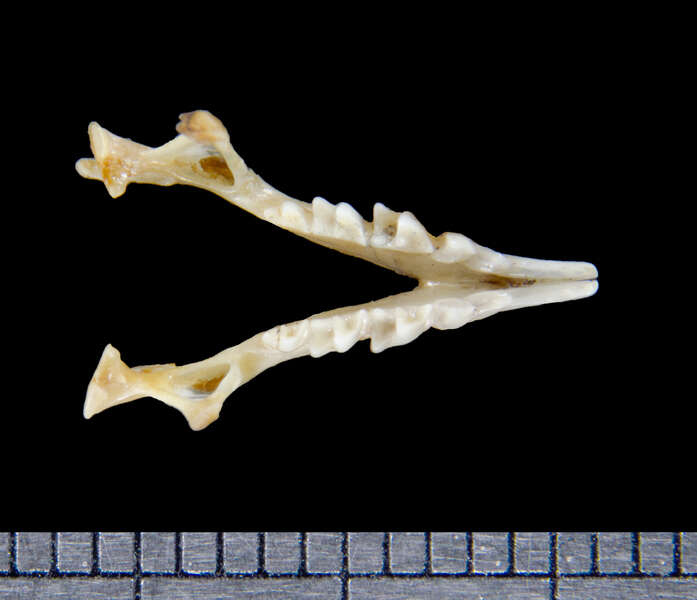
Crocidura
The genus Crocidura is one of nine genera of the shrew subfamily Crocidurinae. Members of the genus are commonly called white-toothed shrews or musk shrews, although both also apply to all of the species in the subfamily. With over 180 species, Crocidura contains the most species of any mammal genus. The genus name Crocidura comes from Ancient Greek κροκύς (krokús), meaning "piece of wool", and οὐρά (ourá), meaning "tail", and thus, "woolly tail", referring to the species' tails being covered in short hairs interspersed with longer ones.
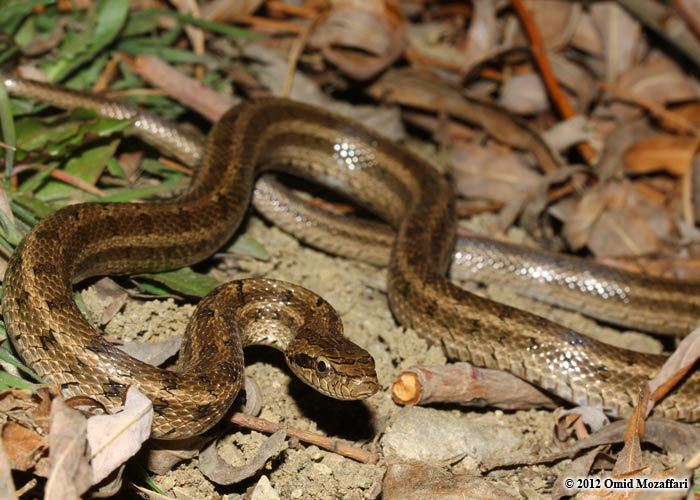
Elaphe
Elaphe is a genus of snakes in the family Colubridae. Elaphe is one of the main genera of the rat snakes, which are found in many regions of the northern hemisphere. Elaphe species are medium to large constrictors by nature.

Franklin's Gull
species of bird
Cylindrophis
The Cylindrophiidae are a monotypic family of secretive, semifossorial, non-venomous snakes containing the genus Cylindrophis found in southeastern Asia. These are burrowing snakes and most have a banded pattern on the belly. Currently, 14 species are recognized, all with no subspecies. Common names include Asian pipesnakes and Asian cylinder snakes.

Lepus callotis
species of mammal

Sri Lanka Blue Magpie
species of bird

Dasypeltis
Dasypeltis is a genus of snakes, also known commonly as egg-eating snakes or egg-eaters, in the subfamily Colubrinae of the family Colubridae. The genus is one of only two taxonomic groups of snakes known to have adapted to feed exclusively on eggs (the other being the genus Elachistodon). Dasypeltis are non-venomous and found throughout the continent of Africa, primarily in forested or wooded habitats that are also home to numerous species of birds.

Pinnated Bittern
species of bird
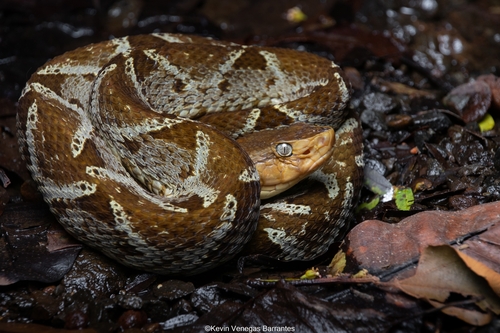
Bothrops
Bothrops is a genus of highly venomous pit vipers endemic to the Neotropics. The generic name, Bothrops, is derived from the Greek words , , meaning , and , , meaning or , together an allusion to the heat-sensitive loreal pit organs. Members of this genus are responsible for more human deaths in the Americas than any other group of venomous snakes. Currently, 48 species are recognized.

Red-throated Wryneck
species of bird
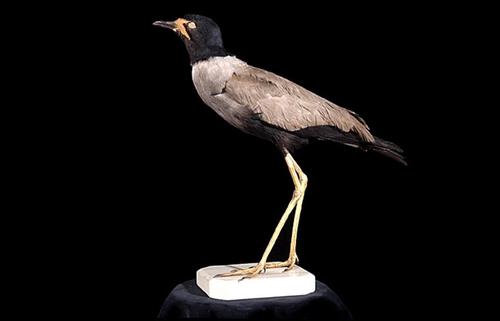
Javan Lapwing
species of bird

Plain Chachalaca
species of bird
.jpg)
Dendrobates
Dendrobates is a genus of poison dart frogs native to Central and South America. It once contained numerous species, but most originally placed in this genus have been split off into other genera such as Adelphobates, Ameerega, Andinobates, Epipedobates, Excidobates, Oophaga, Phyllobates and Ranitomeya (essentially all the brightly marked poison dart frogs; i.e. excluding the duller genera in the family like Colostethus and Hyloxalus), leaving only five large to medium-sized species in the genus Dendrobates. All the other genera used to be grouped in with Dendrobates because it was previously

Small-billed Tinamou
species of bird
Podarcis
Podarcis is a genus of lizards, known colloquially as wall lizards, in the family Lacertidae. Its members look very similar to lizards of the genus Lacerta, to which they were considered to belong until the 1970s. While similar externally and ecologically, Podarcis form a distinct group differing from Lacerta by the construction of the skull and the hemipenis, and by the processes of the caudal vertebrae. Wall lizards are native to Europe and northern Africa, and most species are restricted to the Mediterranean region. Wall lizards diversified and hybridized during the Messinian salinity crisi

Penelope purpurascens
species of bird

Black agouti
species of mammal

Golden-fronted Woodpecker
species of bird

Micrurus
Micrurus is a genus of venomous coral snakes of the family Elapidae.

Chaco Chachalaca
species of bird

Junco
thumb|A pink-sided dark-eyed junco in Elizabeth, Colorado

Mountain pygmy owl
species of bird
Cnemidophorus
Cnemidophorus is a genus of lizards in the family Teiidae. Species in the genus Cnemidophorus are commonly referred to as whiptail lizards or racerunners. The genus is native to South America, Central America, and the West Indies.

Charmosyna
Charmosyna is a genus of parrots in the family Psittaculidae. The four currently recognized species inhabit moist forests on the island of New Guinea.

Pseudechis
thumb|Phylogenetic tree of species within Pseudechis. The NT dwarf form is an undescribed species. After Maddock et al. 2017.
Pseudechis is a genus of venomous snakes in the family Elapidae. It contains the group of elapid species commonly referred to as the black snakes. Species of Pseudechis are found in every Australian state with the exception of Tasmania, and some species are found in Papua New Guinea. They inhabit a variety of habitat types, from arid areas to swampland. All species are dangerous (Pseudechis signifying "like a viper", Greek echis) and can inflict a potentially lethal bit

white-crested guan
species of bird

Bear cuscus
genus of marsupial bears from Indonesia
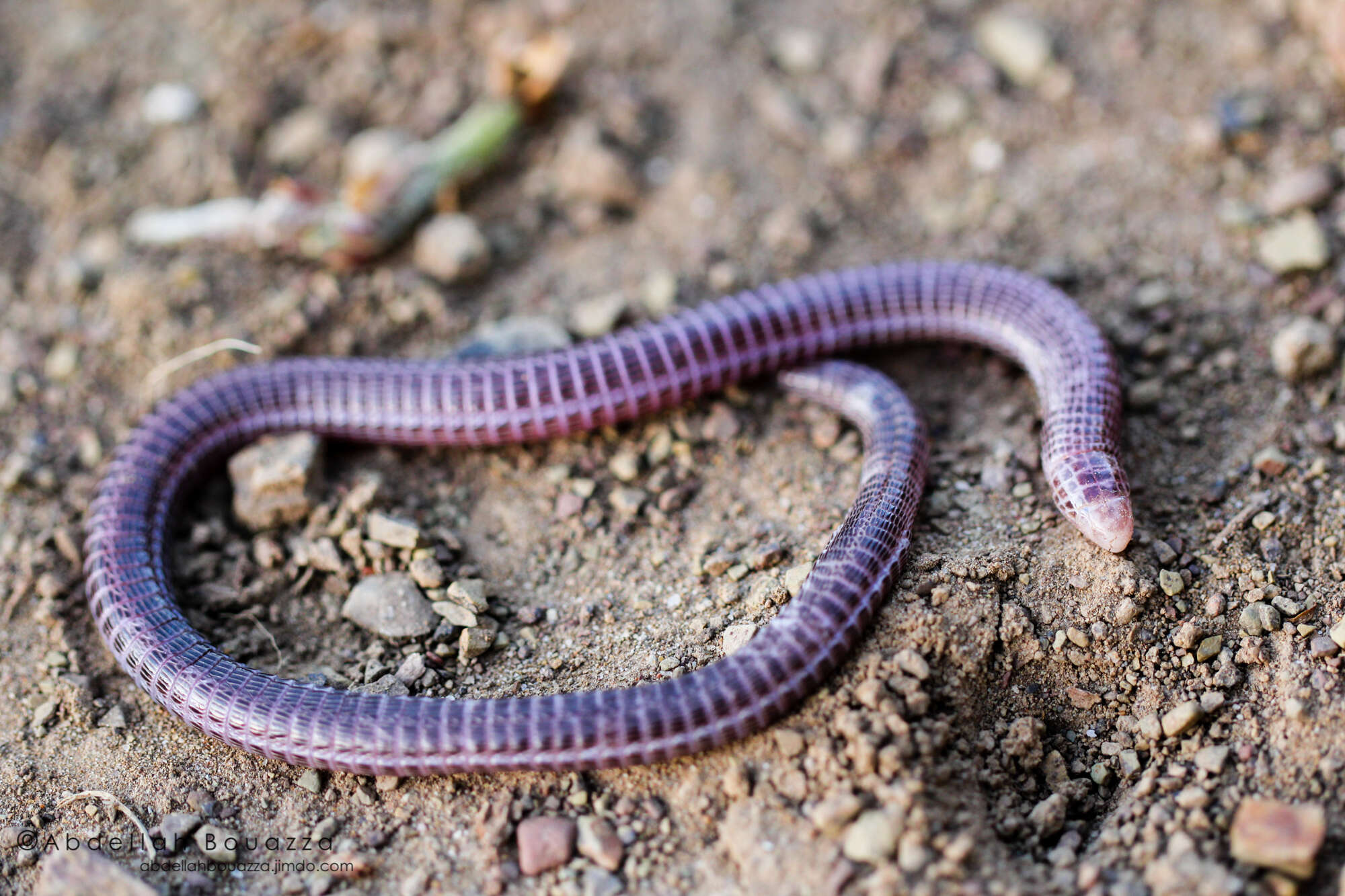
Blanus
Blanus, also known as worm lizards, are a genus of amphisbaenians found in the Mediterranean region of Europe and North Africa. Like other amphisbaenians, Blanus species are specialized for a subterranean existence, with long, slender bodies, reduced limbs, and rudimentary eyes. Their skulls are powerfully constructed, allowing them to push through soil to create a burrow. Their jaws are well-developed, with large, recurved teeth and a pair of canine-like teeth in the upper jaw.

double-striped thick-knee
species of bird

Diglossa
Diglossa is a genus in the family Thraupidae. They are commonly known as flowerpiercers because of their habit of piercing the base of flowers to access nectar that otherwise would be out of reach. This is done with their highly modified bill, which is typically upswept, with a hook at the tip. Most members of the genus Diglossa are found in highlands of South America (especially the Andes), but two species are found in Central America.
thumb|Rusty flowerpiercer, female, piercing the base of an [[Abutilon flower to access the nectar inside.]]
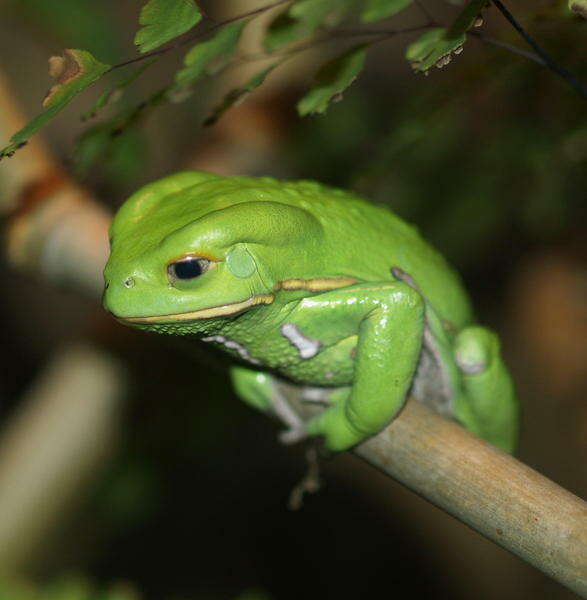
Phyllomedusa
Phyllomedusa is a genus of tree frogs in the subfamily Phyllomedusinae found in tropical and subtropical South America (south to northern Argentina) and Panama. It has 16 recognised species.

Black-rumped agouti
species of mammal
Platanista
genus of freshwater dolphin

Whiskered Screech Owl
species of bird
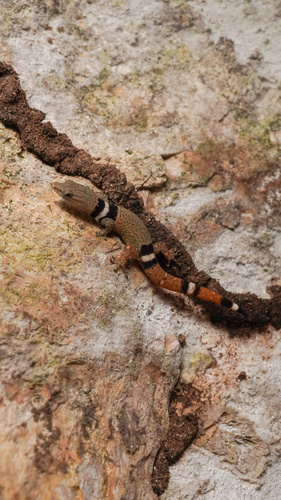
Sphaerodactylus
Sphaerodactylus is a genus of geckos from the Americas that are distinguished from other Gekkota by their small size, by their round, rather than vertical, eye pupils, and by each digit terminating in a single, round adhesive pad or scale, from which their name (Sphaero = round, dactylus = finger) is derived. All species in this genus are rather small, but two species, S. ariasae and S. parthenopion, are tiny, and – with a snout-vent length of about – the smallest reptiles in the world.

Epicrates
genus of snakes

Chestnut-coloured Woodpecker
species of bird
.jpg)
Atlapetes
Atlapetes is a genus of birds in the New World sparrow family Passerellidae. The species are mainly found in montane forest from Mexico to northwestern Argentina.

Red-billed Pigeon
species of bird

Causus
Causus is a genus of vipers found only in sub-Saharan Africa. It is a group considered to be among the most primitive members of the family Viperidae based on head scalation, oviparity, venom apparatus, and because they have round pupils. However, this is contradicted by recent molecular studies. Seven species are currently recognized as being valid. They are commonly known as night adders. Like all other vipers, they are venomous.

Zamenis
Zamenis is a genus of Old World non-venomous snakes in the subfamily Colubrinae of the family Colubridae. Species of the genus Zamenis are native to Europe and the Middle East.

West Mexican Chachalaca
species of bird

Ladder-backed Woodpecker
species of bird

Podocnemis
Podocnemis is a genus of aquatic turtles, commonly known as South American river turtles, in the family Podocnemididae. The genus consists of six extant species occurring in tropical South America. Four additional species are known only from fossils. These turtles have pig-like noses but are not closely related to the pig-nosed turtle.

Telescopus
Telescopus, the Old World catsnakes, is a genus of 12 species of mildly venomous opisthoglyphous snakes in the family Colubridae.

Tawny-throated Dotterel
species of bird

Spix's yellow-toothed cavy
species of mammal
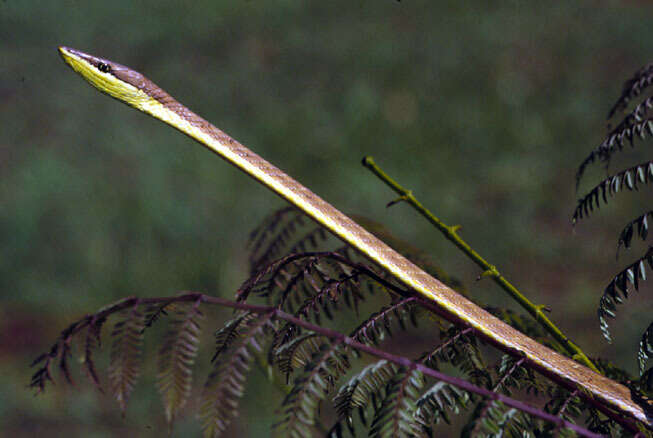
Oxybelis
Oxybelis is a genus of colubrid snakes, endemic to the Americas, which are commonly known as vine snakes. Though similar in appearance to the Asian species of vine snakes of the genus Ahaetulla, they are not closely related, and are an example of convergent evolution.

Cavia fulgida
species of rodents
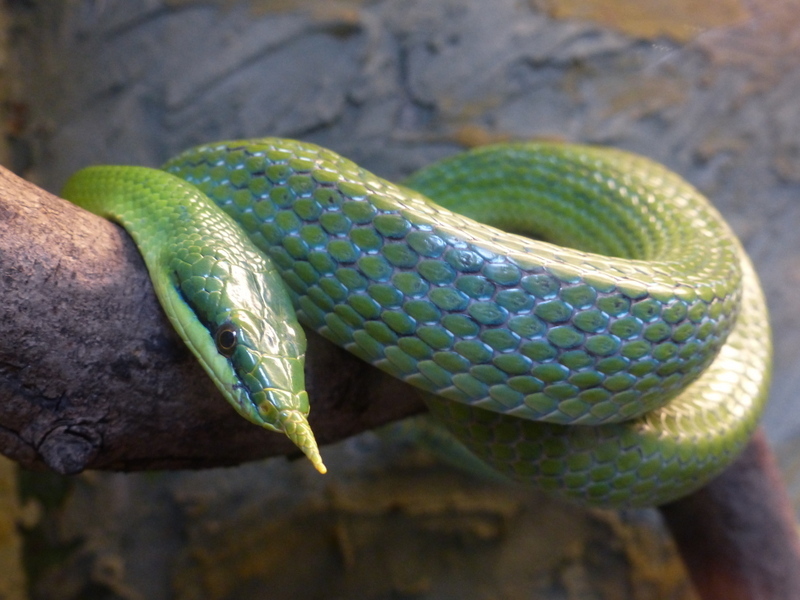
Gonyosoma
Gonyosoma is a genus of snakes in the family Colubridae. The genus is endemic to South Asia.

Tropidolaemus
Tropidolaemus, the temple pit vipers, is a genus of pit vipers in the subfamily Crotalinae of the family Viperidae. Member species are native to southern India and Southeast Asia. Five species are recognised as being valid, and none of these species has subspecies.
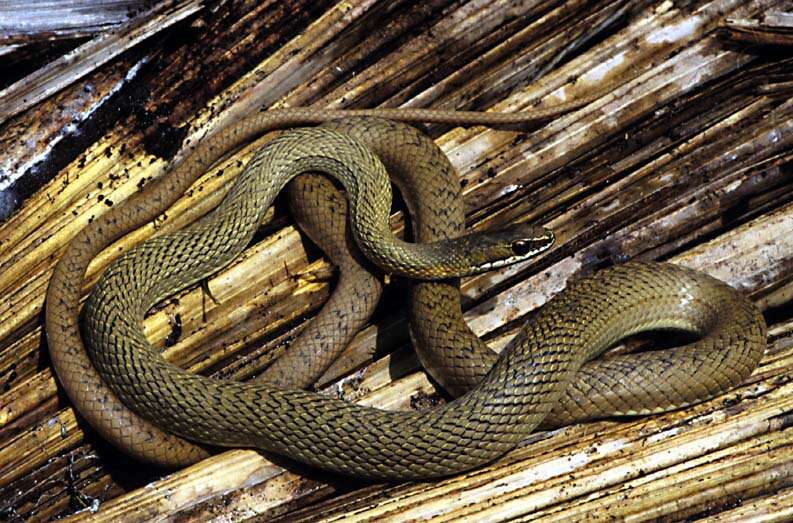
Philodryas
Philodryas is a genus of colubrid snakes endemic to South America, commonly called green snakes.

Pseudis
Pseudis is a genus of South American frogs (swimming frogs) in the family Hylidae. They are often common and frequently heard, but easily overlooked because of their camouflage and lifestyle, living in lakes, ponds, marshes and similar waters with extensive aquatic vegetation, often sitting at the surface among plants or on floating plants, but rapidly diving if disturbed. Whereas the adults are medium-sized frogs, their tadpoles are large; in some species the world's longest.

Erythrolamprus
thumb|An adult Erythrolamprus typhlus
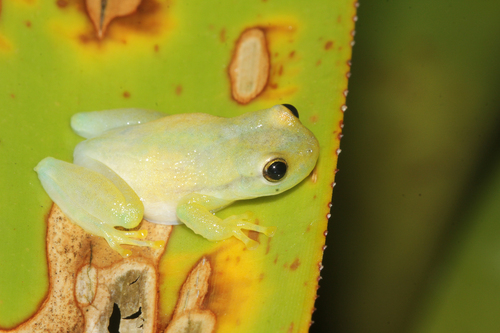
Phyllodytes
Phyllodytes is a genus of frogs (heart-tongued frogs) in the family Hylidae. It is endemic to eastern Brazil.