File:Cyrillic_letter_Fita.svg · Wikimedia Commons · See Wikimedia Commons
Also known as Fita
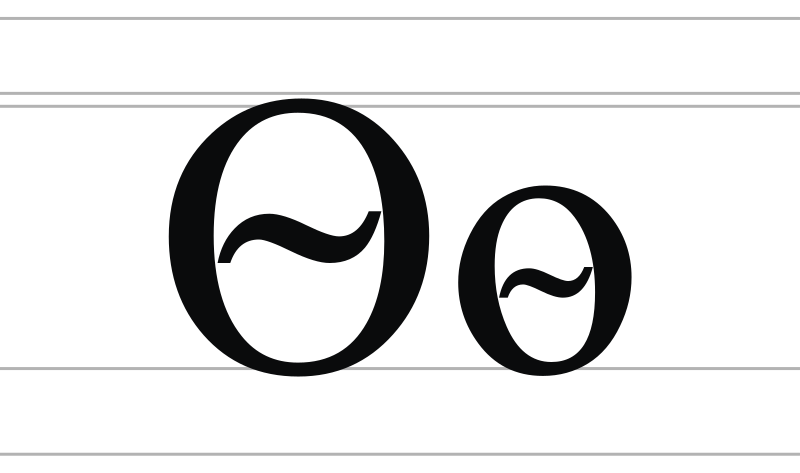
Fita (Ѳ ѳ; italics: Ѳ ѳ) is a letter of the Early Cyrillic alphabet. The shape and the name of the letter are derived from the Greek letter theta (Θ θ). In the ISO 9 system, Ѳ is romanized using F grave accent (F̀ f̀).
Key facts
- Grapheme.letter
- Ѳ ѳ
- Grapheme.script
- Cyrillic
- Grapheme.type
- Alphabet
- Grapheme.typedesc
- ic
- Grapheme.name
- Fita /
- Grapheme.image
- Cyrillic letter Fita.svg
- Grapheme.imageclass
- skin-invert-image
- Grapheme.phonemes
- [], [], []
- Grapheme.number
- 9 (Cyrillic numerals)
- Grapheme.fam1
- 𐤈
- Grapheme.fam2
- Θ θ
- Grapheme.language
- Old Church Slavonic
- Grapheme.usageperiod
- –present
- Grapheme.unicode
- U+0472, U+0473
- Grapheme.alphanumber
- 43rd
via Wikipedia infobox
Wikidata facts
- Part of
- Cyrillic script
- Based on
- Θ/θ
- Image
- Cirila-ѳ-minuskla.svg
Show 4 more facts
- Unicode character
- ѳ
- Commons category
- Cyrillic Fita
- described by source
- Granat Encyclopedic Dictionary
- different from
- Ө
Sources (1)
via Wikidata · CC0
~3 min read
Encyclopedic overview
12 sectionsContents
- Shape
- Usage
- Old Russian and Church Slavonic
- Russian
- Other languages
- Romanian
- Aleut
- Related letters and other similar characters
- Computing codes
- See also
- References
- External links
Fita (Ѳ ѳ; italics: Ѳ ѳ) is a letter of the Early Cyrillic alphabet. The shape and the name of the letter are derived from the Greek letter theta (Θ θ). In the ISO 9 system, Ѳ is romanized using F grave accent (F̀ f̀).
In the Cyrillic numeral system, Fita has a numerical value of 9.
Excerpted from Wikipedia’s “Ѳ” article, available under the CC BY-SA 4.0 licence.