
File:Adam_Smith_The_Muir_portrait.jpg · Wikimedia Commons · See Wikimedia Commons
Adam Smith
Sign in to saveScottish moral philosopher and political economist (1723–1790)
OverviewAI-generated
Adam Smith was an economist, philosopher, and non-fiction writer from the Kingdom of Great Britain. Born in Kirkcaldy on June 5, 1723, he died in Edinburgh on July 17, 1790. He was educated at the University of Glasgow and Balliol College. His professional career included employment at the University of Edinburgh and the University of Glasgow. Smith’s fields of work encompassed economics, ethics, political philosophy, and economic theory.
He is the author of notable works including *The Theory of Moral Sentiments* and *The Wealth of Nations*. Smith received several awards, becoming a Fellow of the Royal Society, the Royal Society of Arts, and the Royal Society of Edinburgh. He was a member of the Royal Society and the Royal Society of Edinburgh. His work was influenced by François Quesnay. Smith has been described by sources such as the *Encyclopædia Britannica* 11th edition and the *Brockhaus and Efron Encyclopedic Dictionary*.
Synthesized by Vinony from 42 facts across 9 sources: Wikidata, Crossref, Open Library, MusicBrainz, Last.fm, Europeana Sparql, Wikiquote, Vinony collections, Vinony graph. Generated from structured data (not the Wikipedia text) and checked against those facts — may still contain errors.
Person · Open Library
- Born
- 16 Jun 1723
- Died
- 17 Jul 1790
- Works
- 645
Top works
- Handbok för statshushållningen efter Adam Smiths grundsattser
- An inquiry into the nature and causes of the wealth of nations
- A letter from Governor Pownall to Adam Smith ... being an examination of several points of doctrine, laid down in his Inquiry into the nature and causes of the wealth of nations
- Letters on infidelity
- An Inquiry into the nature and cause of the wealth of nations
via Open Library + Wikidata
Wikidata facts
- Instance of
- human
- Given name
- Adam
- Family name
- Smith
- Gender
- male
- Citizenship
- Kingdom of Great Britain
- Place of birth
- Kirkcaldy
- Place of death
- Edinburgh
- Occupation
- publisher
- Employer
- University of Glasgow
- Languages spoken
- English language
- Religion
- deism
- Notable work
- The Wealth of Nations
- Doctoral advisor
- Francis Hutcheson
- Field of work
- Age of Enlightenment
- Image
- AdamSmith.jpg
- Work location
- Scotland
Show 17 more facts
- Commons category
- Adam Smith (philosopher)
- date of death
- 1790-07-17
- date of birth
- 1723-06-00
- topic's main category
- Category:Adam Smith
- member of
- Royal Society
- Commons gallery
- Adam Smith
- name in native language
- Adam Smith
- Commons Creator page
- Adam Smith
- influenced by
- François Quesnay
- on focus list of Wikimedia project
- Wikipedia:Vital articles/Level/4
- writing language
- English language
- start of work period
- 1748-00-00
- date of baptism
- 1723-06-05
- P12749
- Damian Kallabis
- professorship
- professor
- Stack Exchange tag
- economics.stackexchange.com/tags/adam-smith
- has works in the collection
- Biblioteca Virtual Miguel de Cervantes
Sources (9)
via Wikidata · CC0
Works in European collections
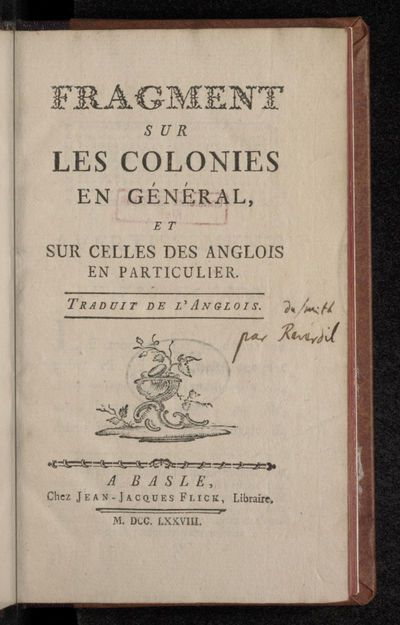
16 objects attributed to Adam Smith, held across European museums, libraries & archives · via Europeana


~40 min read
Encyclopedic overview
Adam Smith (baptised 16 June [O.S. 5 June] 1723 – 17 July 1790) was a Scottish economist and philosopher who was a pioneer in the field of political economy and key figure during the Scottish Enlightenment. Seen by many as the "father of economics", or the "father of capitalism", he is primarily known for two classic works: The Theory of Moral Sentiments (1759) and An Inquiry into the Nature and Causes of the Wealth of Nations (1776). The latter, often abbreviated as The Wealth of Nations, is regarded as his magnum opus, marking the inception of modern economic scholarship as a comprehensive system and an academic discipline. Smith refuses to explain the distribution of wealth and power in terms of divine will and instead appeals to natural, political, social, economic, legal, environmental and technological factors, as well as the interactions among them. The work is notable for its contribution to economic theory, particularly in its exposition of the concept of absolute advantage.
Born in Kirkcaldy, Fife, he studied social philosophy at the University of Glasgow and at the University of Oxford, where he was one of the only students to benefit from scholarships set up by John Snell. Following his graduation, he delivered a successful series of public lectures at the University of Edinburgh, that met with acclaim. This led to a collaboration with David Hume during the Scottish Enlightenment. Smith obtained a professorship at Glasgow, where he taught moral philosophy. During this period, he wrote and published The Theory of Moral Sentiments. Subsequently, he assumed a tutoring position that facilitated travel throughout Europe, where he encountered intellectual figures of his era.
Excerpted from Wikipedia’s “Adam Smith” article, available under the CC BY-SA 4.0 licence.
Gallery (12)
Available in 169 languages
- Español
- Français
- Deutsch
- 中文
- 日本語
- Русский
- Português
- Italiano
- العربية
- हिन्दी
- abstract
- Afrikaans
- Albanian
- Albanian
- Amharic
- Angika
- Aragonese
- Armenian
Show 150 more
- Assamese
- Asturian
- Awadhi
- Aymara
- azb
- Azerbaijani
- Bahasa Indonesia
- Bangla
- Bashkir
- Basque
- bat_smg
- be_x_old
- Belarusian
- Bhojpuri
- Bosnian
- Breton
- btm
- Bulgarian
- Burmese
- Catalan
- Central Kurdish
- Chechen
- Chuvash
- Cornish
- Corsican
- Crimean Tatar
- Croatian
- Czech
- Danish
- dty
- Egyptian Arabic
- Erzya
- Esperanto
- Estonian
- Extremaduran
- Faroese
- Fiji Hindi
- Filipino
- Finnish
- fiu_vro
- Galician
- Georgian
- Greek
- Guarani
- Gujarati
- guw
- Hausa
- Hebrew
- Hungarian
- Icelandic
- Ido
- Iloko
- Interlingua
- Irish
- Javanese
- Kabyle
- Kannada
- Kanuri
- Kara-Kalpak
- Kazakh
- kbp
- Kurdish
- Kyrgyz
- Latin
- Latvian
- Limburgish
- Lingua Franca Nova
- Lithuanian
- Lojban
- Lombard
- Low German
- Luxembourgish
- Macedonian
- Madurese
- Maithili
- Malagasy
- Malay
- Malayalam
- Manx
- Marathi
- Mazanderani
- Minangkabau
- Mingrelian
- Mirandese
- Mongolian
- Moroccan Arabic
- Nederlands
- Nepali
- Newari
- Norwegian
- Norwegian Nynorsk
- Occitan
- Odia
- olo
- Ossetic
- Pashto
- Piedmontese
- Polski
- Punjabi
- Quechua
- rki
- Romanian
- Romansh
- Rusyn
- Sanskrit
- Santali
- Scots
- Scottish Gaelic
- Serbian
- Serbian (Latin)
- Shan
- Sicilian
- simple
- Sindhi
- Sinhala
- Slovak
- Slovenian
- Svenska
- Swahili
- szy
- Tajik
- Tamil
- Tatar
- Telugu
- Tiếng Việt
- Toki Pona
- Türkçe
- Tyap
- Ukrainian
- Urdu
- Uzbek
- Veps
- Volapük
- Walloon
- Waray
- Welsh
- West Flemish
- Western Frisian
- Western Panjabi
- Wu Chinese
- Yakut
- Yiddish
- Yoruba
- Zaza
- zh_classical
- zh_min_nan
- zh_yue
- فارسی
- ไทย
- 한국어
via Wikidata sitelinks · CC0