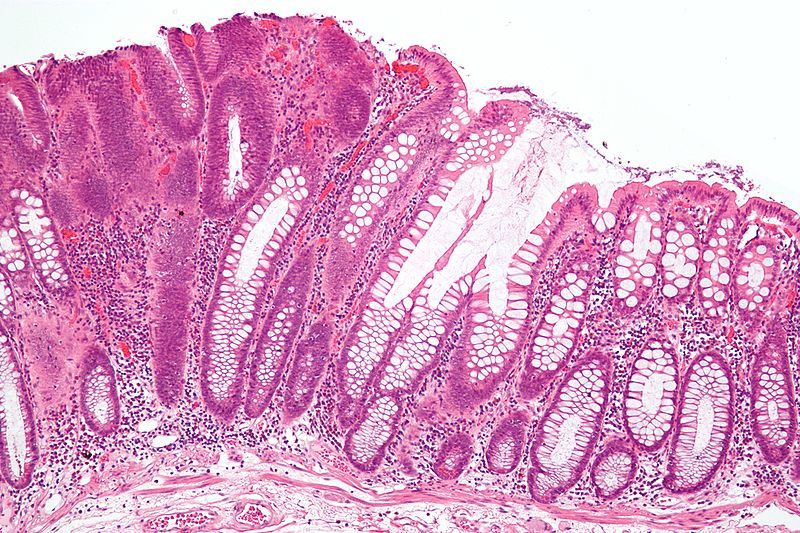
File:Tubular_adenoma_2_intermed_mag.jpg · Wikimedia Commons · See Wikimedia Commons
adenoma
Sign in to saveAlso known as acinar cell adenoma, acinar cell adenoma (morphologic abnormality), acinic cell adenoma, adenomas
An adenoma is a benign tumor of epithelial tissue with glandular origin, glandular characteristics, or both. Adenomas can grow from many glandular organs, including the adrenal glands, pituitary gland, thyroid, prostate, and others. Some adenomas grow from epithelial tissue in nonglandular areas but express glandular tissue structure (as can happen in familial polyposis coli). Although adenomas are benign, they should be treated as pre-cancerous. Over time adenomas may transform to become malignant, at which point they become adenocarcinomas. Most adenomas do not transform. However, even thoug
Key facts
- Medical condition (new).name
- Adenoma
- Medical condition (new).synonyms
- Adenomas, adenomata
- Medical condition (new).image
- Tubular adenoma 2 intermed mag.jpg
- Medical condition (new).caption
- Micrograph of a tubular adenoma (left of image), a type of colonic polyp and a precursor of colorectal cancer. Normal colorectal mucosa is seen on the right of the image. H&E stain.
- Medical condition (new).pronounce
- ,
- Medical condition (new).field
- Oncology
via Wikipedia infobox
Research
154,458 papersvia PubMed
Wikidata facts
- Subclass of
- disease
- Image
- Colon adenoma (1).jpg
Show 6 more facts
- Commons category
- Adenomas
- NCI Thesaurus ID
- C4196
- exact match
- identifiers.org/doid/DOID:657
- symptoms and signs
- inflammation
- on focus list of Wikimedia project
- WikiProject Medicine
- health specialty
- oncology
via Wikidata · CC0
~8 min read
Encyclopedic overview
18 sectionsContents
- Histopathology
- Locations
- Colon
- Renal
- Adrenal
- Thyroid
- Pituitary
- Parathyroid
- Liver
- Breast
- Appendix
- Bronchial
- Sebaceous
- Salivary glands
- Prostate
- Treatment
- References
- External links
An adenoma is a benign tumor of epithelial tissue with glandular origin, glandular characteristics, or both. Adenomas can grow from many glandular organs, including the adrenal glands, pituitary gland, thyroid, prostate, and others. Some adenomas grow from epithelial tissue in nonglandular areas but express glandular tissue structure (as can happen in familial polyposis coli). Although adenomas are benign, they should be treated as pre-cancerous. Over time adenomas may transform to become malignant, at which point they become adenocarcinomas. Most adenomas do not transform. However, even though benign, they have the potential to cause serious health complications by compressing other structures (mass effect) and by producing large amounts of hormones in an unregulated, non-feedback-dependent manner (causing paraneoplastic syndromes). Some adenomas are too small to be seen macroscopically but can still cause clinical symptoms.
== Histopathology ==
Excerpted from Wikipedia’s “adenoma” article, available under the CC BY-SA 4.0 licence.