File:Faidherbia_albida.JPG · Wikimedia Commons · See Wikimedia Commons
agroforestry
Sign in to saveAlso known as agro-silvikultur
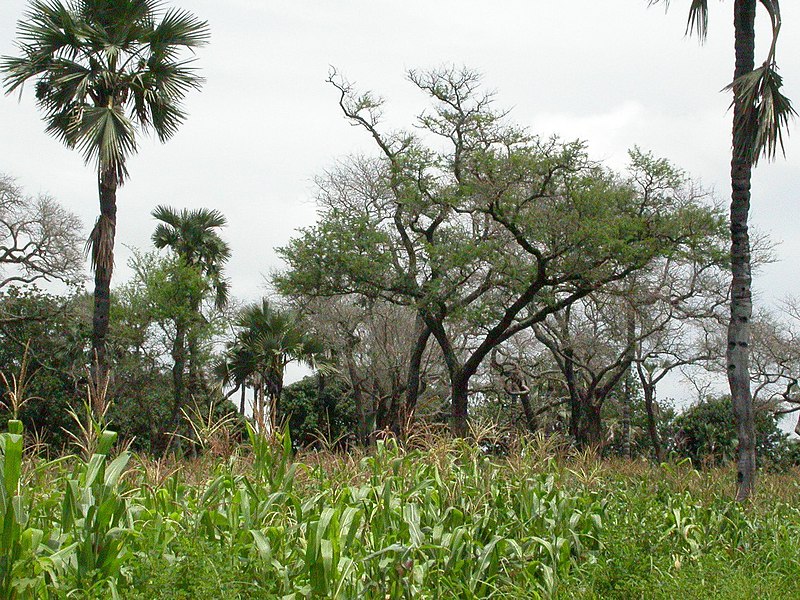
thumb|upright=1.35|Maize grown under Faidherbia albida and [[Borassus akeassii near Banfora, Burkina Faso ]] Agroforestry (also known as agro-sylviculture or forest farming) is a land use management system that integrates trees with crops or pasture. It combines agricultural and forestry technologies. As a polyculture system, an agroforestry system can produce timber and wood products, fruits, nuts, other edible plant products, edible mushrooms, medicinal plants, ornamental plants, animals and animal products, and other products from both domesticated and wild species.
Wikidata facts
- Instance of
- academic discipline
- Subclass of
- forestry
- Image
- Agroforestry contour planting.jpg
Show 4 more facts
- Commons category
- Agroforestry
- topic's main category
- Category:Agroforestry
- on focus list of Wikimedia project
- WikiProject Climate change
- name
- Forest farming
via Wikidata · CC0
~43 min read
Encyclopedic overview
45 sectionsContents
- Definition
- History and scientific study
- Benefits
- Biodiversity
- Soil and plant growth
- Sustainability
- Other environmental goals
- Adaptation to climate change
- Tropical
- Hillside systems
- Kuojtakiloyan
- Shade crops
- Alley cropping
- Syntropic systems
- In Burma
- In India
- In Africa
- In Hawaiʻi
- Temperate
- Urban Agroforestry
- Benefits
- Environmental resilience
- Biodiversity
- Social and cultural wellbeing
- Implementation barriers and trade-offs
- Financial costs
- Biophysical challenges
- Opportunity costs
- Examples/Projects
- Forest gardening
- History
- In temperate climates
- Seven-layer system
- Further development
- Geographical distribution
- Americas
- Projects
- Forest farming
- History
- Methods
- Further reading
- See also
- References
- Sources
- External links
thumb|upright=1.35|Maize grown under Faidherbia albida and [[Borassus akeassii near Banfora, Burkina Faso ]] Agroforestry (also known as agro-sylviculture or forest farming) is a land use management system that integrates trees with crops or pasture. It combines agricultural and forestry technologies. As a polyculture system, an agroforestry system can produce timber and wood products, fruits, nuts, other edible plant products, edible mushrooms, medicinal plants, ornamental plants, animals and animal products, and other products from both domesticated and wild species.
Agroforestry can be practiced for economic, environmental, and social benefits, and can be part of sustainable agriculture. Apart from production, benefits from agroforestry include improved farm productivity, healthier environments, reduction of risk for farmers, beauty and aesthetics, increased farm profits, reduced soil erosion, creating wildlife habitat, less pollution, managing animal waste, increased biodiversity, improved soil structure, and carbon sequestration.
Excerpted from Wikipedia’s “agroforestry” article, available under the CC BY-SA 4.0 licence.