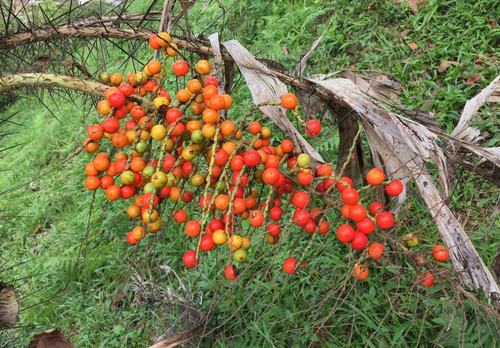
(c) Apipa, some rights reserved (CC BY-NC), uploaded by Apipa · cc-by-nc
Aiphanes
Sign in to saveAiphanes is a genus of spiny palms which is native to tropical regions of South and Central America and the Caribbean. There are about 26 species in the genus (see below), ranging in size from understorey shrubs with subterranean stems to subcanopy trees as tall as . Most have pinnately compound leaves (leaves which are divided into leaflets arranged feather-like, in pairs along a central axis); one species has entire leaves. Stems, leaves and sometimes even the fruit are covered with spines. Plants flower repeatedly over the course of their lifespan and have separate male and female flowers,
Species
GENUS
- KingdomPlantae
- PhylumTracheophyta
- ClassLiliopsida
- OrderArecales
- FamilyArecaceae
Common Name: mararay palm
via GBIF · Kew POWO
Museum specimens
- Specimen records
- 94
- With media
- 54
- Family
- Arecaceae
- Collections
- US, MO
- Recorded in
- Bolivia, Peru, St. Lucia, Barbados, Puerto Rico, Bahamas, Panama, Martinique
Wikidata facts
Show 7 more facts
- taxon rank
- genus
- taxon name
- Aiphanes
- topic's main category
- Category:Aiphanes
- Commons category
- Aiphanes
- taxon common name
- 刺叶椰子属
- topic has template
- Template:Taxonomy/Aiphanes
Sources (1)
via Wikidata · CC0
~22 min read
Encyclopedic overview
15 sectionsContents
- Description
- Stems
- Leaves
- Spines
- Flowers
- Fruit
- Karyotype
- Taxonomy
- History
- Species
- Distribution and status
- Habitat and ecology
- Uses
- Notes
- References
Aiphanes is a genus of spiny palms which is native to tropical regions of South and Central America and the Caribbean. There are about 26 species in the genus (see below), ranging in size from understorey shrubs with subterranean stems to subcanopy trees as tall as . Most have pinnately compound leaves (leaves which are divided into leaflets arranged feather-like, in pairs along a central axis); one species has entire leaves. Stems, leaves and sometimes even the fruit are covered with spines. Plants flower repeatedly over the course of their lifespan and have separate male and female flowers, although these are borne together on the same inflorescence. Although records of pollinators are limited, most species appear to be pollinated by insects. The fruit are eaten by several birds and mammals, including at least two species of amazon parrots.
Carl Ludwig Willdenow coined the name Aiphanes in 1801. Before that, species belonging to the genus had been placed in Bactris or Caryota. The name Martinezia had also been applied to the genus, and between 1847 and 1932 it was generally used in place of Aiphanes. Max Burret resurrected the name Aiphanes in 1932 and laid the basis for the modern concept of the genus. Aiphanes is most closely related to several other genera of spiny palms—Acrocomia, Astrocaryum, Bactris and Desmoncus. Two species are widely planted as ornamentals and the fruit, seeds or palm heart of several species have been eaten by indigenous peoples of the Americas for millennia.
Excerpted from Wikipedia’s “Aiphanes” article, available under the CC BY-SA 4.0 licence.