Encyclopedia of Life · EOL (see source)
Albuca
Sign in to saveAlso known as Slime-Lily
Albuca is a genus of flowering plants in the family Asparagaceae, subfamily Scilloideae. The genus is distributed mainly in southern and eastern Africa, with some species occurring in northern Africa and the Arabian Peninsula. Plants of the genus are known commonly as slime lilies.
Species
GENUS
- KingdomPlantae
- PhylumTracheophyta
- ClassLiliopsida
- OrderAsparagales
- FamilyAsparagaceae
Albuca ist eine Pflanzengattung innerhalb der Familie der Spargelgewächse (Asparagaceae). Die etwa 150 Arten sind von der Arabischen Halbinsel über Afrika mit dem Verbreitungsschwerpunkt im Südlichen Afrika verbreitet.
via GBIF · Kew POWO
Museum specimens
- Specimen records
- 275
- With media
- 213
- Family
- Asparagaceae
- Collections
- CAS, IRVC, UT, ASU, US, DES
- Recorded in
- Tanzania, United States, Kenya, South Africa, Angola, Namibia, Ivory Coast, Malawi
Wikidata facts
- Instance of
- taxon
- Parent taxon
- Scilloideae
- Image
- Albuca shawii.jpg
Show 7 more facts
- taxon rank
- genus
- taxon name
- Albuca
- Commons category
- Albuca
- topic's main category
- Category:Albuca
- has fruit type
- capsule
- taxon common name
- 肋瓣花属
Sources (1)
via Wikidata · CC0
~14 min read
Encyclopedic overview
6 sectionsContents
- Description
- Systematics
- Species
- Cultivation
- References
- External links
Albuca is a genus of flowering plants in the family Asparagaceae, subfamily Scilloideae. The genus is distributed mainly in southern and eastern Africa, with some species occurring in northern Africa and the Arabian Peninsula. Plants of the genus are known commonly as slime lilies.
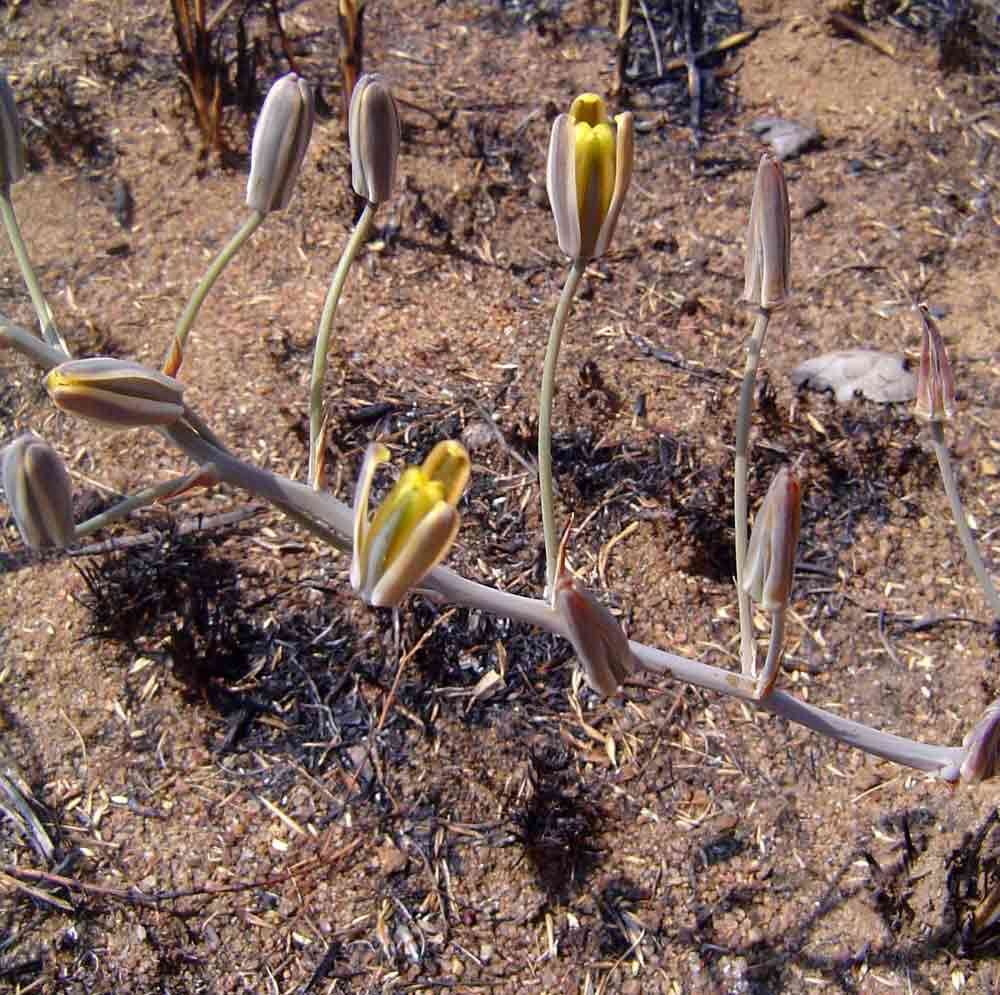
==Description== These are perennial herbs growing from bulbs. The stem is sheathed in leaves with linear to strap-shaped blades. They can be 8 cm to well over 1 m long, and are flat or keeled. They are generally fleshy and sappy with a mucilaginous juice that inspired the common name "slime lilies". The flowers of some species are scented, especially at night. They are borne in racemes, usually slender, but flat-topped in some species. The flowers may be on stiff, or slender, nodding stalks, held erect or drooping. The six tepals are white to yellow, and each has a green or brown stripe down the centre. The outer three tepals spread open, while the inner three are connivent, curving inward so that the tips meet. There are six stamens, which have wings at the bases that wrap around the ovary at the centre of the flower. Some species have six fertile stamens, and in others the outer stamens are staminodes which do not produce pollen. The fruit is a rounded or oval three-lobed capsule containing shiny black seeds.
Excerpted from Wikipedia’s “Albuca” article, available under the CC BY-SA 4.0 licence.