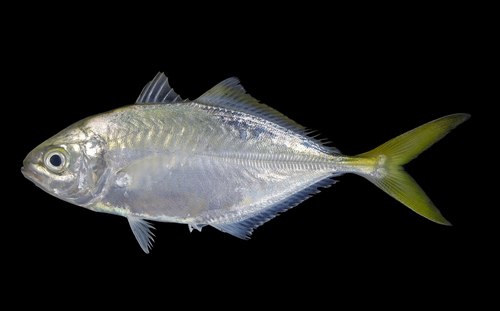
(c) sharkdevotee, some rights reserved (CC BY-NC) · cc-by-nc
Alepes
Sign in to saveAlepes is a genus containing five extant species of tropical marine fishes in the jack family, Carangidae. They are commonly known as scads, a term applied to many genera of carangid fishes. Their body form, however, differs from these other scads by being much more ovate in shape, more similar to the larger jacks taken as game fish, although scads are generally much smaller. They are found in coastal waters throughout the Indo-West Pacific region.
Species
マブタシマアジ属
GENUS
- KingdomAnimalia
- PhylumChordata
- ClassTeleostei
- OrderPerciformes
- FamilyCarangidae
via GBIF
Museum specimens
- Specimen records
- 96
- With media
- 2
- Family
- Carangidae
- Collections
- UMMZ, LSUMZ, USNM, CAS, FMNH, WAM
- Recorded in
- Vietnam, Singapore, New Caledonia, Thailand, China, Palau, Malaysia, Philippines
Wikidata facts
- Instance of
- taxon
- Parent taxon
- Carangidae
- Image
- Alepes melanoptera.png
Show 5 more facts
- Commons category
- Alepes
- start time
- 23000000-0
- taxon name
- Alepes
- taxon rank
- genus
- topic's main category
- Category:Alepes
Sources (1)
via Wikidata · CC0
~6 min read
Encyclopedic overview
7 sectionsContents
- Taxonomy and phylogeny
- Species
- Biology
- Distribution and habitat
- Relationship to humans
- References
- External links
Alepes is a genus containing five extant species of tropical marine fishes in the jack family, Carangidae. They are commonly known as scads, a term applied to many genera of carangid fishes. Their body form, however, differs from these other scads by being much more ovate in shape, more similar to the larger jacks taken as game fish, although scads are generally much smaller. They are found in coastal waters throughout the Indo-West Pacific region.
==Taxonomy and phylogeny== Alepes is a genus containing five extant and one extinct species. It is part of the jack family, the Carangidae are part of the order Carangiformes. Recent phylogenetic studies using molecular information have placed Alepes in the subfamily Caranginae (or the tribe Carangini). The most comprehensive study suggests the genus is basal to all other 'scads' and 'horse mackerels' of the genera Trachurus, Decapterus, and Selar, whilst still being closely affiliated with larger members of Caranginae such as Caranx.
Excerpted from Wikipedia’s “Alepes” article, available under the CC BY-SA 4.0 licence.
Gallery (6)
Available in 18 languages
- 日本語
- Русский
- Italiano
- العربية
- Bahasa Indonesia
- Catalan
- Cebuano
- Egyptian Arabic
- Hungarian
- Lithuanian
- Nederlands
- Polski
- Svenska
- Tiếng Việt
- Türkçe
- Waray
- فارسی
via Wikidata sitelinks · CC0