Almutaster · Kew POWO · Kew Plants of the World Online
Almutaster
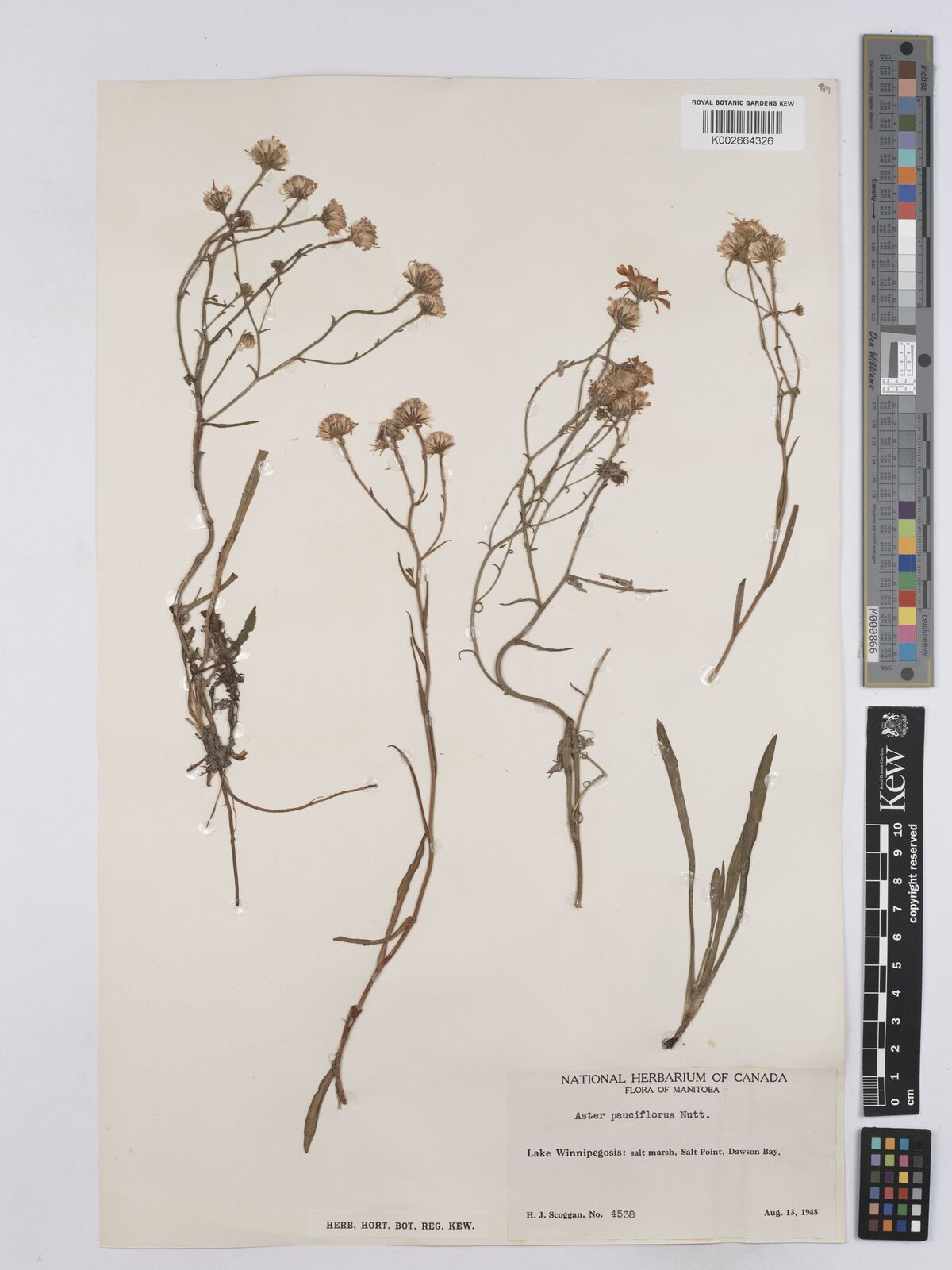
Sign in to saveAlmutaster is a North American genus of plants in the family Asteraceae containing the single species Almutaster pauciflorus (formerly Aster pauciflorus), which is known by the common name alkali marsh aster. It is native to Canada (Northwest Territories and the three Prairie Provinces), the Western United States, and northern and central Mexico (as far south as Tlaxcala). The genus is named for botanist Almut Gitter Jones.
Species
GENUS
- KingdomPlantae
- PhylumTracheophyta
- ClassMagnoliopsida
- OrderAsterales
- FamilyAsteraceae
via GBIF · Kew POWO
Museum specimens
- Specimen records
- 12
- With media
- 2
- Family
- Asteraceae
- Collections
- UT, BRIT, UF
- Recorded in
- United States
Wikidata facts
- Instance of
- taxon
- Parent taxon
- Asteraceae
- Named after
- Almut Gitter Jones
- Image
- 2019.08.17 09.41.28 IMG 3905.jpg
Show 5 more facts
- taxon name
- Almutaster
- taxon rank
- genus
- taxon common name
- alkali marsh aster
- Commons category
- Almutaster
Sources (1)
via Wikidata · CC0
~2 min read
Encyclopedic overview
2 sectionsContents
- References
- External links
Almutaster is a North American genus of plants in the family Asteraceae containing the single species Almutaster pauciflorus (formerly Aster pauciflorus), which is known by the common name alkali marsh aster. It is native to Canada (Northwest Territories and the three Prairie Provinces), the Western United States, and northern and central Mexico (as far south as Tlaxcala). The genus is named for botanist Almut Gitter Jones.
Almutaster pauciflorus grows in wet alkaline and saline soils such as inland salt marshes and salt flats. This is a perennial herb growing a reddish-green glandular stem to heights from 30 to 120 centimeters. The narrow leaves are linear in shape and up to 10 centimeters long. The inflorescence is an open array of flower heads containing white to pale purple ray florets and a center of yellow disc florets. The head is lined with phyllaries covered in tiny white resin glands. The fruit is a hairy cypsela.
Excerpted from Wikipedia’s “Almutaster” article, available under the CC BY-SA 4.0 licence.
Gallery (2)
Available in 7 languages
via Wikidata sitelinks · CC0