
File:Ani_Harabeleri_2.jpg · Wikimedia Commons · See Wikimedia Commons
Also known as Abnicum
Ani (; ; ) is a ruined medieval Armenian city now situated in Turkey's province of Kars, next to the closed border with Armenia.
Ani is a ruined medieval Armenian city located in the Turkish province of Kars, near the closed border with Armenia. It matters as a significant historical site representing Armenian medieval civilization and remains a subject of cultural and historical importance to Armenian heritage.
AI-generated from the Wikipedia summary — may contain errors.
Key facts
- Ancient site.name
- Ani
- Ancient site.native_name
- Անի
- Ancient site.image
- Ani Harabeleri 2.jpg
- Ancient site.image_size
- 300
- Ancient site.caption
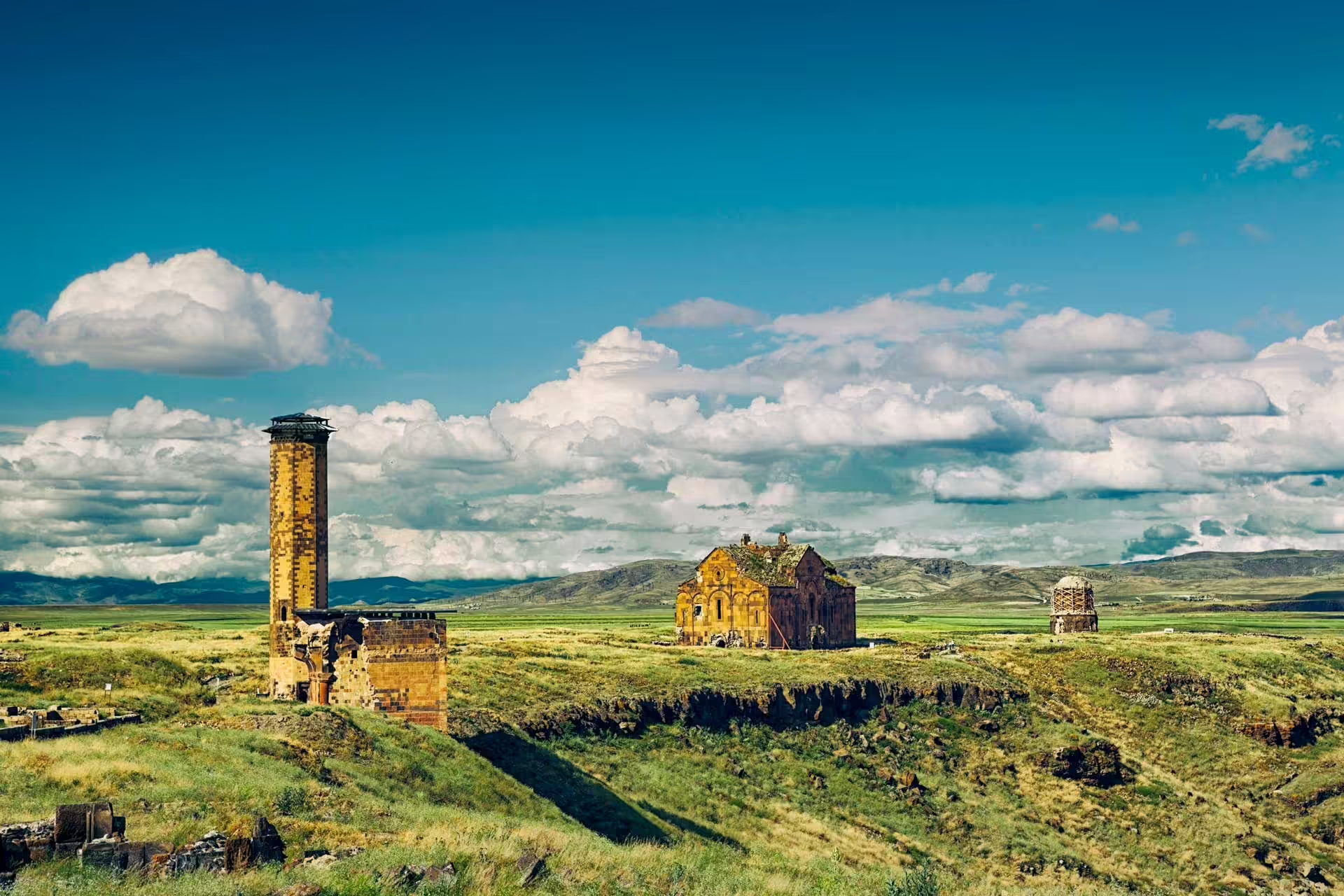
- Church of the Holy Apostles and Church of Saint Gregory of Abughamrentz, Ani
- Ancient site.map_type
- West Asia
- Ancient site.map_caption
- Location of Ani
- Ancient site.map_size
- 300
- Ancient site.location
- Ocaklı (nearest settlement), Kars Province, Turkey
- Ancient site.region
- Armenian highlands
- Ancient site.type
- Settlement
- Ancient site.built
- 5th century (first mentioned)
- Ancient site.abandoned
- 17th century
- Ancient site.epochs
- Middle Ages
- Ancient site.cultures
- Armenian (predominantly)
- Ancient site.ownership
- Kingdom of Armenia (Middle Ages)
- Ancient site.notes
- historical population of over 100,000
- Ancient site.designation1
- WHS
via Wikipedia infobox
Described at
Ruiny bývalého hlavného mesta arménskej ríše - Turecko - PlaceMania
Ani bolo kedysi jedným z najväčších miest na svete, ktoré mocne vládlo nad regiónom, a hoci dnes je z neho strašidelné, opustené mesto duchov, s trochou predstavivosti sa dá takmer vidieť, aké mesto mohlo byť.
placemania.sk →Miesto bolo osídlené už od praveku a v roku 961 sa stalo hlavným mestom arménskeho kráľovstva rodu Bagratovcov. Ašot III. vtedy presunul svoj dvor z Karsu, mesta nachádzajúceho sa asi 45 kilometrov západne, ktoré v konečnom dôsledku dopadlo lepšie ako jeho uzurpátor. Pod vládou Ašotových nasledovníkov Sembata II. a hlavne Gagika I. sa z Ani stala prosperujúca opevnená metropola, kráľovské hlavné mesto a obchodné centru, ktoré konkurovalo Konštantínopolu. Okrem toho bolo známe aj svojou zbožnosťou, keďže ho velebili ako “mesto 1001 kostolov”. Patrila medzi ne aj majestátna katedrála s kupolou zasvätená svätej Bohorodičke od uznávaného arménskeho architekta Trdata. Zakladateľ projektu PlaceMania.sk a zodpovedá za jeho obsah, technické fungovanie a dlhodobý rozvoj. Cestovné zápisky na webe vychádzajú z vlastnej skúsenosti z ciest; faktografické záznamy o miestach vznikajú kombináciou verejných zdrojov, automatizovaného spracovania dát a redakčného overovania. Zameriava sa na netradičné lokality, ich historický a geografický kontext a menej známe súvislosti. Things to do near Ruiny bývalého hlavného mesta arménskej ríše, Ani Ruins, Ani, Ани, Ανί, Անի, Անիոն, Երկգետնյա քաղաք, Skanzen, Múzeum, Turistická atrakcia, Kars Merkez, Kars, Turkey, Türkiye, Turecko. Find tours, guided tours, local activities, attractions, tickets, excursions, sightseeing, day trips and travel experiences nearby. Coordinates: 40.5110758, 43.5725713. Pozrite si ďalšie zaujímave miesta vo svete, ktoré stoja za naplánovanie ďalšej cesty. Chetiti: Záhadný národ, ktorý unikal histórii, až do nedávnych objavov v Anatolii. Tento malý stredoveký kostolík ukrytý v centre Jerevanu bol stratený a znovuobjavený - dvakrát. Chcete vidieť ďalšie úchvatné miesta ako Ruiny bývalého hlavného mesta arménskej ríše? Nájdeš ich u nás na mape. Objav s nami ďalšie úžasné miesta na zemi.
Excerpt from a page describing this subject · 20,113 chars · not written by Vinony
Wikidata facts
- Instance of
- fortress
- Country
- Ottoman Empire
- Located in
- Kars Province
- Official language
- Armenian
- Population
- 75000
- Area
- 432.45
- Body of water
- Akhurian River
- Capital of
- Iberia
- Image
- Ani Archeological Site, March 2020 1.jpg
- Significant event
- Siege of Ani
Show 9 more facts
- Commons category
- Ani
- dissolved, abolished or demolished date
- 1319-00-00
- topic's main category
- Category:Ani
- Commons gallery
- Ani
- heritage designation
- World Heritage Site
- P8168
- Aloe macrocarpa
- located in/on physical feature
- Eastern Anatolia Region
via Wikidata · CC0
~34 min read
Encyclopedic overview
31 sectionsContents
- Toponym
- Location
- History
- Early history
- Bagratuni capital
- Seljuks and Shaddadids
- Revival under the Zakarians
- Mongol capture and decline
- Modern times
- Since 1991
- UNESCO World Heritage Site
- Monuments
- The Cathedral
- The church of St Gregory of Tigran Honents
- The church of the Holy Redeemer
- The church of St Gregory of the Abughamrents
- King Gagik's church of St Gregory
- The Church of the Holy Apostles
- Surp Stephanos Church
- The mosque of Manuchihr
- The citadel
- The city walls
- Other monuments
- Cave Village
- Panorama
- In culture
- See also
- References
- Bibliography
- Further reading
- External links
Ani (; ; ) is a ruined medieval Armenian city now situated in Turkey's province of Kars, next to the closed border with Armenia.
Between 961 and 1045, it was the capital of the Bagratuni Armenian kingdom that covered much of present-day Armenia and eastern Turkey. The iconic city was often referred to as the "City of 1,001 Churches," though the number was significantly less. To date, 50 churches, 33 cave chapels and 20 chapels have been excavated by archaeologists and historians. Ani stood on various trade routes and its many religious buildings, palaces, and sophisticated fortifications distinguished it from other contemporary urban centers in the Armenian kingdom. Among its most notable buildings was the Cathedral of Ani, which is associated with early examples of Gothic architecture and that scholars argue influenced the great cathedrals of Europe in the early gothic and Romanesque styles; its ribbed vaulting would not be seen in European cathedrals for at least another two centuries. At its height, Ani was one of the world's largest cities, with a population of perhaps 100,000, though given its limited area historians have cast doubt at this estimate.
Excerpted from Wikipedia’s “Ani” article, available under the CC BY-SA 4.0 licence.
Gallery (30)
On the map
2 mapped locations
Available in 55 languages
- Español
- Français
- Deutsch
- 中文
- 日本語
- Русский
- Português
- Italiano
- العربية
- Armenian
- Asturian
- Azerbaijani
- Bahasa Indonesia
- Basque
- Belarusian
- Bulgarian
- Catalan
- Central Kurdish
Show 36 more
via Wikidata sitelinks · CC0