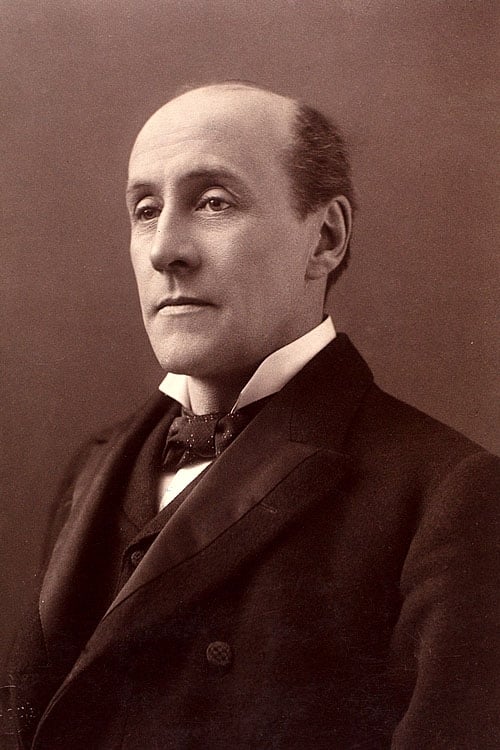
Profile via TMDB · Courtesy of TMDB
Anthony Hope
Sign in to saveAlso known as Sir Anthony Hope Hawkins, Antony Hope
English novelist (1863-1933)
OverviewAI-generated
Anthony Hope Hawkins (1863–1933) was a British barrister, writer, and novelist. Born in London, he was educated at Balliol College and began his professional work period in 1890. He wrote in English and was a citizen of the United Kingdom and the United Kingdom of Great Britain and Ireland. Hope received the award of Knight Bachelor.
His notable works include *The prisoner of Zenda*, *Little tiger*, *Comedies of courtship*, *A change of air*, and *The great Miss Driver*. He died in Walton on the Hill of laryngeal cancer.
Synthesized by Vinony from 41 facts across 9 sources: Wikidata, Open Library, Crossref, MusicBrainz, Last.fm, TMDb, Wikiquote, Europeana Sparql, Vinony graph. Generated from structured data (not the Wikipedia text) and checked against those facts — may still contain errors.
Person · Open Library
- Born
- 1863
- Died
- 1933
- Works
- 387
Top works
- Little tiger
- Comedies of courtship
- A change of air
- The prisoner of Zenda
- The great Miss Driver
via Open Library + Wikidata
Film & TV
Writing · London, England, UK
via TMDB
Music · MusicBrainz
- Type
- Person
- Gender
- Male
- Country
- United Kingdom
- Active from
- 1863
- Active to
- 1933
via MusicBrainz · CC0
Listeners · Last.fm
- Listeners
- 544
- Total plays
- 4,564
Tags
Anthony Hope is a powerful Norwegian band with a love for catchy tunes. The guys met in 2010 and have since then traveled far and wide. Sleeping in German fire stations, breaking cars on the Norwegian highway, climbing mountains, or opening doors in France, they will always be searching for the sounds that will make you dance, scream and make love all night. Michael Steinslien - Vocals, bass Joakim Arnt Holmen - Guitar, backing vocals Runar Grimstad - Drums, percussion, backing vocals Kristian
Recent publications · Crossref
5 total works indexed
- Trimmomatic: a flexible trimmer for Illumina sequence data
· 2014 · cited 61,985x
- SciPy 1.0: fundamental algorithms for scientific computing in Python
· 2020 · cited 36,562x
- A global reference for human genetic variation
· 2015 · cited 17,797x
- The FAIR Guiding Principles for scientific data management and stewardship
· 2016 · cited 14,659x
- Structure validation in chemical crystallography
· 2009 · cited 14,184x
via Crossref · CC0
Quotes
- “Boys will be boys—And even that ... wouldn't matter if only we could prevent girls from being girls.”
- “The blemishes on honourable lineage are a delicate subject, and certainly this heredity we hear so much about is the finest scandalmonger in the world; it laughs at discretion, and writes strange entries between the lines of the “Peerages”.”
- ““The difference between you and Robert,” said my sister-in-law, who often (bless her!) speaks on a platform, and oftener still as if she were on one, “is that he recognizes the duties of his position, and you see the opportunities of yours.”“To a man of spirit, my dear Rose,” I answered, “opportunities are duties.””
- “For my part, if a man must needs be a knave, I would have him a debonair knave, and I liked Rupert Hentzau better than his long-faced, close-eyed companions. It makes your sin no worse, as I conceive, to do it à la mode and stylishly.”
via Wikiquote · CC BY-SA
Key facts
- Born
- Anthony Hope Hawkins , ( 1863-02-09 ) 9 February 1863, Clapton , London, England
- Died
- 8 July 1933 (1933-07-08) (aged 70), Walton-on-the-Hill , Surrey , England
- Occupations
- Barrister , Writer
- Notable work
- The Prisoner of Zenda , Rupert of Hentzau
via Wikipedia infobox
Wikidata facts
- Instance of
- human
- Given name
- Anthony
- Gender
- male
- Citizenship
- United Kingdom of Great Britain and Ireland
- Place of birth
- London
- Place of death
- Walton on the Hill
- Languages spoken
- English language
- Native language
- English language
- Award
- Knight Bachelor
- Image
- Anthony Hope Hawkins by Alfred Ellis & Walery.jpg
Show 10 more facts
- Commons category
- Anthony Hope
- date of birth
- 1863-02-09
- date of death
- 1933-01-01
- described by source
- Encyclopædia Britannica 11th edition
- name in native language
- Anthony Hope Hawkins
- cause of death
- laryngeal cancer
- manner of death
- natural causes
- writing language
- English language
- start of work period
- 1890-00-00
- Commons Creator page
- Anthony Hope
via Wikidata · CC0
Works in European collections
14 objects attributed to Anthony Hope, held across European museums, libraries & archives · via Europeana

Half a hero : a novel
Ein Mann von Bedeutung. von Anthony Hope ; autorisierte Übersetzung aus dem Englischen von F. Mangold

The chronicles of Count Antonio

A change of air

The indiscretion of the duchess : being a story concerning two ladies, a nobleman, and a necklace

Phroso : a romance, 1
![The dolly dialogues by Anthony Hope [d. i. Sir Anthony Hope Hawkins.]](https://api.europeana.eu/thumbnail/v2/url.json?uri=https%3A%2F%2Fapi.digitale-sammlungen.de%2Fiiif%2Fimage%2Fv2%2Fbsb11665900_00009%2Ffull%2Ffull%2F0%2Fdefault.jpg&type=IMAGE)
The dolly dialogues by Anthony Hope [d. i. Sir Anthony Hope Hawkins.]

Mr. Witt's Widow : a frivolous tale

Phroso : a romance, 2

The chronicles of Count Antonio

The heart of Princess Osra

The god in the car

Comedies of courtship

The heart of Princess Osra
~9 min read
Encyclopedic overview
Sir Anthony Hope Hawkins (9 February 1863 – 8 July 1933), better known as Anthony Hope, was a British novelist and playwright. He was a prolific writer, especially of adventure novels but he is remembered predominantly for only two books: The Prisoner of Zenda (1894) and its sequel Rupert of Hentzau (1898).
These works, "minor classics" of English literature, are set in the contemporaneous fictional country of Ruritania and spawned the genre known as Ruritanian romance, books set in fictional European locales similar to the novels. Zenda has inspired many adaptations, most notably the 1937 Hollywood movie of the same name and the 1952 version.
Excerpted from Wikipedia’s “Anthony Hope” article, available under the CC BY-SA 4.0 licence.