Don E. Wilson;Russell A. Mittermeier
Antilocapridae
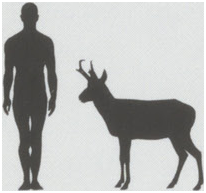
Sign in to saveThe Antilocapridae are a family of ruminant artiodactyls endemic to North America. Their closest extant relatives are the giraffids. Only one species, the pronghorn (Antilocapra americana), is living today; all other members of the family are extinct. The living pronghorn is a small ruminant mammal resembling an antelope.
OverviewAI-generated
Antilocapridae is a family of mammals within the order Artiodactyla. It belongs to the class Mammalia, phylum Chordata, and kingdom Animalia. The family is part of the superfamily Giraffoidea and is governed by the International Code of Zoological Nomenclature. Its temporal range begins in the Early Miocene.
Specimens of this family are held by institutions including USNM, UTEP, CM, and SDNHM. Records are associated with the United States. The taxon has 29,891 occurrences and 1,672 records, with 28 media items. It is referenced by 432 other encyclopedia articles.
Synthesized by Vinony from 22 facts across 5 sources: Wikidata, GBIF, Gbif Occ, iDigBio, Vinony graph. Generated from structured data (not the Wikipedia text) and checked against those facts — may still contain errors.
Species
FAMILY
- KingdomAnimalia
- PhylumChordata
- ClassMammalia
- OrderArtiodactyla
- FamilyAntilocapridae
via GBIF
Museum specimens
- Specimen records
- 1,672
- With media
- 28
- Family
- Antilocapridae
- Collections
- USNM, UTEP, CM, SDNHM
- Recorded in
- United States
Wikidata facts
- Instance of
- taxon
- Parent taxon
- Giraffoidea
- Image
- Pronghorn antelope.jpg
Show 6 more facts
- taxon name
- Antilocapridae
- taxon rank
- family
- Code of nomenclature
- International Code of Zoological Nomenclature
- Commons category
- Antilocapridae
- topic's main category
- Category:Pronghorns
- temporal range start
- Early Miocene
Sources (1)
via Wikidata · CC0
~5 min read
Encyclopedic overview
5 sectionsContents
- Description
- Classification
- Evolution
- Species
- References
The Antilocapridae are a family of ruminant artiodactyls endemic to North America. Their closest extant relatives are the giraffids. Only one species, the pronghorn (Antilocapra americana), is living today; all other members of the family are extinct. The living pronghorn is a small ruminant mammal resembling an antelope.
==Description== In most respects, antilocaprids resemble other ruminants. They have a complex, four-chambered stomach for digesting tough plant matter, cloven hooves, and small, forked horns. Their horns resemble those of the bovids, in that they have a true horny sheath, but, uniquely, they are shed outside the breeding season, and subsequently regrown. Their lateral toes are even further diminished than in bovids, with the digits themselves being entirely lost, and only the cannon bones remaining. Antilocaprids have the same dental formula as most other ruminants: .
Excerpted from Wikipedia’s “Antilocapridae” article, available under the CC BY-SA 4.0 licence.