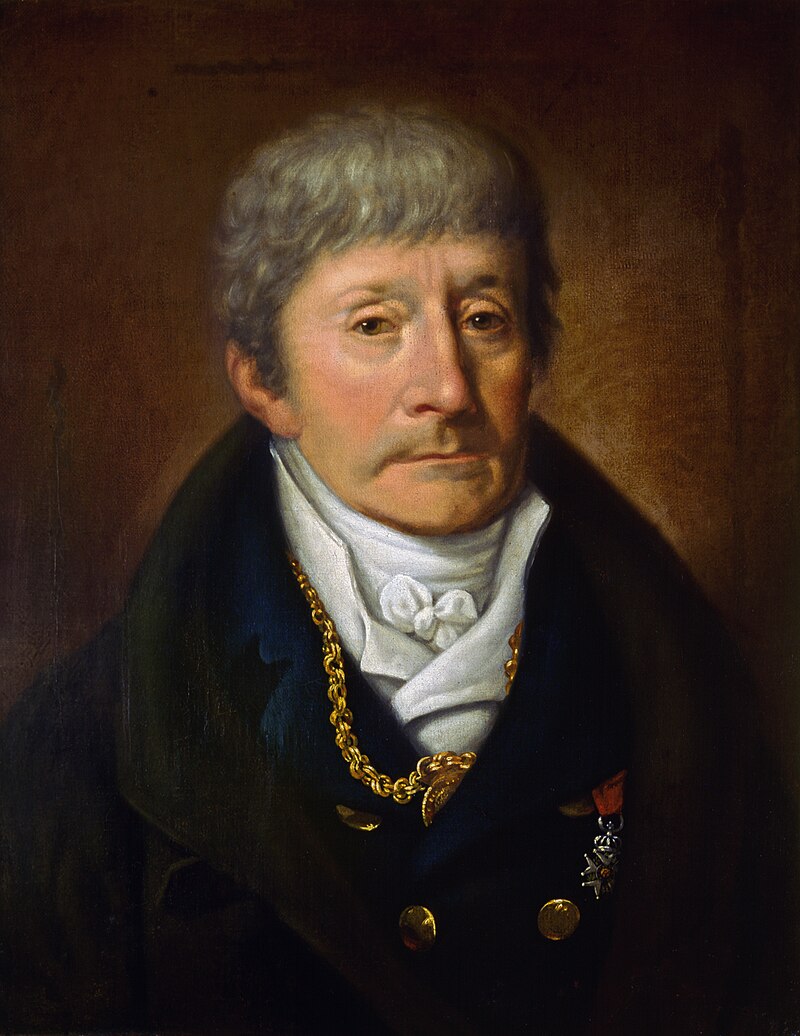
File:Antonio_Salieri_painted_by_Joseph_Willibrord_Mähler.jpg · Wikimedia Commons · See Wikimedia Commons
Antonio Salieri was an Italian composer and music teacher who lived from 1750 to 1825 and was an influential figure in classical music during his lifetime. He is historically significant as a major composer of the era and for his role in teaching and shaping musical traditions, though his reputation has been affected by portrayals in popular culture that often exaggerate his rivalry with Wolfgang Amadeus Mozart.
AI-generated from the Wikipedia summary — may contain errors.
Wikidata facts
- Instance of
- human
- Given name
- Antonio
- Gender
- male
- Citizenship
- Austrian Empire
- Place of birth
- Legnago
- Place of death
- Vienna
- Occupation
- music educator
- Languages spoken
- Italian
- Student of
- Giuseppe Tartini
- Field of work
- chamber music
- Instrument
- pipe organ
- Image
- Antonio Salieri painted by Joseph Willibrord Mähler.jpg
Show 16 more facts
- topic's main category
- Category:Antonio Salieri
- place of burial
- Vienna Central Cemetery
- Commons category
- Antonio Salieri
- date of birth
- 1750-08-19
- date of death
- 1825-05-07
- cause of death
- stroke
- student
- Franz Xaver Wolfgang Mozart
- manner of death
- natural causes
- Commons gallery
- Antonio Salieri
- Commons Creator page
- Antonio Salieri
- name in native language
- Antonio Salieri
- start of work period
- 1770-00-00
- member of
- Académie des beaux-arts
- list of works
- list of compositions by Antonio Salieri
- related category
- Category:Compositions by Antonio Salieri
- P8168
- ad server
Sources (7)
via Wikidata · CC0
Works in European collections
33 objects attributed to Antonio Salieri, held across European museums, libraries & archives · via Europeana
Palmira regina di Persia. Excerpts - Don Mus.Ms. 1712 : V (4); AngS 135
Dir allein glüht diese Wange &c. : Duett aus Axur [von Salieri]
Schernita depressa da un'alma spergiura - Don Mus.Ms. 1706 : A, orch; E
La grotta di Trofonio : opera comica in due atti
Axur re d'Ormus. Excerpts. Arr - Don Mus.Ms. 2162 : V (2), cemb; AngS 12
Canzonetta Nato io son nello stato romano per clavicembalo : ricavata dall'opera Axur re d'Ormus
Masses - Don Mus.Ms. 1744 : V (X), org; A
Aria soave luce di paradiso per clavicembalo : ricavata dall'opera Axur re d'Ormus
Il Talismano - Don Mus.Ms. 1707a-d : AngS 178
Der Rauchfangkehrer - Don Mus.Ms. 1708a-c : AngS 158
violino 2° - “Axur”
![[particella del coro - rassojo]](https://api.europeana.eu/thumbnail/v2/url.json?uri=https%3A%2F%2Fbeu-covers.s3.amazonaws.com%2Fedl%2Feuropeana%2F109293.jpg&type=IMAGE)
[particella del coro - rassojo]
Palmira - quartet
![[Palmira - piano - bc]](https://api.europeana.eu/thumbnail/v2/url.json?uri=https%3A%2F%2Fbeu-covers.s3.amazonaws.com%2Fedl%2Feuropeana%2F109444.jpg&type=IMAGE)
[Palmira - piano - bc]
Overtura del'opera Axur re d'Ormus
Duetto Per te solo, amato bene per clavicembalo : ricavata dall'opera Axur re d'Ormus
Canone all'erta zovenotti per Clavicembalo : ricavata dall'opera Axur re d'Ormus
Cavatina Come ape ingegnosa per clavicembalo : ricavata dall'opera Axur re d'Ormus
La Fiera di Venezia. Opera bernesca in musica in 3 atti
Aria: Son qual nave in mezzo all'onda per s. e strumenti nell'opera L'Avaro
Chorus, i.e. the March of Axur King d'Ormus. Parts of violin and bass
Evolution Marsch aus der Oper: Palmira, für das Piano Forte
Duetto d'Axur Re d'Ormus Per te solo amato bene con accompagnamento di Piano Forte
![Duett aus der oper: Axur von Salieri, con accomp. di P F. [Incipit: Hier wo die Frühlingsstüft]](https://api.europeana.eu/thumbnail/v2/url.json?uri=https%3A%2F%2Fbeu-covers.s3.amazonaws.com%2Fedl%2Feuropeana%2F12823.jpg&type=IMAGE)
Duett aus der oper: Axur von Salieri, con accomp. di P F. [Incipit: Hier wo die Frühlingsstüft]
Canzonetta Nato io son nello stato romano per Clavicembalo, ricavato nell'opera, Axur re d'Ormus
Canzonetta Nato son nello stato romano per Soprano e Piano Forte, nello: Axur re di Ormus
![Coro, ossia marcia d'Axur re d'Ormus, con accompagnamento di Cembalo.[Incipit No più vaghi soggiorni]](https://api.europeana.eu/thumbnail/v2/url.json?uri=https%3A%2F%2Fbeu-covers.s3.amazonaws.com%2Fedl%2Feuropeana%2F13035.jpg&type=IMAGE)
Coro, ossia marcia d'Axur re d'Ormus, con accompagnamento di Cembalo.[Incipit No più vaghi soggiorni]
Duet for Soprano and Tenor, with the accompt of P.F. Here, where he laughs the aura in the work Axur
Ouverture für das Clavier aus der Oper: La Palmira von Herrn A. Salieri
Air: Alderano presents Palmira in the opera. With P. F.
Symphony in the work: The Grotto of Trofonio, for 2 flute and bass violins
Sinfonia nella Scuola dei Gelosi, ridotta a due violini, flauto e basso
Falstaff: ossia le tre burle. Op. 52°. Ouverture per Piano Forte
~40 min read
Encyclopedic overview
Antonio Salieri (18 August 1750 – 7 May 1825) was an Italian composer and teacher of the classical period. He was born in Legnago, south of Verona, in the Republic of Venice, and spent his adult life and career as a subject of the Habsburg monarchy.
Salieri was a pivotal figure in the development of late 18th-century opera. As a student of Florian Leopold Gassmann, and a protégé of Christoph Willibald Gluck, Salieri was a cosmopolitan composer who wrote operas in three languages. Salieri helped to develop and shape many of the features of operatic compositional vocabulary, and his music was a powerful influence on contemporary composers.
Excerpted from Wikipedia’s “Antonio Salieri” article, available under the CC BY-SA 4.0 licence.
Gallery (2)
Available in 67 languages
- Español
- Français
- Deutsch
- 中文
- 日本語
- Русский
- Português
- Italiano
- العربية
- Aragonese
- Armenian
- Azerbaijani
- Bahasa Indonesia
- Bangla
- Bashkir
- Basque
- be_x_old
- Belarusian
Show 48 more
- Bosnian
- Bulgarian
- Catalan
- Croatian
- Czech
- Danish
- Egyptian Arabic
- Esperanto
- Estonian
- Finnish
- Galician
- Georgian
- Greek
- Hebrew
- Hungarian
- Icelandic
- Ido
- Latin
- Latvian
- Lithuanian
- Low German
- Luxembourgish
- Macedonian
- Maltese
- Marathi
- Nederlands
- Norwegian
- Norwegian Nynorsk
- Occitan
- Polski
- Punjabi
- Romanian
- Serbian
- Serbian (Latin)
- Sicilian
- simple
- Slovak
- Slovenian
- Svenska
- Tamil
- Tiếng Việt
- Türkçe
- Ukrainian
- Urdu
- Wu Chinese
- فارسی
- ไทย
- 한국어
via Wikidata sitelinks · CC0