File:Tamerlano_-_Bajazet-Aria.jpg · Wikimedia Commons · See Wikimedia Commons
aria
Sign in to saveAlso known as arietta, ariette, aria music
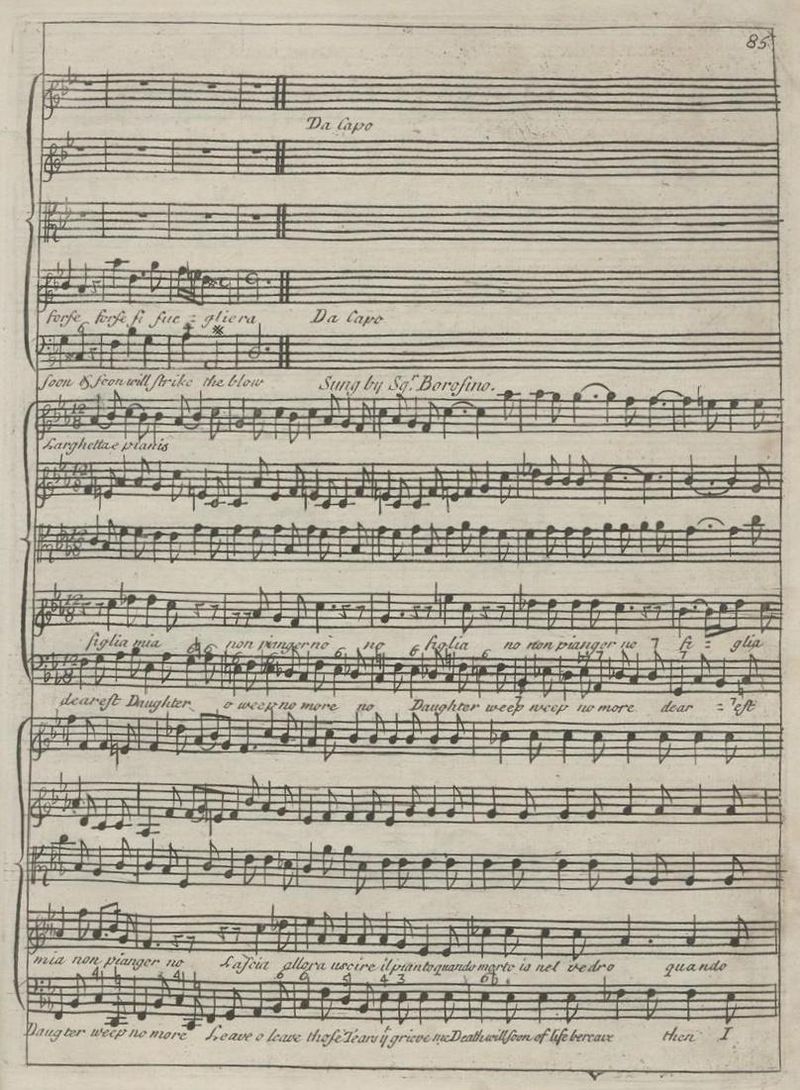
thumb|The farewell aria of Sultan Bajazet in George Frideric Handel|Handel's opera [[Tamerlano (note the da capo instruction). First edition, London, 1719.]]
An aria is a solo vocal piece in an opera where a single character expresses their emotions or thoughts, often with elaborate musical accompaniment. Arias matter because they are central moments in operas where singers can showcase their vocal skill and where audiences connect deeply with a character's inner life.
AI-generated from the Wikipedia summary — may contain errors.
Wikidata facts
- Instance of
- musical form
- Subclass of
- song
- Image
- Figaro.jpg
Show 5 more facts
- Commons category
- Arias
- topic's main category
- Category:Arias
- different from
- air
- language of work or name
- Italian
- on focus list of Wikimedia project
- Wikipedia:Vital articles/Level/4
Sources (2)
via Wikidata · CC0
~11 min read
Encyclopedic overview
11 sectionsContents
- Etymology
- In opera
- Aria form in late 17th century French and Italian opera
- The French baroque ''ariette'' and ''air''
- 18th century
- 19th century
- Concert arias
- Instrumental music
- See also
- References
- External links
thumb|The farewell aria of Sultan Bajazet in George Frideric Handel|Handel's opera [[Tamerlano (note the da capo instruction). First edition, London, 1719.]]
In music, an aria (, ; : , ; arias in common usage; diminutive form: arietta, ; : ariette; in English simply air) is a self-contained piece for one voice, with or without instrumental or orchestral accompaniment, normally part of a larger work.
Excerpted from Wikipedia’s “aria” article, available under the CC BY-SA 4.0 licence.
Gallery (9)
Available in 67 languages
- Español
- Français
- Deutsch
- 中文
- 日本語
- Русский
- Português
- Italiano
- العربية
- Albanian
- Armenian
- Asturian
- Azerbaijani
- Basque
- Belarusian
- Bosnian
- Bulgarian
- Catalan
Show 48 more
- Central Kurdish
- Croatian
- Czech
- Danish
- Esperanto
- Estonian
- Finnish
- Galician
- Georgian
- Greek
- Hebrew
- Hungarian
- Ido
- Irish
- Kazakh
- Kyrgyz
- Latin
- Latvian
- Lithuanian
- Macedonian
- Malay
- Malayalam
- Mongolian
- Nederlands
- Newari
- Norwegian
- Norwegian Nynorsk
- Polski
- Romanian
- rsk
- Serbian
- Serbian (Latin)
- Sicilian
- simple
- Slovak
- Slovenian
- Svenska
- Tajik
- Tiếng Việt
- Türkçe
- Ukrainian
- Uzbek
- Welsh
- Wu Chinese
- zh_yue
- فارسی
- ไทย
- 한국어
via Wikidata sitelinks · CC0