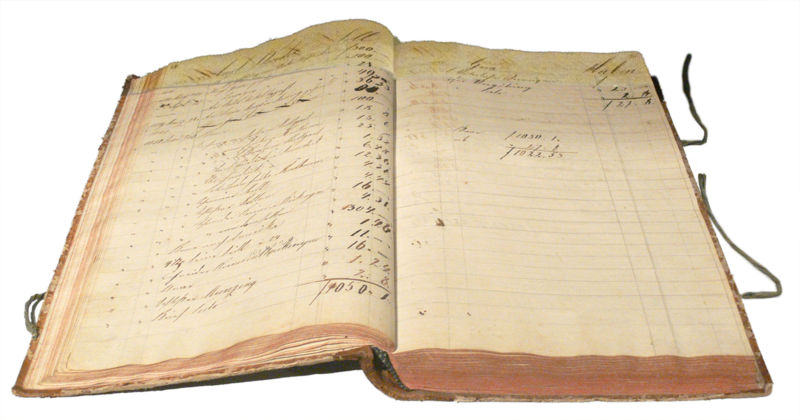
File:Ledger.png · Wikimedia Commons · See Wikimedia Commons
asset
Sign in to saveAlso known as assets, Assets, economic asset, business asset
In financial accounting, an asset is any resource owned or controlled by a business or an economic entity. It is anything (tangible or intangible) that can be used to produce positive economic value. Assets represent value of ownership that can be converted into cash (although cash itself is also considered an asset). The balance sheet of a firm records the monetary value of the assets owned by that firm. It covers money and other valuables belonging to an individual or to a business. Total assets can also be called the balance sheet total.
An asset is anything of value that a person or business owns or controls—whether it's tangible like cash and equipment or intangible like patents—that can be used to generate income or be converted into money. Assets matter because they represent what an entity owns and can use to grow wealth or pay obligations, which is why businesses track their total assets on financial statements called balance sheets.
AI-generated from the Wikipedia summary — may contain errors.
Wikidata facts
- Subclass of
- resource
- Part of
- accounting equation
Show 4 more facts
- has characteristic
- asset class
- opposite of
- liabilities plus owner's equity
- described by source
- Encyclopædia Britannica 11th edition
- topic's main category
- Category:Asset
via Wikidata · CC0
~10 min read
Encyclopedic overview
12 sectionsContents
- Formal definition
- Characteristics
- Accounting
- Current assets
- Long-term investments
- Fixed assets
- Intangible assets
- Tangible assets
- Wasting asset
- Comparison: current assets, liquid assets and absolute liquid assets
- See also
- References
In financial accounting, an asset is any resource owned or controlled by a business or an economic entity. It is anything (tangible or intangible) that can be used to produce positive economic value. Assets represent value of ownership that can be converted into cash (although cash itself is also considered an asset). The balance sheet of a firm records the monetary value of the assets owned by that firm. It covers money and other valuables belonging to an individual or to a business. Total assets can also be called the balance sheet total.
Assets can be grouped into two major classes: tangible assets and intangible assets. Tangible assets contain various subclasses, including current assets and fixed assets. Current assets include cash, inventory, accounts receivable, while fixed assets include land, buildings and equipment. Intangible assets are non-physical resources and rights that have a value to the firm because they give the firm an advantage in the marketplace. Intangible assets include goodwill, intellectual property (such as copyrights, trademarks, patents, computer programs), and financial assets, including financial investments, bonds, and companies' shares.
Excerpted from Wikipedia’s “asset” article, available under the CC BY-SA 4.0 licence.
Available in 75 languages
- Español
- Français
- Deutsch
- 中文
- 日本語
- Русский
- Português
- Italiano
- العربية
- हिन्दी
- Afrikaans
- Albanian
- Armenian
- Assamese
- Azerbaijani
- Bahasa Indonesia
- Balinese
- Bashkir
Show 56 more
- Basque
- Bulgarian
- Buriat
- Burmese
- Catalan
- Central Kurdish
- Croatian
- Czech
- Danish
- Esperanto
- Filipino
- Galician
- Greek
- Hakka Chinese
- Hebrew
- Hungarian
- Irish
- Javanese
- Kazakh
- Kyrgyz
- Latvian
- Lithuanian
- Malay
- Malayalam
- Marathi
- Minangkabau
- Mongolian
- nds_nl
- Nederlands
- Nepali
- Norwegian
- Norwegian Nynorsk
- Polski
- Romanian
- Scots
- Serbian
- Serbian (Latin)
- simple
- Slovak
- Sundanese
- Svenska
- Tajik
- Tamil
- Tatar
- Tiếng Việt
- Türkçe
- Ukrainian
- Urdu
- Uzbek
- Welsh
- Wu Chinese
- zh_yue
- Zulu
- فارسی
- ไทย
- 한국어
via Wikidata sitelinks · CC0