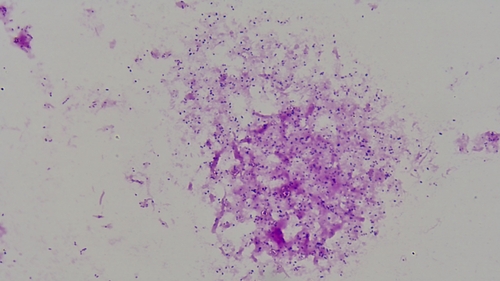
(c) Ansel Oommen, some rights reserved (CC BY-NC), uploaded by Ansel Oommen · cc-by-nc
Atopobium
Sign in to saveAtopobium is a genus of Actinomycetota, in the family Coriobacteriaceae. Atopobium species are anaerobic, Gram-positive rod-shaped or elliptical bacteria found as single elements or in pairs or short chains.
Species
GENUS
- KingdomBacteria
- PhylumActinobacteriota
- ClassCoriobacteriia
- OrderCoriobacteriales
- FamilyAtopobiaceae
via GBIF
Wikidata facts
- Instance of
- taxon
- Parent taxon
- Coriobacteriaceae
- Image
- Atopobium parvulum.png
Show 4 more facts
- taxon name
- Atopobium
- taxon rank
- genus
- Gram staining
- gram-positive bacteria
- LPSN URL
- www.bacterio.net/atopobium.html
Sources (1)
via Wikidata · CC0
~1 min read
Encyclopedic overview
5 sectionsContents
- Clinical significance
- Phylogeny
- See also
- References
- External links
Atopobium is a genus of Actinomycetota, in the family Coriobacteriaceae. Atopobium species are anaerobic, Gram-positive rod-shaped or elliptical bacteria found as single elements or in pairs or short chains.
Atopobium vaginae was discovered in 1999. This is a facultative anaerobic bacteria, which form small colonies on blood agar at 37 °C is also positive for acid phosphatase. This species has now been reclassified into the genus Fannyhessea following phylogenetic studies.
Excerpted from Wikipedia’s “Atopobium” article, available under the CC BY-SA 4.0 licence.