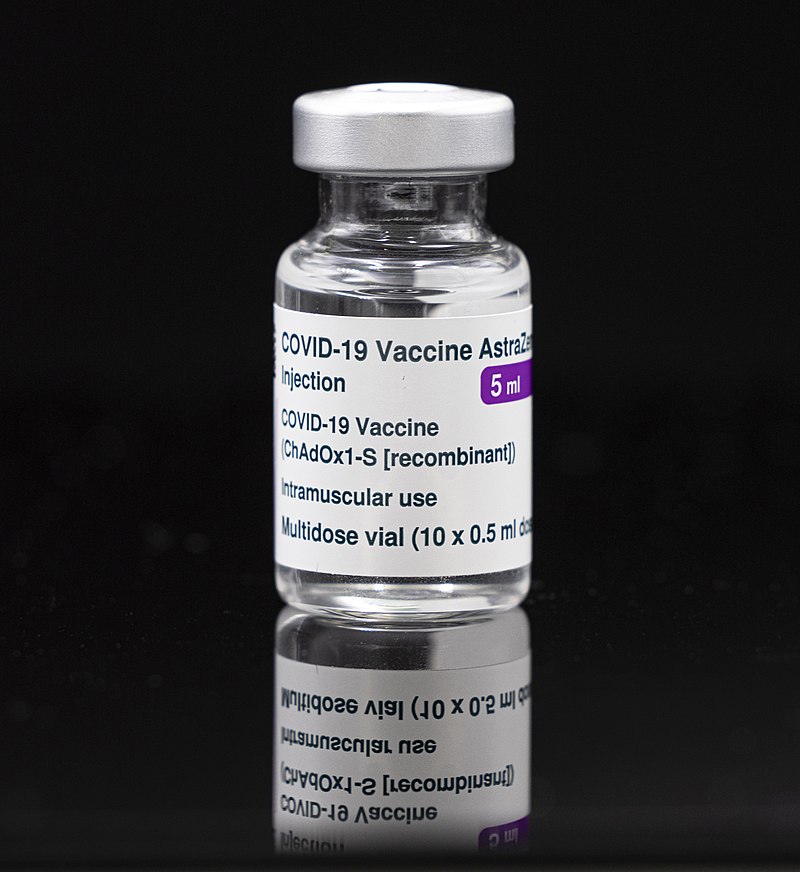
File:Oxford_AstraZeneca_COVID-19_vaccine_AZD1222_-_4.jpg · Wikimedia Commons · See Wikimedia Commons
AZD1222
Sign in to saveAlso known as ChAdOx1 nCoV-19, Consortium of the Jenner Institute COVID-19 vaccine candidate, AZD 1222, AZD1222 Vaccine for the Prevention of COVID-19, AZD-1222, Oxford/AstraZeneca vaccine, Oxford vaccine, Covishield
viral vector vaccine for prevention of COVID-19
AZD1222 is a COVID-19 vaccine that uses a modified virus to teach your immune system to recognize and fight the coronavirus. It was developed as an option to help prevent COVID-19 infection during the pandemic.
AI-generated from the Wikipedia summary — may contain errors.
Key facts
- Target
- SARS-CoV-2
- Vaccine type
- Viral vector
- Trade names
- Vaxzevria, Covishield
- Other names
- AZD1222, ChAdOx1 nCoV-19, ChAdOx1-S, COVID-19 Vaccine AstraZeneca, AstraZeneca COVID-19 Vaccine, AZD2816
- License data
- United States</span>"}]]}'>US DailyMed : AstraZeneca_COVID-19_Vaccine
- Pregnancy category
- Australia</span>"}]]}'>AU : B1
- Routes of administration
- Intramuscular
- Atc code
- J07BN02 ( WHO )
- Cas number
- 2420395-83-9
- Drugbank
- DB15656
- Unii
- B5S3K2V0G8
- Kegg
- D12115
via Wikipedia infobox
Wikidata facts
- Official name
- Vaxzevria
- Developer
- AstraZeneca
- Image
- Oxford AstraZeneca COVID-19 vaccine AZD1222 - 4.jpg
Show 7 more facts
- sponsor
- AstraZeneca
- vaccine for
- COVID-19
- funder
- Operation Warp Speed
- route of administration
- intramuscular injection
- announcement date
- 2020-11-00
- price
- 1.78
- Commons category
- AZD1222
Sources (6)
via Wikidata · CC0
~40 min read
Encyclopedic overview
The Oxford–AstraZeneca COVID‑19 vaccine, sold under the brand names Covishield and Vaxzevria among others, is a viral vector vaccine for the prevention of COVID-19. It was developed in the United Kingdom by Oxford University and British-Swedish company AstraZeneca, using as a vector the modified chimpanzee adenovirus ChAdOx1. The vaccine is given by intramuscular injection. Studies carried out in 2020 showed that the efficacy of the vaccine is 76.0% at preventing symptomatic COVID-19 beginning at 22 days following the first dose and 81.3% after the second dose. A study in Scotland found that, for symptomatic COVID-19 infection after the second dose, the vaccine is 81% effective against the Alpha variant (lineage B.1.1.7) and 61% against the Delta variant (lineage B.1.617.2).
The vaccine is stable at refrigerator temperatures and has a good safety profile, with side effects including injection-site pain, headache, and nausea, all generally resolving within a few days. More rarely, anaphylaxis may occur; the UK Medicines and Healthcare products Regulatory Agency (MHRA) has 268 reports out of some 21.2 million vaccinations as of 14 April 2021. In very rare cases (around 1 in 100,000 people), the vaccine has been associated with an increased risk of blood clots when in combination with low levels of blood platelets (embolic and thrombotic events after COVID-19 vaccination). According to the European Medicines Agency, as of 4 April 2021, a total of 222 cases of blood clots had been recorded among 34 million people who had been vaccinated in the European Economic Area (a percentage of 0.0007%).
Excerpted from Wikipedia’s “AZD1222” article, available under the CC BY-SA 4.0 licence.