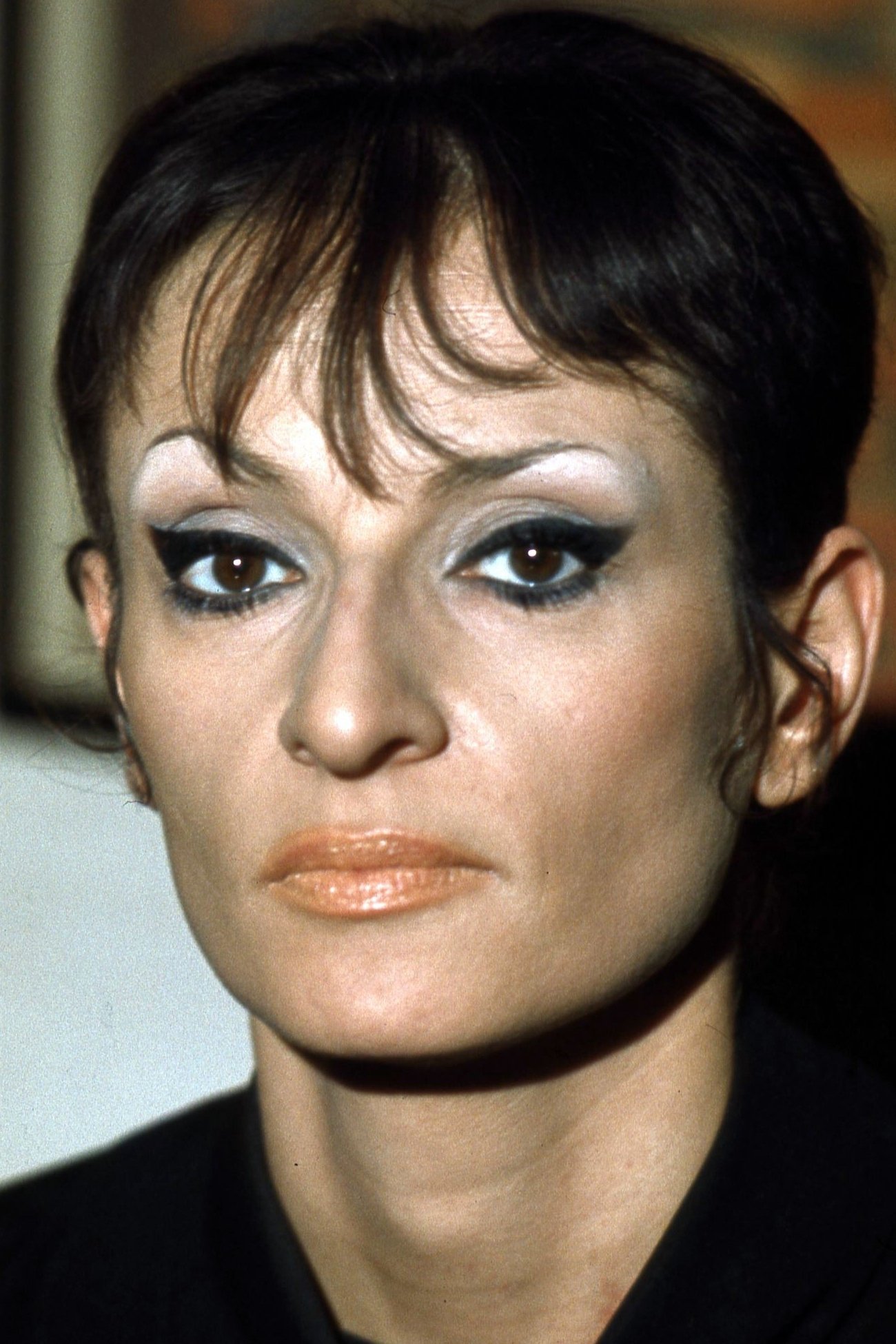
Profile via TMDB · Courtesy of TMDB
Barbara
Sign in to saveAlso known as Barbara Brodi, Andrée Olga, Monique Andrée Serf
French recording artist; singer-songwriter (1930–1997)
OverviewAI-generated
Barbara, born Monique Andrée Serf on June 9, 1930, in the 17th arrondissement of Paris, was a French film actor, singer-songwriter, singer, and poet. She worked primarily in the chanson genre and composed music. Her professional career began in 1958, during which she performed using the piano and her voice. She recorded for several labels, including Universal Music Group, His Master's Voice, Odeon, and Philips Records.
She died of cardiovascular disease on November 24, 1997, in Neuilly-sur-Seine. Barbara was a Jewish woman who spoke and wrote in French. She was a citizen of France and received the award of Knight of the Legion of Honour. She is buried at the Cimetière parisien de Bagneux.
Synthesized by Vinony from 33 facts across 4 sources: Wikidata, MusicBrainz, Last.fm, TMDb. Generated from structured data (not the Wikipedia text) and checked against those facts — may still contain errors.
Film & TV
Paris, France
Monique Andrée Serf (9 June 1930 – 24 November 1997), known as Barbara, was a French singer. She took her stage name from her grandmother, Varvara Brodsky, a native of Odesa, Ukraine. Barbara became a famous cabaretière in the late 1950s in Paris, known as La Chanteuse de minuit ('the midnight singer'), before she started composing her own tracks, which brought her to fame. Her most famous songs…
Known for
- Immortelle Barbara - « …Du bout des lèvres » au Grand Rex à Paris, le 18/09/2023 — Self (archive footage)2024
- Au cœur du Papotin — Self2023
- Mitterrand, président culturel — Self (archive footage)2021
- Barbara, chansons pour une absente — Self (archive footage)2017
- À la recherche de... Pierre Richard — Self - Singer, songwriter (archive footage)2017
- Precy Jardin — Self2006
- Chants — Self1995
- Le monde est à vous — Self1987
- Barbara en concert : Pantin 81 — Self1986
- Victoires de la musique — Self1985
via TMDB
Listeners · Last.fm
- Listeners
- 225,439
- Total plays
- 2,585,349
Tags
Barbara was a popular French female singer born as Monique Andrée Serf (9th June 1930 - 25th November 1997) best known under her stage name. "Barbara" had been the title of a famous song in the fifties, whose text comes from Prévert. Monique Serf, born in Paris, France, into a Jewish family, was ten years old when she had to go into hiding during the German occupation of France in World War II. After the war ended, a neighbourhood music teacher heard her sing and took an interest in helping her
Key facts
- Born
- Monique Andrée Serf , 9 June 1930, Paris , France
- Died
- 24 November 1997 (aged 67), Neuilly-sur-Seine , France
- Genres
- Chanson French pop
- Occupations
- Singer-songwriter actress
- Instruments
- Vocals piano
- Years active
- 1958–1996
- Label
- Universal Music Group
via Wikipedia infobox
Wikidata facts
- Instance of
- human
- Given name
- Andrée
- Gender
- female
- Citizenship
- France
- Place of birth
- 17th arrondissement of Paris
- Place of death
- Neuilly-sur-Seine
- Occupation
- television actor
- Languages spoken
- French
- Native language
- French
- Field of work
- music composing
- Genre
- chanson
- Instrument
- voice
- Record label
- Mercury Records
- Image
- Barbara 2 (Repetities 1968-03-07 Grand Gala du Disque Populaire).jpg
Show 20 more facts
- Commons category
- Barbara (singer)
- place of burial
- Cimetière parisien de Bagneux
- date of birth
- 1930-06-09
- date of death
- 1997-11-24
- birth name
- Monique Andrée Serf
- name in native language
- Monique Serf
- cause of death
- cardiovascular disease
- ethnic group
- Jewish people
- pseudonym
- Barbara Brodi
- different from
- Barbara
- start of work period
- 1958-00-00
- copyright representative
- SACEM
- end of work period
- 1997-00-00
- nickname
- La Chanteuse de Minuit
- writing language
- French
- social media followers
- 30000
- partner in business or sport
- Roland Romanelli
- archives at
- Bibliothèque nationale de France
- Commons Creator page
- Barbara
- manner of death
- natural causes
via Wikidata · CC0
~11 min read
Encyclopedic overview
(Learn how and when to remove this message)
Monique Andrée Serf (9 June 1930 – 24 November 1997), known as Barbara, was a French singer. She took her stage name from her grandmother, Varvara Brodsky, a native of Odesa, Ukraine. Barbara became a famous cabaretière in the late 1950s in Paris, known as La Chanteuse de minuit ('the midnight singer'), before she started composing her own tracks, which brought her to fame. Her most famous songs include "Dis, quand reviendras-tu ?" (1962), "Ma plus belle histoire d'amour" (1966) and "L'Aigle noir" (1970), the latter of which is said to have sold over 1 million copies in just twelve hours.
Excerpted from Wikipedia’s “Barbara” article, available under the CC BY-SA 4.0 licence.