Barringtonia · Kew POWO · Kew Plants of the World Online
Barringtonia
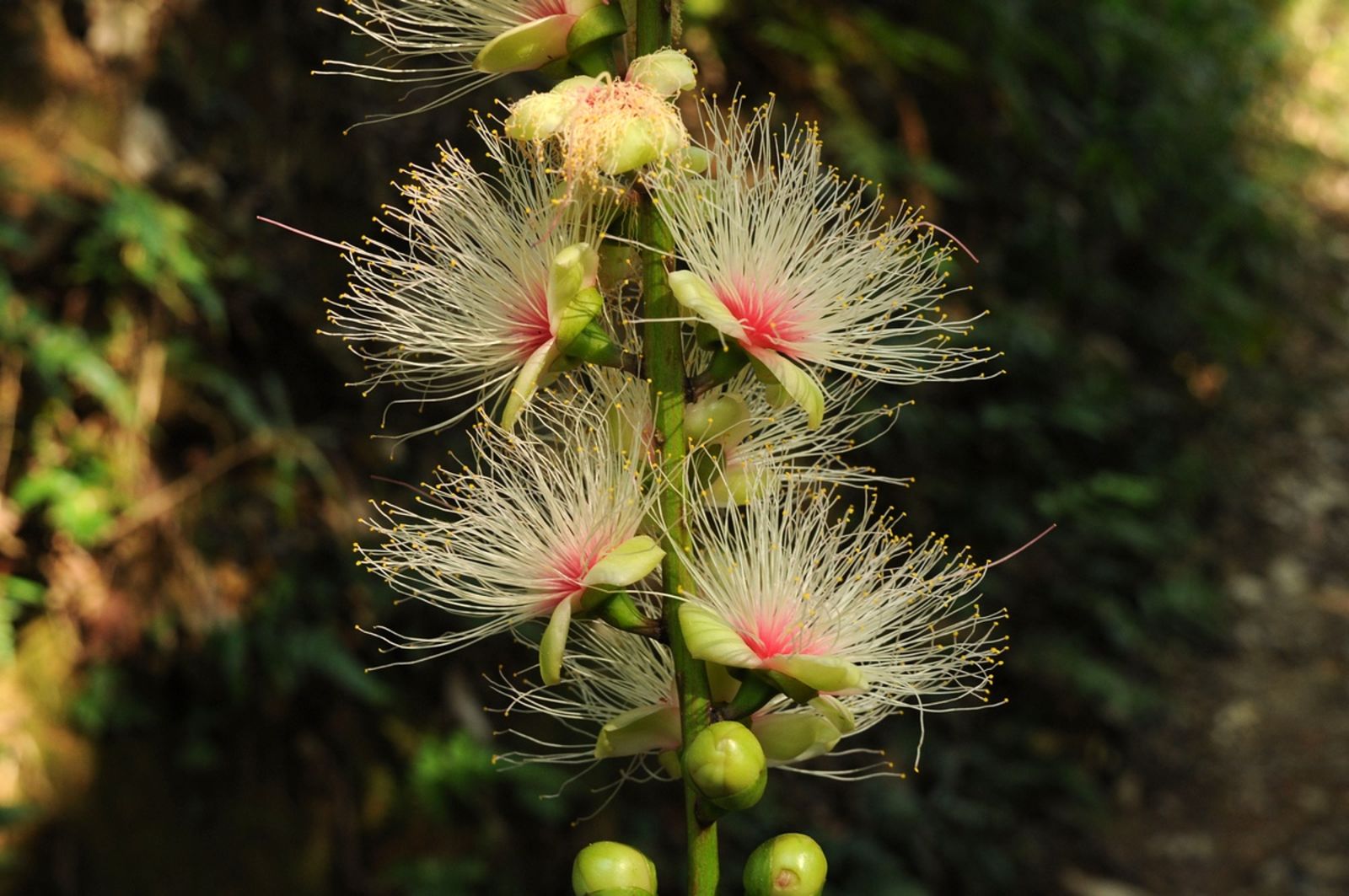
Sign in to saveBarringtonia is a genus of flowering plants in the family Lecythidaceae first described as a genus with this name in 1775. It is native to Africa, southern Asia, Australia, and various islands of the Pacific and Indian Oceans. The genus name commemorates Daines Barrington.
Species
サガリバナ属
GENUS
- KingdomPlantae
- PhylumTracheophyta
- ClassMagnoliopsida
- OrderEricales
- FamilyLecythidaceae
General: Members of Barringtonia are found in lowland forests
via GBIF · Kew POWO
Museum specimens
- Specimen records
- 598
- With media
- 377
- Family
- Lecythidaceae
- Collections
- USNM, GH, A, MO
- Recorded in
- United States, Philippines, Indonesia, Papua New Guinea, Malaysia, China
Research
89 papers- Isoryanodane diterpene derivatives from Barringtonia macrocarpa.Natural product research · 2024
- Acylated flavonoid glycosides from Barringtonia racemosa.Natural product research · 2020
- Flavonoid glycosides from Barringtonia acutangula.Bioorganic & medicinal chemistry letters · 2017
- TAK1/AP-1-Targeted Anti-Inflammatory Effects of Barringtonia augusta Methanol Extract.Molecules (Basel, Switzerland) · 2021
- Acylated flavonoid glycosides from Barringtonia pendula and their inhibition on lipopolysaccharide-induced nitric oxide production in RAW264.7 cells.Fitoterapia · 2023
via PubMed
Wikidata facts
- Instance of
- taxon
- Image
- Barringtonia-acutangula-SF23323-08.jpg
Show 7 more facts
- topic's main category
- Category:Barringtonia
- Commons category
- Barringtonia
- taxon name
- Barringtonia
- taxon rank
- genus
- taxon common name
- 玉蕊属
- taxon author citation
- J.R.Forst. & G.Forst.
Sources (2)
via Wikidata · CC0
~2 min read
Encyclopedic overview
5 sectionsContents
- Description
- Species list
- Gallery
- References
- External links
Barringtonia is a genus of flowering plants in the family Lecythidaceae first described as a genus with this name in 1775. It is native to Africa, southern Asia, Australia, and various islands of the Pacific and Indian Oceans. The genus name commemorates Daines Barrington.
==Description== Plants in this genus are evergreen trees or shrubs, which may be deciduous or semi-deciduous. Leaves are entire or toothed. Inflorescences are pendulous or (rarely) erect racemes, either , , or cauliflorus. The has four or five lobes (with the exception of B. asiatica, two or three), petals number between three and six. Stamens are numerous, arranged in three to eight whorls. Ovaries are two to four locular, with two to eight ovules per locule. The fruit may be , or , and may be angled or winged. They contain one large seed.
Excerpted from Wikipedia’s “Barringtonia” article, available under the CC BY-SA 4.0 licence.