(c) Catriona Munro, Stefan Siebert, Felipe Zapata, Mark Howison, Alejandro Damian-Serrano, Samuel H. Church, Freya E.Goetz, Philip R. Pugh, Steven H.D.Haddock, Casey W.Dunn, some rights reserved (CC BY) · cc-by
Bathyphysa
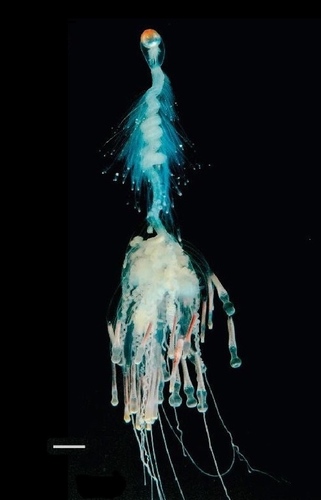
Sign in to saveBathyphysa is a genus of hydrozoan siphonophores within the family Rhizophysidae. It has 3 species: Bathyphysa conifera, Bathyphysa Sibogae, and Bathyphysa japonica. This genus is composed of colonial organisms that consist of specialized zooids and are characterized by an elongated body, lack of swimming bells, and the presence of a gas filled float chamber (pneumatophore). The Bathyphysa species encompass the deep ocean waters and are primarily bathypelagic predators. They typically prey on zooplankton and nekton using tentacles that bear nematocysts for capturing purposes.
Species
マガタマニラ属
GENUS
- KingdomAnimalia
- PhylumCnidaria
- ClassHydrozoa
- OrderSiphonophorae
- FamilyRhizophysidae
via GBIF
Museum specimens
- Specimen records
- 10
- With media
- 3
- Family
- Rhizophysidae
- Collections
- RBINS-SCIENTIFIC HERITAGE, NHMUK
- Recorded in
- Gabon, Congo, The Democratic Republic Of The
Wikidata facts
- Instance of
- taxon
- Parent taxon
- Rhizophysidae
- Image
- NMNH-IZ1160071 IZ1160072 CUR11547 Bathyphysa CUR11548 Hyperiids P6282784.jpg
Show 3 more facts
- taxon name
- Bathyphysa
- taxon rank
- genus
- Commons category
- Bathyphysa
Sources (1)
via Wikidata · CC0
~5 min read
Encyclopedic overview
5 sectionsContents
- Taxonomy
- Morphology
- Habitat
- Ecology
- References
Bathyphysa is a genus of hydrozoan siphonophores within the family Rhizophysidae. It has 3 species: Bathyphysa conifera, Bathyphysa Sibogae, and Bathyphysa japonica. This genus is composed of colonial organisms that consist of specialized zooids and are characterized by an elongated body, lack of swimming bells, and the presence of a gas filled float chamber (pneumatophore). The Bathyphysa species encompass the deep ocean waters and are primarily bathypelagic predators. They typically prey on zooplankton and nekton using tentacles that bear nematocysts for capturing purposes.
== Taxonomy == In 1878, marine biologist Théophile Rudolphe Studer first described the genus using samples of Bathyphysa conifera that had been wrapped around plumb lines. This discovery was followed by that of the Bathyphysa sibogae in 1908, through specimens collected on trawls during the Siboga expedition.
Excerpted from Wikipedia’s “Bathyphysa” article, available under the CC BY-SA 4.0 licence.