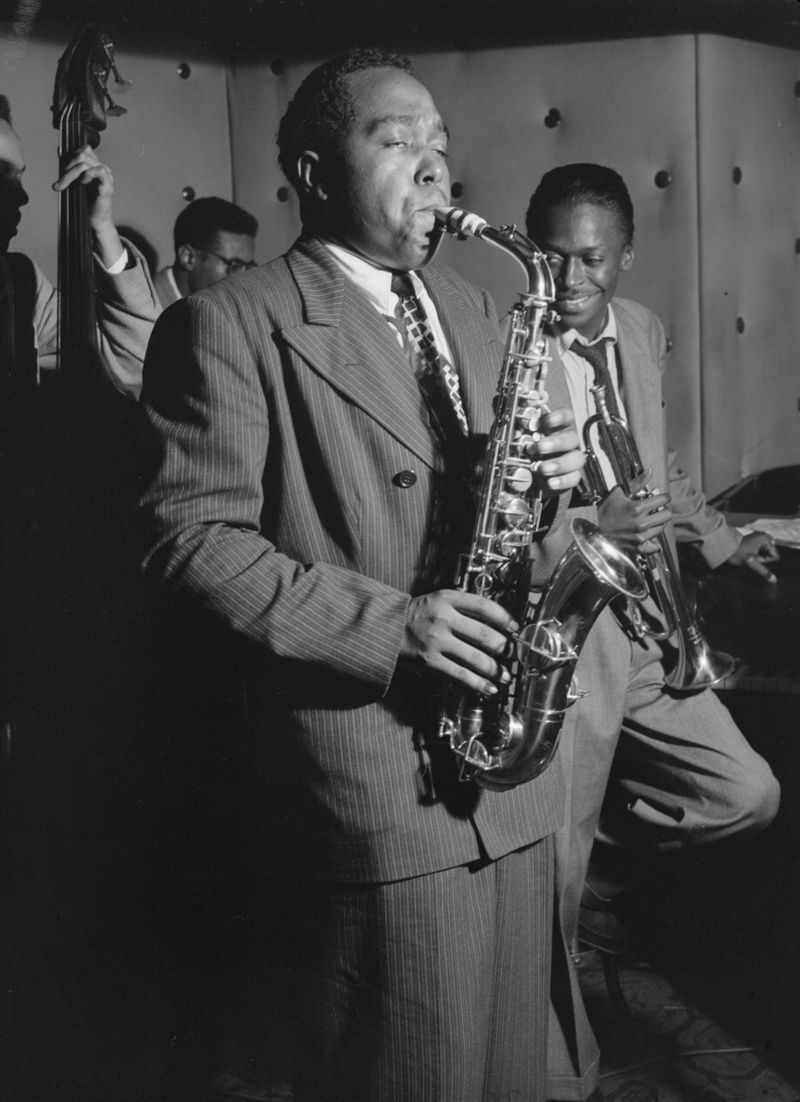
File:Charlie_Parker,_Tommy_Potter,_Miles_Davis,_Max_Roach_(Gottlieb_06941).jpg · Wikimedia Commons · See Wikimedia Commons
bebop
Sign in to saveAlso known as jazz bebop, bop, rebop, be-bop
Bebop or bop is a style of jazz developed in the early to mid-1940s in the United States. It is characterized by a fast tempo, complex chord progressions—with rapid chord changes, changes of key, and substitute chords—along with virtuosic improvisation based on a combination of harmonic structure, scales, and occasional references to the melody.
Bebop is a fast-paced style of jazz that emerged in the early to mid-1940s and is known for its complex harmonies, quick chord changes, and skilled improvisation by musicians. It matters because it represented a significant new direction in jazz music, emphasizing technical difficulty and harmonic sophistication in ways that challenged and transformed the genre.
AI-generated from the Wikipedia summary — may contain errors.
Key facts
- Music genre.name
- Bebop
- Music genre.image
- Charlie Parker, Tommy Potter, Miles Davis, Max Roach (Gottlieb 06941).jpg
- Music genre.caption
- Alto saxophonist Charlie Parker was a leading performer and composer of the bebop era. He is pictured here with Tommy Potter, Max Roach and Miles Davis at the Three Deuces club in New York City.
- Music genre.stylistic_origins
- Swing Kansas City jazz
- Music genre.cultural_origins
- Mid-1940s, United States
- Music genre.derivatives
- Avant-garde jazz hard bop post-bop wabap
- Music genre.regional_scenes
- United States
via Wikipedia infobox
Wikidata facts
- Instance of
- music genre
- Subclass of
- jazz
- Country of origin
- United States
- Image
- Howard McGhee, Brick Fleagle and Miles Davis, ca September 1947 (Gottlieb).jpg
Show 5 more facts
- topic's main category
- Category:Bebop
- Commons category
- Bebop
- inception
- 1945-00-00
- native label
- Bebop
- on focus list of Wikimedia project
- Wikipedia:Vital articles/Level/4
Sources (8)
via Wikidata · CC0
~33 min read
Encyclopedic overview
15 sectionsContents
- Etymology
- Instrumentation
- Musical style
- History
- Swing era influences
- Going beyond swing in New York
- Early recordings
- Breakout
- Beyond
- Influence
- Musicians
- See also
- References
- Further reading
- External links
Bebop or bop is a style of jazz developed in the early to mid-1940s in the United States. It is characterized by a fast tempo, complex chord progressions—with rapid chord changes, changes of key, and substitute chords—along with virtuosic improvisation based on a combination of harmonic structure, scales, and occasional references to the melody.
Bebop developed as the younger generation of jazz musicians expanded the creative possibilities of jazz beyond the popular, dance-oriented swing music-style to a new "musician's music" that was not as danceable and demanded close listening. As bebop was not intended for dancing, it enabled the musicians to play at faster tempos. Bebop musicians explored advanced harmonies, complex syncopation, altered chords, extended chords, chord substitutions, asymmetrical phrasing, and intricate melodies. Bebop groups used rhythm sections in a way that expanded their role. Whereas the key ensemble of the swing music era was the big band of 16–18 musicians playing in an ensemble-based style, the classic bebop group was a small combo that consisted of saxophone (alto or tenor), trumpet, piano, guitar, double bass, and drums playing music in which the ensemble played a supportive role for soloists. Rather than play heavily arranged music, bebop musicians typically played the melody of a composition (called the "head") with the accompaniment of the rhythm section, followed by a section in which each of the performers improvised a solo, then returned to the melody at the end of the composition.
Excerpted from Wikipedia’s “bebop” article, available under the CC BY-SA 4.0 licence.