
File:Bertolt-Brecht.jpg · Wikimedia Commons · See Wikimedia Commons
Bertolt Brecht
Sign in to saveAlso known as Berŭtʻoltʻŭ Bŭrehitʻŭ, Pertōl Pirekcṭ, Mpertolt Mprecht, Pu-lai-hsi-tʻe, Pertōlṭ Pirekcṭ, Perṭōlṭ Pireṣṭ, Bertolt Breht, Bert Brecht
German poet, playwright, and theatre director (1898–1956)
Bertolt Brecht was a German poet, playwright, and theatre director who lived from 1898 to 1956 and became one of the most influential figures in modern drama. He matters because he revolutionized how theatre could be used to make audiences think critically about society, rather than simply entertaining them passively.
AI-generated from the Wikipedia summary — may contain errors.
Person · Open Library
- Works
- 22
Top works
- The Messingkauf Dialogues
- Seven plays
- Gedichte I. 1918-1929.
- Die Geschafte Des Herrn Julius Caesar
- Die Driegroschenoper
via Open Library + Wikidata
Music · MusicBrainz
- Type
- Person
- Gender
- Male
- Origin
- Germany
- Active from
- 1898-02-10
- Active to
- 1956-08-14
Discography
- Gisela May singt Lieder von Hanns Eisler nach Texten von Bertolt Brecht1962
- The Exception and the Rule1965
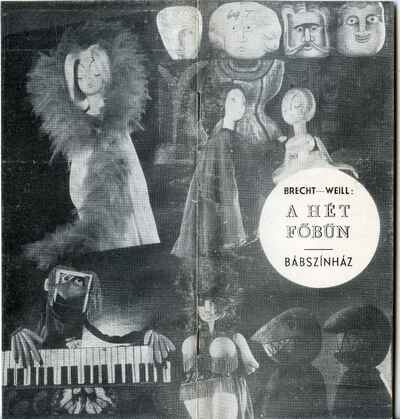
- Die 7 Todsünden der Kleinbürger1967
- Die Dreigroschenoper1979
- Collaboration1989
- Let No One Deceive You: Songs of Bertolt Brecht1989
- The Collector's Three Penny Opera (1929-1931 original cast)1990
- The Seven Deadly Sins / The Berlin Requiem1990
- Die Verurteilung des Lukullus1993
- War & Exile1996
via MusicBrainz · CC0
Listeners · Last.fm
- Listeners
- 13,233
- Total plays
- 101,035
Tags
Similar artists
Bertolt Brecht (born Eugen Berthold Friedrich Brecht; 10 February 1898–14 August 1956) was a German poet, playwright, and theatre director. His collaboration with composer Kurt Weill in particular created popular music classics such as Mack The Knife and Alabama Song. An influential theatre practitioner of the twentieth century, Brecht made equally significant contributions to dramaturgy and theatrical production, the latter particularly through <a href="https://www.last.fm/music/Bertolt+Brecht">Read more on Last.fm</a>
Recent publications · Crossref
5 total works indexed
- ERA5-Land: a state-of-the-art global reanalysis dataset for land applications
· 2021 · cited 3,790x
- Attributable deaths and disability-adjusted life-years caused by infections with antibiotic-resistant bacteria in the EU and the European Economic Area in 2015: a population-level modelling analysis
· 2019 · cited 2,447x
- Lignin Biosynthesis and Structure
· 2010 · cited 2,209x
- GLEAM v3: satellite-based land evaporation and root-zone soil moisture
· 2017 · cited 1,961x
- World Health Organization Global Estimates and Regional Comparisons of the Burden of Foodborne Disease in 2010
· 2015 · cited 1,707x
via Crossref · CC0
Authority record · VIAF
- Lifespan
- 1898–1956
- Nationality
- DE, US, SE, DK, DEU
- Role / Field
- Theatrical producers and directors, Screenwriters, Poets, Poetas, Playwright, Theater production and direction
- Language
- ger, deu
- Gender
- Male
Recorded by 47 libraries
via VIAF · OCLC
Quotes
- “People remain what they are even if their faces fall apart.”
- “A man who strains himself on the stage is bound, if he is any good, to strain all the people sitting in the stalls.”
- “The main objective is to learn to think crudely. Crude thinking is the great one's thinking.”
- “Do not treat me in this fashion. Don't leave me out. Have I notAlways spoken the truth in my books? And nowYou treat me like a liar! I order you:Burn me!”
- “Let nothing be called natural In an age of bloody confusion, Ordered disorder, planned caprice,And dehumanized humanity, lest all things Be held unalterable!”
- “Literary works cannot be taken over like factories, or literary forms of expression like industrial methods. Realist writing, of which history offers many widely varying examples, is likewise conditioned by the question of how, when and for what class it is made use of.”
via Wikiquote · CC BY-SA
Wikidata facts
- Image
- Bundesarchiv Bild 183-W0409-300, Bertolt Brecht.jpg
Show 10 more facts
- birth name
- Eugen Berthold Friedrich Brecht
- pseudonym
- Berthold Larsen
- Commons category
- Bertolt Brecht
- date of birth
- 1898-02-10
- date of death
- 1956-08-14
- Commons gallery
- Bertolt Brecht
- name in native language
- Bertolt Brecht
- P8168
- Rosa
- P12674
- Saraland
- P12749
- Markward von Annweiler
Sources (15)
via Wikidata · CC0
Works in European collections
27 objects attributed to Bertolt Brecht, held across European museums, libraries & archives · via Europeana

Querschnitt aus der Oper: "Aufstieg und Fall der Stadt Mahagonny"; I. Teil; II. Teil / (Kurt Weill). Text: Bert Brecht
Leben des Galilei

Bert Brecht an Arnold Bronnen: 12 Briefe und 6 Karten, teils eigenhändig, teils maschinengeschrieben, 1 Brief von Hessel-Burri und 1 Banknote mit eigenhändigen Zeilen - BSB Cgm 8075

A kaukázusi krétakör

Koldusopera

Kurázsi mama és gyermekei
Aufstieg und Fall der Stadt Mahagonny. Oper in drei Akten von Brecht [Textbuch] Musik von Kurt Weill
Der gute Mensch von Sezuan
Die Dreigroschenoper
Die Kleinbürgerhochzeit
Mutter Courage und ihre Kinder
Flüchtlingsgespräche
Der aufhaltsame Aufstieg des Arturo Ui
Mann ist Mann
Mann ist Mann
Die Dreigroschenoper
Der gute Mensch von Sezuan
In der Fremde
Die Dreigroschenoper
Herr Puntila und sein Knecht Matti
Im Dickicht der Städte
Baal
Glut unter der Asche
Leben des Galilei

Handschriftlicher Brief Bertolt Brechts an Paula Banholzer, 16. April 1919 - SuStB Augsburg "BSX 1, Banholzer, Paula, 1919-04-16"
Untitled
Untitled
~40 min read
Article
Eugen Berthold Friedrich Brecht (10 February 1898 – 14 August 1956), known as Bertolt Brecht and Bert Brecht, was a German theatre practitioner, playwright, and poet. Coming of age during the Weimar Republic, he had his first successes as a playwright in Munich and moved to Berlin in 1924, where he wrote The Threepenny Opera with Elisabeth Hauptmann and Kurt Weill and began a lifelong collaboration with the composer Hanns Eisler. Immersed in Marxist thought during this period, Brecht wrote didactic Lehrstücke and became a leading theoretician of epic theatre (which he later preferred to call "dialectical theatre") and the Verfremdungseffekt.
When the Nazis came to power in Germany in 1933, Brecht fled his home country, initially to Scandinavia. During World War II he moved to Southern California, where he established himself as a screenwriter while being surveilled by the FBI. In 1947, he was part of the first group of Hollywood film artists to be subpoenaed by the House Un-American Activities Committee for alleged Communist Party affiliations. The day after testifying, he returned to Europe, eventually settling in East Berlin, where he co-founded the theatre company Berliner Ensemble with his wife and long-time collaborator, actress Helene Weigel.
Gallery (6)
Available in 109 languages
- Español
- Français
- Deutsch
- 中文
- 日本語
- Русский
- Português
- Italiano
- العربية
- हिन्दी
- Afrikaans
- Albanian
- Aragonese
- Armenian
- Arpitan
- Asturian
- Aymara
- azb
Show 90 more
- Azerbaijani
- Bahasa Indonesia
- Bangla
- Bashkir
- Basque
- be_x_old
- Belarusian
- Bhojpuri
- Bishnupriya
- Bosnian
- Breton
- Bulgarian
- Catalan
- Central Kurdish
- Croatian
- Czech
- Danish
- Egyptian Arabic
- Esperanto
- Estonian
- Faroese
- Fiji Hindi
- Filipino
- Finnish
- Galician
- Georgian
- Greek
- Gujarati
- Haitian Creole
- Hebrew
- Hungarian
- hyw
- Icelandic
- Ido
- Interlingue
- Irish
- Javanese
- Kazakh
- Kurdish
- Kyrgyz
- Latin
- Latvian
- Lingua Franca Nova
- Lithuanian
- Low German
- Luxembourgish
- Macedonian
- Malagasy
- Malayalam
- Maltese
- Manx
- Mingrelian
- Mongolian
- Nederlands
- Norwegian
- Norwegian Nynorsk
- Occitan
- Pashto
- Piedmontese
- Polski
- Punjabi
- Quechua
- Romanian
- Serbian
- Serbian (Latin)
- simple
- Sinhala
- Slovak
- Slovenian
- Svenska
- Tajik
- Tamil
- Tiếng Việt
- Türkçe
- Ukrainian
- Upper Sorbian
- Urdu
- Uzbek
- Volapük
- Waray
- Welsh
- Western Frisian
- Western Mari
- Western Panjabi
- Wu Chinese
- Zaza
- zh_min_nan
- zh_yue
- فارسی
- 한국어
via Wikidata sitelinks · CC0