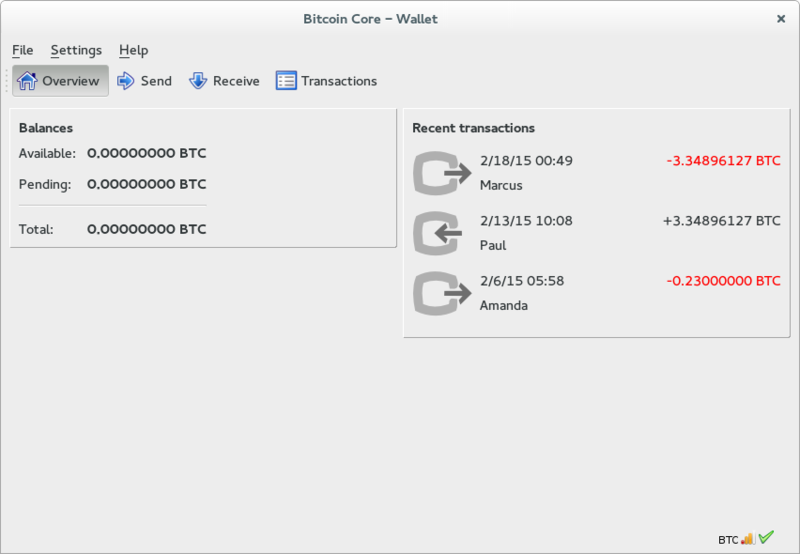
File:Bitcoin-core-v0.10.0.png · Wikimedia Commons · See Wikimedia Commons
Bitcoin
Sign in to saveBitcoin (abbreviation: BTC; sign: ₿) is the first decentralized cryptocurrency. Based on a free-market ideology, bitcoin was invented in 2008 when an unknown person published a white paper under the pseudonym of Satoshi Nakamoto. Use of bitcoin as a currency began in 2009, with the release of its open-source implementation. From 2021 to 2025, El Salvador adopted it as legal tender currency before revoking it. As bitcoin is pseudonymous, its use by criminals has attracted the attention of regulators, leading to its ban by several countries.
Bitcoin is a decentralized digital currency created in 2008 that operates without a central authority, allowing people to conduct transactions directly with each other. It has attracted significant regulatory scrutiny because of its pseudonymous nature, which has enabled some criminal use, leading certain countries to ban it, while El Salvador briefly adopted it as official legal tender before reversing that decision.
AI-generated from the Wikipedia summary — may contain errors.
Key facts
- Cryptocurrency.currency_name
- Bitcoin
- Cryptocurrency.image_1
- Bitcoin.svg
- Cryptocurrency.image_width_1
- 150
- Cryptocurrency.image_width_2
- 110
- Cryptocurrency.image_title_1
- Commonly used logo of bitcoin
- Cryptocurrency.alt1
- Prevailing bitcoin logo
- Cryptocurrency.precision
- 10−8
- Cryptocurrency.subunit_name_1
- millibitcoin
- Cryptocurrency.subunit_name_2
- microbitcoin
- Cryptocurrency.plural
- bitcoins
- Cryptocurrency.symbol
- ₿(Unicode: )
- Cryptocurrency.code
- BTC
- Cryptocurrency.implementations
- Bitcoin Core
- Cryptocurrency.initial_release_version
- 0.1.0
- Cryptocurrency.status
- Active
- Cryptocurrency.latest_release_version
- 30.2.0
- Cryptocurrency.programming_languages
- C++
- Cryptocurrency.author
- Satoshi Nakamoto
via Wikipedia infobox
Source code
Bitcoin Core connects to the Bitcoin peer-to-peer network to download and fully validate blocks and transactions. It also includes a wallet and graphical user interface, which can be optionally built. The master branch is regularly built (see doc/build- .md for instructions) and tested, but it is not guaranteed to be completely stable. Tags are created regularly from release branches to indicate new official, stable release versions of Bitcoin Core. The repository is used exclusively for the development of the GUI. Its master branch is identical in all monotree repositories. Release branches and tags do not exist, so please do not fork that repository unless it is for development reasons. The contribution workflow is described in CONTRIBUTING.md and useful hints for developers can be found in doc/developer-notes.md. Testing and code review is the bottleneck for development; we get more pull requests than we can review and test on short notice. Please be patient and help out by testing other people's pull requests, and remember this is a security-critical project where any mistake might cost people lots of money. Developers are strongly encouraged to write unit tests for new code, and to submit new unit tests for old code. Unit tests can be compiled and run (assuming they weren't disabled during the generation of the build system) with: ctest . Further details on running and extending unit tests can be found in /src/test/README.md. There are also regression and integration tests, written in Python. These tests can be run (if the test dependencies are installed) with: build/test/functional/test runner.py (assuming build is your build directory). The CI (Continuous Integration) systems make sure that every pull request is tested on Windows, Linux, and macOS. The CI must pass on all commits before merge to avoid unrelated CI failures on new pull requests. Translations are periodically pulled from Transifex and merged into the git repository. See the translation process for details on how this works. Important : We do not accept translation changes as GitHub pull requests because the next pull from Transifex would automatically overwrite them again.
Excerpt from the source-code README · 3,488 chars · not written by Vinony
Wikidata facts
- Instance of
- payment system
- Subclass of
- investment
- Has part
- bitcoin protocol
- Named after
- coin
- Country
- Central African Republic
- Stock exchange
- KuCoin Exchange
- Developer
- Satoshi Nakamoto
- Official website
- bitcoin.org
- Significant event
- Bitcoin Law in El Salvador
Show 27 more facts
- uses
- proof of work
- derivative work
- Bitcoin Gold
- Stack Exchange site URL
- bitcoin.stackexchange.com
- time of earliest written record
- 2008-10-31
- Commons category
- Bitcoin
- topic's main category
- Category:Bitcoin
- history of topic
- history of bitcoin
- hashtag
- BTC
- Stack Exchange tag
- stackoverflow.com/tags/bitcoin
- short name
- BTC
- publication date
- 2009-01-03
- unit symbol
- ₿
- price
- 103331.32
- inception
- 2009-01-03
- cryptocurrency code
- XBT
- topic has template
- Template:Bitcoin
- power consumed
- 18.4
- conversion to standard unit
- 100000000
- has goal
- decentralization
- applies to jurisdiction
- Central African Republic
- market capitalization
- 712696504252
- name
- ꠛꠤꠐꠇꠄꠘ
- port
- 8333
- Unicode character
- ₿
- copyright license
- MIT License
- Lemmy instance URL
- realbitcoin.cash
- source code repository URL
- github.com/bitcoin/bitcoin
Sources (15)
via Wikidata · CC0
~28 min read
Encyclopedic overview
26 sectionsContents
- History
- Background
- 2008–2009: Creation
- 2010–2012: Early growth
- 2013–2014: First regulatory actions
- 2015–2019
- 2020–present
- Design
- Units and divisibility
- Blockchain
- Addresses and transactions
- Mining
- Privacy and fungibility
- Wallets
- Scalability and decentralization challenges
- Economics and usage
- Bitcoin's theoretical roots and ideology
- Recognition as a currency and legal status
- Use for payments
- Use for investment and status as an economic bubble
- Market characteristics
- See also
- Notes
- References
- Further reading
- External links
Bitcoin (abbreviation: BTC; sign: ₿) is the first decentralized cryptocurrency. Based on a free-market ideology, bitcoin was invented in 2008 when an unknown person published a white paper under the pseudonym of Satoshi Nakamoto. Use of bitcoin as a currency began in 2009, with the release of its open-source implementation. From 2021 to 2025, El Salvador adopted it as legal tender currency before revoking it. As bitcoin is pseudonymous, its use by criminals has attracted the attention of regulators, leading to its ban by several countries.
Bitcoin works through the collaboration of computers, each of which acts as a node in the peer-to-peer bitcoin network. Each node maintains an independent copy of a public distributed ledger of transactions, called a blockchain, without central oversight. Transactions are validated through the use of cryptography, preventing one person from spending another person's bitcoin, as long as the owner of the bitcoin keeps certain sensitive data secret.
Excerpted from Wikipedia’s “Bitcoin” article, available under the CC BY-SA 4.0 licence.
Gallery (17)
Available in 139 languages
- Español
- Français
- Deutsch
- 中文
- 日本語
- Русский
- Português
- Italiano
- العربية
- हिन्दी
- Afrikaans
- Albanian
- Albanian
- Amharic
- Aragonese
- Armenian
- Assamese
- Asturian
Show 120 more
- azb
- Azerbaijani
- Bahasa Indonesia
- Balinese
- Bangla
- Bashkir
- Basque
- Bavarian
- be_x_old
- Belarusian
- Bhojpuri
- blk
- Breton
- Bulgarian
- Burmese
- Catalan
- Central Kurdish
- Croatian
- Czech
- Danish
- Egyptian Arabic
- Esperanto
- Estonian
- Faroese
- Filipino
- Finnish
- Fula
- Galician
- Georgian
- Greek
- Hausa
- Hebrew
- Hungarian
- hyw
- Iban
- Icelandic
- Ido
- Inari Sami
- Interlingua
- Interlingue
- Irish
- Kannada
- Kazakh
- Kurdish
- Kyrgyz
- Latvian
- Limburgish
- Lingua Franca Nova
- Lithuanian
- Lombard
- Luxembourgish
- Macedonian
- Malay
- Malayalam
- Maltese
- Manipuri
- Marathi
- Mazanderani
- Mongolian
- Moroccan Arabic
- nds_nl
- Nederlands
- Nepali
- Northern Sami
- Northern Sotho
- Norwegian
- Norwegian Nynorsk
- Nyanja
- Occitan
- Odia
- Papiamento
- Pashto
- Piedmontese
- Polski
- ppl
- Punjabi
- Romanian
- Scots
- Serbian
- Serbian (Latin)
- simple
- Sinhala
- Slovak
- Slovenian
- Southern Sotho
- Svenska
- Swahili
- syl
- szy
- Tajik
- Tamil
- Taroko
- Tatar
- tay
- Telugu
- Tiếng Việt
- Türkçe
- Turkmen
- Ukrainian
- Urdu
- Uyghur
- Uzbek
- Venetian
- Volapük
- Waray
- Welsh
- West Flemish
- Western Frisian
- Western Panjabi
- Wu Chinese
- Yakut
- Yiddish
- Zaza
- Zeelandic
- zh_classical
- zh_min_nan
- zh_yue
- فارسی
- ไทย
- 한국어
via Wikidata sitelinks · CC0