
File:François,_Claude_(dit_Frère_Luc)_-_Saint_Bonaventure.jpg · Wikimedia Commons · See Wikimedia Commons
Bonaventure
Sign in to saveAlso known as Giovanni di Fidanza, Giovanni Fidanza, Bonaventura, Saint Bonaventure, Saint Bonaventura, Saint Bonaventure O.F.M., Seraphic Doctor, St. Bonaventura
Bonaventure ( ; ; ; born Giovanni di Fidanza; 1221 – 15 July 1274) was an Italian Catholic Franciscan bishop, cardinal, scholastic theologian and philosopher.
OverviewAI-generated
Bonaventure, born Giovanni Fidanza in 1221, was a theologian, philosopher, writer, and regular cleric within the Catholic Church. A member of the Franciscan order, he held the positions of cardinal, bishop, and superior general. He received his education at the University of Paris, where he also served as an employer. His academic credentials included a Doctor of Divinity, and he was later granted the honorific prefix Doctor of the Church.
Among his students were John Peckham and Matthew of Aquasparta, while he studied under Alexander of Hales, Eudes Rigaud, and John of la Rochelle. Bonaventure spoke medieval Latin, Old French, Italian, and Latin. He died in Lyon on July 15, 1274. His canonization status is that of a saint.
Synthesized by Vinony from 34 facts across 7 sources: Wikidata, Crossref, Open Library, MusicBrainz, Last.fm, Europeana Sparql, Vinony graph. Generated from structured data (not the Wikipedia text) and checked against those facts — may still contain errors.
Person · Open Library
- Works
- 21
Top works
- Streams of Consciousness Coloring Book
- Psautier de la Sainte Vierge
- Méditations Sur la Vie de Notre Seigneur Jésus Christ...
- Méditations de la Vie du Christ...
- S. Bonaventurae Opera Omnia...
via Open Library + Wikidata
Key facts
- Saint.honorific_prefix
- Saint
- Saint.name
- Bonaventure
- Saint.birth_name
- Giovanni di Fidanza
- Saint.birth_date
- 1221
- Saint.feast_day
- 14 July (1568-1969), 15 July (1969-Present)
- Saint.venerated_in
- Catholic ChurchChurch of England
- Saint.image
- François, Claude (dit Frère Luc) - Saint Bonaventure.jpg
- Saint.caption
- 17th-century portrait of Bonaventure by French painter and friar Claude François
- Saint.birth_place
- Civita di Bagnoregio, Latium, Papal States
- Saint.death_place
- Lyon, Lyonnais, Kingdom of Burgundy-Arles
- Saint.titles
- FriarCardinal Bishop of AlbanoDoctor of the ChurchSeraphic DoctorTeacher of the Faith
- Saint.canonized_date
- April 14 1482
- Saint.canonized_place
- Rome
- Saint.canonized_by
- Pope Sixtus IV
- Saint.attributes
- Cardinal's hat on a bush; ciborium; Holy Communion; cardinal in Franciscan robes, usually reading or writing
- Philosopher.embed
- yes
- Philosopher.region
- Western philosophy
- Philosopher.era
- Medieval philosophy
via Wikipedia infobox
Wikidata facts
- Instance of
- human
- Gender
- male
- Place of birth
- Bagnoregio
- Place of death
- Lyon
- Occupation
- mystic
- Position held
- superior general
- Educated at
- University of Paris
- Employer
- University of Paris
- Languages spoken
- Latin
- Religion
- Catholic Church
- Academic degree
- Doctor of Divinity
- Student of
- John of la Rochelle
- Image
- Bonaventura1 (Woerden).jpg
- Religious order
- Franciscans
Show 19 more facts
- Commons category
- Bonaventura
- date of death
- 1274-00-00
- date of birth
- 1221-00-00
- described by source
- Granat Encyclopedic Dictionary
- topic's main category
- Category:Bonaventura
- Commons gallery
- Bonaventura
- canonization status
- saint
- birth name
- Giovanni Fidanza
- student
- Matthew of Aquasparta
- honorific prefix
- Doctor of the Church
- feast day
- July 15
- religious name
- Bonaventura
- on focus list of Wikimedia project
- Wikipedia:Vital articles/Level/4
- consecrator
- Gregory X
- Commons Creator page
- Bonaventura
- name in native language
- Bonaventura
- P12749
- Dieter Korn
- P13311
- Eric Abidal
- subject has role
- bishop
Sources (7)
via Wikidata · CC0
Works in European collections
36 objects attributed to Bonaventure, held across European museums, libraries & archives · via Europeana

Bonaventura: Soliloquium, dt. ; Johannes Gerson: Points of notice about the sacrament of the altar

Untitled
Untitled
Untitled
Untitled
Untitled

Untitled

Untitled

Untitled
Untitled
Untitled
Untitled
Untitled

Untitled

Untitled

Untitled

Untitled
Untitled

Untitled

Untitled

Untitled

Untitled

Untitled

Untitled
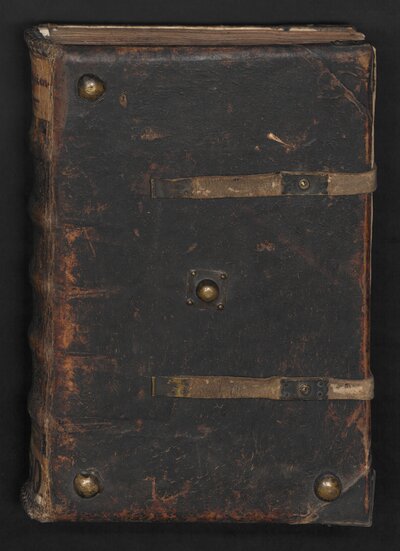
Untitled

Untitled

Untitled
Untitled
Untitled
Untitled
Untitled
Untitled
Untitled
Untitled
Untitled
Untitled
~29 min read
Encyclopedic overview
19 sectionsContents
- Life
- Relics
- Theology and works
- Writings
- Philosophy
- Theology
- Canonisation
- Places, churches, and schools named in his honour
- Europe
- Schools
- United States
- Canada
- Philippines
- Latin America
- Southern Asia
- Works
- References
- Further reading
- External links
Bonaventure ( ; ; ; born Giovanni di Fidanza; 1221 – 15 July 1274) was an Italian Catholic Franciscan bishop, cardinal, scholastic theologian and philosopher.
The seventh Minister General of the Order of Friars Minor, he also served for a time as Bishop of Albano. He was canonised on 14 April 1482 by Pope Sixtus IV. In 1588 Pope Sixtus V declared him a Doctor of the Church named as the "Seraphic Doctor" (). His feast day is 15 July.
Excerpted from Wikipedia’s “Bonaventure” article, available under the CC BY-SA 4.0 licence.
Gallery (14)
Available in 64 languages
- Español
- Français
- Deutsch
- 中文
- 日本語
- Русский
- Português
- Italiano
- العربية
- हिन्दी
- Afrikaans
- Albanian
- Armenian
- Asturian
- Bahasa Indonesia
- Basque
- Bavarian
- be_x_old
Show 45 more
- Belarusian
- Bulgarian
- Catalan
- Croatian
- Czech
- Danish
- Egyptian Arabic
- Esperanto
- Estonian
- Finnish
- Galician
- Greek
- Hebrew
- Hungarian
- Irish
- Kazakh
- Latin
- Latvian
- Lithuanian
- Malagasy
- Malayalam
- Nederlands
- Norwegian
- Piedmontese
- Polski
- Romanian
- Sardinian
- Serbian
- Serbian (Latin)
- simple
- Slovak
- Slovenian
- Svenska
- Swahili
- Tamil
- Tiếng Việt
- Türkçe
- Ukrainian
- Waray
- Welsh
- Wu Chinese
- zh_yue
- فارسی
- ไทย
- 한국어
via Wikidata sitelinks · CC0