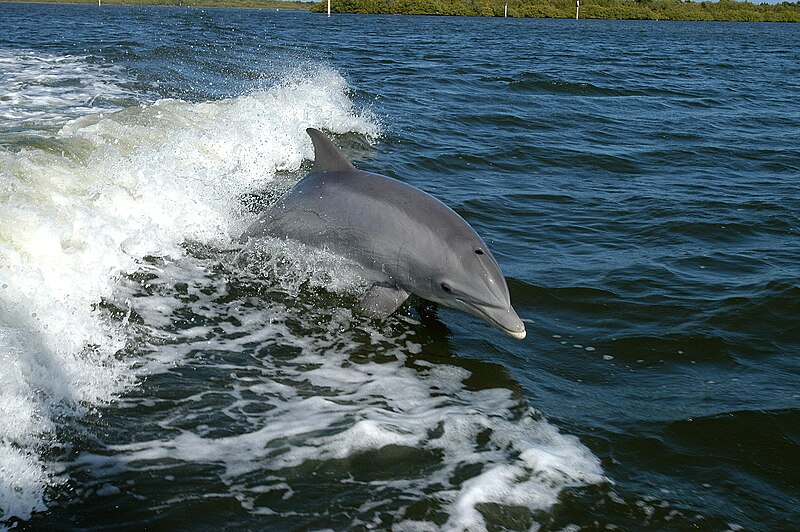
File:Tursiops_truncatus_01.jpg · Wikimedia Commons · See Wikimedia Commons
OverviewAI-generated
Tursiops is a genus of marine and brackish mammals within the family Delphinidae. It belongs to the subfamily Delphininae and is classified under the order Cetartiodactyla, class Mammalia, and phylum Chordata. The genus was described by Gervais in 1855 and has existed for about 4 million years. Its taxonomic status is accepted.
Common names for this group include Bottlenose Dolphin, Delfin mular, Großer Tümmler, and Øresvin. The genus is referenced by 1,066 other encyclopedia articles.
Synthesized by Vinony from 19 facts across 3 sources: Wikidata, WoRMS, Vinony graph. Generated from structured data (not the Wikipedia text) and checked against those facts — may still contain errors.
In the Vinony graph
Within Vinony's link graph, bottlenose dolphin is referenced by 1,066 other articles, and connects out to dolphin, Delphinidae and Ziphiidae.
It is catalogued under topics including Cosmopolitan mammals, IUCN Red List least concern species and Symbols of Mississippi.
Its subject is documented across 39 Wikipedia language editions.
Species
bottlenose dolphins
Genus
- PhylumChordata
- ClassMammalia
- OrderCetartiodactyla
- FamilyDelphinidae
寬吻海豚屬的分佈圖 種 寬吻海豚 T. truncatus 印度太洋瓶鼻海豚 T. aduncus 寬吻海豚屬(學名:Tursiops)是海豚科下最為人所知及普遍的一類。[1]分子生物學研究顯示其下有兩個物種:瓶鼻海豚及印度太洋瓶鼻海豚,而非只有一種。牠們棲息在溫帶的海域。 寬吻海豚屬會以10-30條的群落生活,有些數量可以少至1條或達至成千條。牠們主要吃魚類。牠們有時會合作捕捉魚群,也有獨自覓食的。牠們主要是靠回聲定位來尋找獵物。牠們會發出聲音及聽其回聲來確定身邊物件(包括獵物)的位置及大小。牠們也會利用聲音及身體語言來溝通。 寬吻海豚屬具有高度的智慧,包括模仿、使用人工語言、物件分類及自我認知等,這促使牠們與人類之間的互動。牠們在水族箱非常受歡迎,也有受訓來進行水雷及敵方蛙人定位。在一些地區,牠們可以與漁民合作將魚群引到漁網中。 目录 1 分類 1.1 混種 2 特徵 3 構造 4 生理及感官 4.1 回聲定位 4.2 視覺 4.3 嗅覺 4.4 溝通 5 智慧 5.1 認知 5.2 工具使用 5.3 皮層神經元 6 生活史 6.1 呼叫及睡眠 6.2 繁殖 6.3 社群關係 7 生態 7.1 食性 7.2 與其他物種關係 7.3 掠食者 8 與人類關係 8.1 互動 8.2 威脅 8.3 保育 9 參考 分類 傳統上,寬吻海豚屬只有一個物種,故不能分辨其結構。而國際自然保護聯盟因此在IUCN紅色名錄缺乏數據。[2]分子遺傳學提供了更好的工具來進行研究,並發現共有兩個物種:[3] 印度太洋瓶鼻海豚。 寬吻海豚(T. truncatus):分佈在熱帶至溫帶的海洋。身體呈灰色,配以藍灰色、褐灰色或近黑色的陰影。吻背至背鰭後一般較為深色;[4] 印度太洋寬吻海豚(T. aduncus):分佈在近印度、北澳洲、南中國、紅海及非洲東岸的海域。背部呈深灰色,腹部呈淺灰色或白色,且有灰色斑點。[4] 以下的有時被認為是寬吻海豚的亞種: 太平洋寬吻海豚(T. gillii或T. truncatus gillii):分佈在太平洋,由眼睛至前額有一道黑線。[5][6] 黑海寬吻海豚(T. truncatus ponticus):分佈在黑海。[5][7] 寬吻海豚在西北大西洋有兩個生態型:[8]即較淺水或近岸的生態型及離岸的生態型。[8]牠們的分佈地重疊,但遺傳基因上各有不同。[8]不過,牠們並沒有被描述為不同的物種或亞種。一般而言,牠們具有足夠的群落遺傳變異來描述為獨立的物種。[4] 一些遺傳學證據指印太洋瓶鼻海豚屬於細吻海豚屬,因其外觀較像花斑原海豚而多於寬吻海豚。[9][10] 在夏威夷的鯨豚。 混種 寬吻海豚屬與其他海豚都有混種。野生及圈養的情況下,寬吻海豚屬都有與灰海豚都有混種。[11][12]鯨豚是偽虎鯨與寬吻海豚的混種。鯨豚具生殖能力,現有兩條在夏威夷海洋公園(
via
Wikidata facts
- Instance of
- taxon
- Parent taxon
- Delphininae
- Image
- Tursiops truncatus 01.jpg
Show 7 more facts
- taxon name
- Tursiops
- Commons category
- Tursiops
- taxon rank
- genus
- topic's main category
- Category:Tursiops
- taxon common name
- Şise higns huday
- start time
- 3600000-00
- taxon author citation
- Gervais, 1855
Sources (3)
via Wikidata · CC0
~40 min read
Encyclopedic overview
The bottlenose dolphin is a toothed whale in the genus Tursiops. They are common, cosmopolitan members of the family Delphinidae, the family of oceanic dolphins. Molecular studies show the genus contains three species: the common bottlenose dolphin (Tursiops truncatus), the Indo-Pacific bottlenose dolphin (Tursiops aduncus), and Tamanend's bottlenose dolphin (Tursiops erebennus). Others, like the Burrunan dolphin (Tursiops (aduncus) australis), may be alternately considered their own species or be subspecies of T. aduncus. Bottlenose dolphins inhabit warm and temperate seas worldwide, being found everywhere except for the Arctic and Antarctic Circle regions. Their name derives from the Latin tursio (dolphin) and truncatus for the truncated teeth (the type specimen was old and had worn down teeth; this is not a typical characteristic of most members of the species).
Numerous investigations of bottlenose dolphin intelligence have been conducted, examining mimicry, use of artificial language, object categorization, and self-recognition. They can use tools (sponging; using marine sponges to forage for food sources they normally could not access) and transmit cultural knowledge from generation to generation, and their considerable intelligence has driven interaction with humans. Bottlenose dolphins gained popularity from aquarium shows and television programs such as Flipper. They have also been trained by militaries to locate sea mines or detect and mark enemy divers. In some areas, they cooperate with local fishermen by driving fish into their nets and eating the fish that escape. Some encounters with humans are harmful to the dolphins: people hunt them for food, and dolphins are killed inadvertently as a bycatch of tuna fishing and by getting caught in crab traps.
Excerpted from Wikipedia’s “bottlenose dolphin” article, available under the CC BY-SA 4.0 licence.