(c) leithallb, some rights reserved (CC BY-NC), uploaded by leithallb · cc-by-nc
Buckinghamia
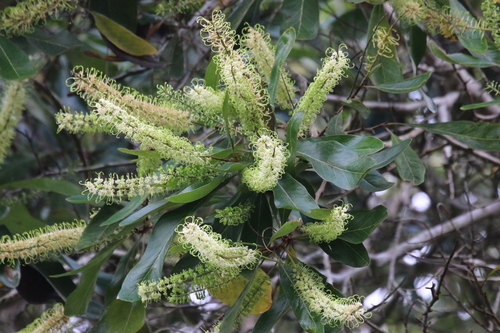
Sign in to saveBuckinghamia is a genus of only two known species of trees, belonging to the plant family Proteaceae. They are endemic to the rainforests of the wet tropics region of north eastern Queensland, Australia. The ivory curl flower, B. celsissima, is the well known, popular and widely cultivated species in gardens and parks, in eastern and southern mainland Australia, and additionally as street trees north from about Brisbane. The second species, B. ferruginiflora, was only recently described in 1988.
Species
ivory curl tree
GENUS
- KingdomPlantae
- PhylumTracheophyta
- ClassMagnoliopsida
- OrderProteales
- FamilyProteaceae
via GBIF · Kew POWO
Museum specimens
- Specimen records
- 5
- With media
- 6
- Family
- Proteaceae
- Collections
- VT, NY
- Recorded in
- Australia
Wikidata facts
- Instance of
- taxon
- Parent taxon
- Proteaceae
- Image
- Buckinghamia celsissima HabitusInflorescence BotGard0906a.jpg
Show 6 more facts
- taxon name
- Buckinghamia
- taxon rank
- genus
- Commons category
- Buckinghamia
- topic's main category
- Category:Buckinghamia
- taxon common name
- 曲牙花属
Sources (1)
via Wikidata · CC0
~5 min read
Encyclopedic overview
4 sectionsContents
- History, classification and evolution
- Species and summary descriptions
- References
- External links
Buckinghamia is a genus of only two known species of trees, belonging to the plant family Proteaceae. They are endemic to the rainforests of the wet tropics region of north eastern Queensland, Australia. The ivory curl flower, B. celsissima, is the well known, popular and widely cultivated species in gardens and parks, in eastern and southern mainland Australia, and additionally as street trees north from about Brisbane. The second species, B. ferruginiflora, was only recently described in 1988.
== History, classification and evolution == The genus was named in 1868 by Ferdinand von Mueller in honour of Richard Grenville, the Duke of Buckingham, who was Secretary of State for the Colonies from 1866 to 1868. It was initially placed in a tribe Grevilleae, but the feature of having four ovules per carpel led Chellapilla Venkata Rao to classify it in the tribe Telopeae, and within this a new subtribe Hollandaeae based on the antero-posterior orientation of the perianth, with the genera Hollandaea, Cardwellia, Knightia, Opisthiolepis and Stenocarpus.
Excerpted from Wikipedia’s “Buckinghamia” article, available under the CC BY-SA 4.0 licence.