
Bunraku
Sign in to saveAlso known as bunraku theatre, Ningyō jōruri
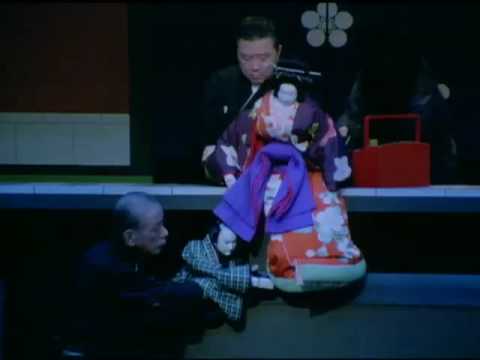
thumb|The character Osono, from the play , in a performance by the Tonda Puppet Troupe of Nagahama, Shiga Prefecture
Described at
Le théâtre de marionnettes Ningyo Johruri Bunraku - UNESCO Patrimoine culturel immatériel
ich.unesco.org →Votre navigateur n'est pas supporté par cette application. Merci d'utiliser des versions récentes de navigateurs tels que Google Chrome, Firefox, Edge ou Safara pour accéder aux interfaces 'Dive'. Le Ningyo Johruri a adopté son jeu scénique caractéristique au milieu du dix-huitième siècle. Trois marionnettistes, masqués jusqu’à la taille par un écran, manipulent de grandes marionnettes articulées. Depuis une plate-forme surélevée (yuka), le narrateur (tayu) raconte l’histoire tandis qu’un musicien joue du shamisen, un luth à trois cordes. Le tayu interprète tous les personnages, hommes et femmes, adaptant sa voix et ses intonations aux rôles et aux situations. Si le tayu « lit » un texte écrit, il jouit d’une grande liberté d’improvisation. Les trois marionnettistes doivent parfaitement coordonner leurs mouvements pour donner plus de réalisme aux gestes et attitudes des marionnettes. Celles-ci, dotées de riches costumes et d’expressions du visage propres à chacune, sont confectionnées par des maîtres artisans. Le genre a pris son nom actuel, Ningyo Johruri Bunraku à la fin du dix-neuvième siècle, le Bunrakuza étant un théâtre célèbre de l’époque.
Excerpt from a page describing this subject · 10,242 chars · not written by Vinony
Wikidata facts
- Instance of
- theatrical genre
- Subclass of
- theatre of Japan
- Country
- Japan
- Country of origin
- Japan
- Image
- 文樂三番叟戲偶.jpg
Show 6 more facts
- described at URL
- ich.unesco.org/en/RL/00064
- Commons category
- Bunraku
- topic's main category
- Category:Bunraku
- intangible cultural heritage status
- Masterpieces of the Oral and Intangible Heritage of Humanity
- native label
- 文楽
- inception
- 1700-00-00
Sources (2)
via Wikidata · CC0
~16 min read
Encyclopedic overview
18 sectionsContents
- History
- Today
- Music and song
- Puppets
- The head of the Puppet
- Costumes
- Construction
- Text and the puppets
- Performers
- Stage
- The musician's stage ({{transliteration|ja|yuka}})
- The partitions ({{transliteration|ja|tesuri}}) and the pit ({{transliteration|ja|funazoko}})
- Small curtain ({{transliteration|ja|komaku}}) and screened-off rooms ({{transliteration|ja|misuuchi}})
- Large curtain ({{transliteration|ja|joshiki-maku}})
- Further reading
- See also
- References
- External links
thumb|The character Osono, from the play , in a performance by the Tonda Puppet Troupe of Nagahama, Shiga Prefecture
is a form of traditional Japanese puppet theatre, founded in Osaka in the beginning of the 17th century, which is still performed in the modern day. Three kinds of performers take part in a performance: the or (puppeteers), the (chanters), and musicians. Occasionally other instruments such as drums will be used. The combination of chanting and playing is called and the Japanese word for puppet (or dolls, generally) is . It is used in many plays.
Excerpted from Wikipedia’s “Bunraku” article, available under the CC BY-SA 4.0 licence.