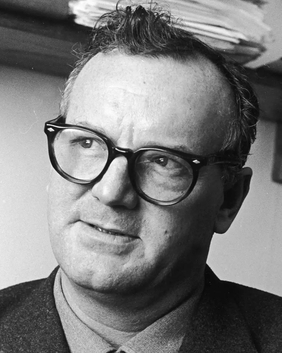
File:C._Wright_Mills_(1916–1962).jpg · Wikimedia Commons · See Wikimedia Commons
C. Wright Mills was an influential American sociologist in the mid-20th century who developed influential critiques of power, bureaucracy, and social inequality in modern society. His work matters because he shaped how sociologists and the public think about who holds power in America and how institutions affect ordinary people's lives.
AI-generated from the Wikipedia summary — may contain errors.
Wikidata facts
- Instance of
- human
- Family name
- Mills
- Gender
- male
- Citizenship
- United States
- Place of birth
- Waco
- Place of death
- Nyack
- Occupation
- university teacher
- Educated at
- Columbia University
- Employer
- University of Maryland
- Languages spoken
- English language
- Notable work
- The Power Elite
- Field of work
- sociology
- Official website
- www.cwrightmills.org
- Image
- C. Wright Mills.jpg
Show 8 more facts
- Commons category
- Charles Wright Mills
- cause of death
- myocardial infarction
- date of birth
- 1916-08-28
- date of death
- 1962-03-20
- manner of death
- natural causes
- personal library at
- Harry Ransom Center
- on focus list of Wikimedia project
- Wikipedia:Vital articles/Level/4
- different from
- Charles Mills
Sources (7)
via Wikidata · CC0
~33 min read
Encyclopedic overview
Charles Wright Mills (August 28, 1916 – March 20, 1962) was an American sociologist, and a professor of sociology at Columbia University from 1946 until his death in 1962. Mills published widely in both popular and intellectual journals, and is remembered for several books, such as The Power Elite, White Collar: The American Middle Classes, and The Sociological Imagination, which was in 1998 named by the International Sociological Association as the second most important sociological book of the 20th century.
Mills was concerned with the responsibilities of intellectuals in post–World War II society, and he advocated public and political engagement over disinterested observation. One of Mills's biographers, Daniel Geary, writes that Mills's writings had a "particularly significant impact on New Left social movements of the 1960s era." It was Mills who popularized the term "New Left" in the U.S., in a 1960 open letter "Letter to the New Left".
Excerpted from Wikipedia’s “C. Wright Mills” article, available under the CC BY-SA 4.0 licence.