Encyclopedia of Life · EOL (see source)
Callidulidae
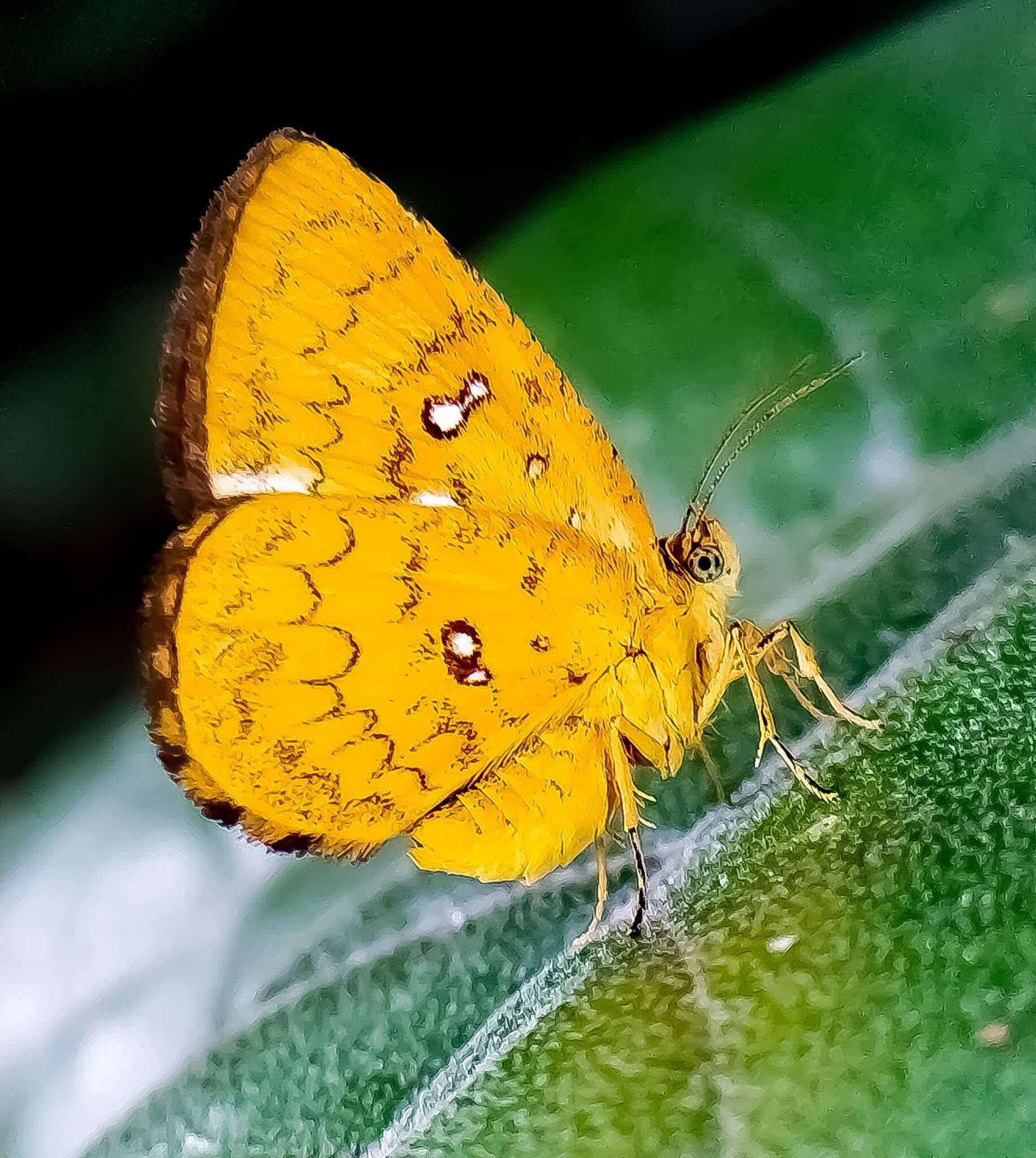
Sign in to saveCallidulidae, the only known family of the superfamily Calliduloidea, is the family of Old World butterfly-moths, containing eight genera. They have a peculiar distribution, restricted to the Old World tropics of Southeast Asia to Australasia and Madagascar. The three subfamilies exhibit both day- and night-flying behaviour.
Species
FAMILY
- KingdomAnimalia
- PhylumArthropoda
- ClassInsecta
- OrderLepidoptera
- FamilyCallidulidae
Les Callidulidae sont une famille de lépidoptères, la seule de la super-famille des Calliduloidea. Sous-familles et genres Callidulinae Pterodecta Butler, 1877 Tetragonus Geyer, 1832 Callidula Hübner, [1819] Comella Pagenstecher, 1902 Cleis Guérin-Ménéville, 1831 Griveaudiinae Griveaudia Viette, 1958 Pterothysaninae Caloschemia Butler (syn. Helicomitra) Pterothysanus Walker, 1854
via GBIF
Museum specimens
- Specimen records
- 5
- With media
- 2
- Family
- Callidulidae
- Collections
- USNM, NHMUK
- Recorded in
- Papua New Guinea
Wikidata facts
- Instance of
- taxon
- Image
- Tetragonus catamitus India.jpg
Show 4 more facts
- topic's main category
- Category:Callidulidae
- taxon name
- Callidulidae
- taxon rank
- family
- Commons category
- Callidulidae
Sources (1)
via Wikidata · CC0
~2 min read
Encyclopedic overview
3 sectionsContents
- Cited references
- Other references
- External links
Callidulidae, the only known family of the superfamily Calliduloidea, is the family of Old World butterfly-moths, containing eight genera. They have a peculiar distribution, restricted to the Old World tropics of Southeast Asia to Australasia and Madagascar. The three subfamilies exhibit both day- and night-flying behaviour.
The mainly day-flying Callidulinae can be distinguished by their resting posture, which is the most butterfly-like, with the wings held closely over the back. Resembling the butterfly family Lycaenidae, these moths can be told apart by their antennae which taper to a point or may be very subtly clubbed. The more often night-flying Pterothysaninae and Griveaudiinae have a different adult resting posture (the latter roof-like in repose) and these were not placed within the Callidulidae until recently.
Excerpted from Wikipedia’s “Callidulidae” article, available under the CC BY-SA 4.0 licence.