Calluna · Kew POWO · Kew Plants of the World Online
Calluna
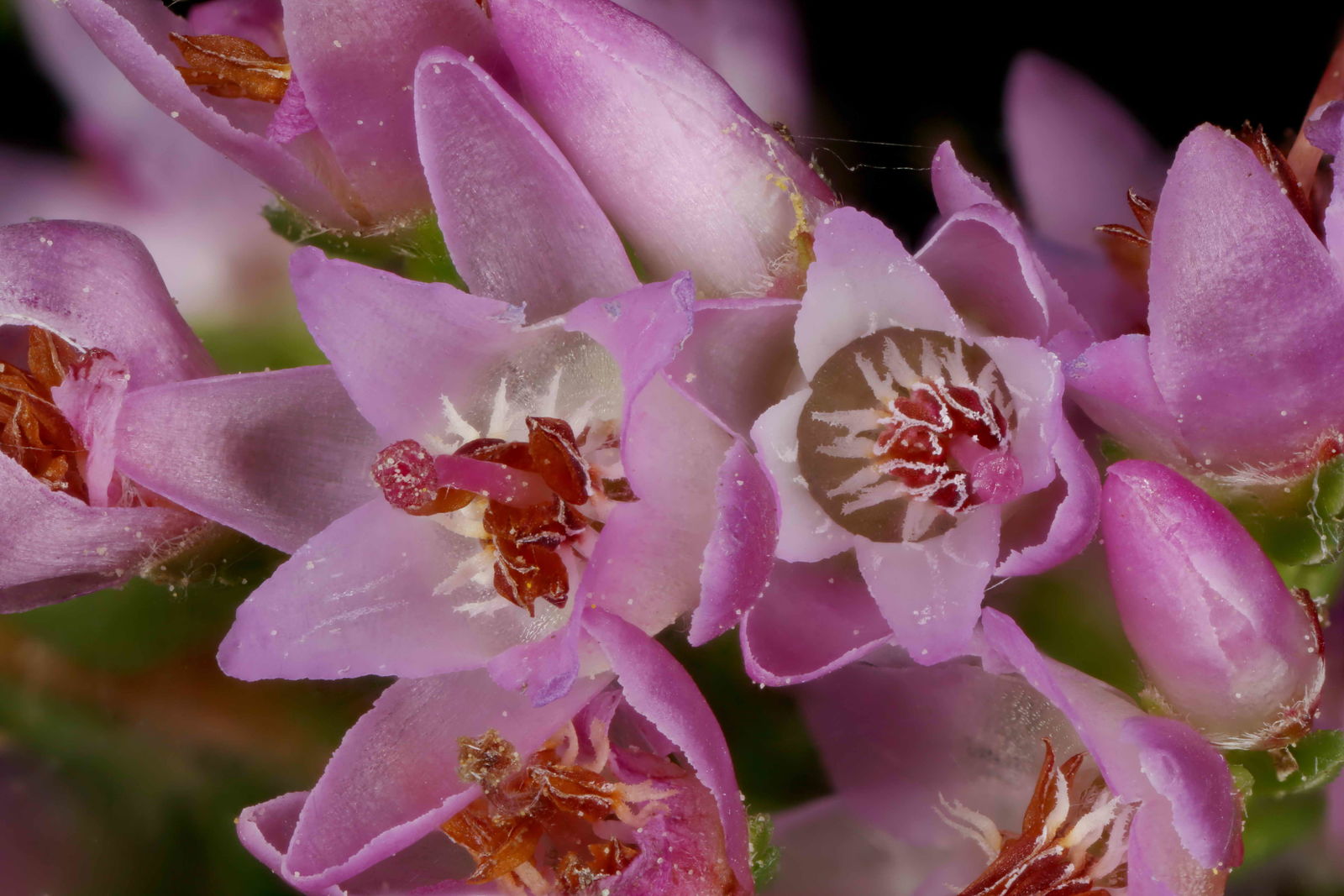
Sign in to saveCalluna vulgaris, common heather, ling, or simply heather, is the sole species in the genus Calluna in the flowering plant family Ericaceae. It is a low-growing evergreen shrub growing to tall, or rarely to and taller, and is found widely in Europe and Asia Minor on acidic soils in open sunny situations and in moderate shade.
Species
GENUS
- KingdomPlantae
- PhylumTracheophyta
- ClassMagnoliopsida
- OrderEricales
- FamilyEricaceae
Calluna es un pequeño género monotípico de plantas fanerógamas pertenecientes a la familia Ericaceae. Su única especie, Calluna vulgaris, es natural de Europa, norte de África y América donde crece en terrenos estériles y ácidos como turberas y landas. Popularmente se le llama brecina, brezo o biércol.
via GBIF · Kew POWO
Research
359 papers- Calluna vulgaris as a Valuable Source of Bioactive Compounds: Exploring Its Phytochemical Profile, Biological Activities and Apitherapeutic Potential.Plants (Basel, Switzerland) · 2022
- Sarcoidosis: a state-of-the-art review.The European respiratory journal · 2026
- Reply.Arthritis & rheumatology (Hoboken, N.J.) · 2024
- Calluna vulgaris (L.) Hull: chemical characterization, evaluation of its bioactive properties and effect on the vaginal microbiota.Food & function · 2019
- Heather (Calluna vulgaris) supplementation does not reduce trapping ability of Duddingtonia flagrans in faeces of Haemonchus contortus infected lambs.Veterinary parasitology · 2022
via PubMed
Wikidata facts
Show 8 more facts
- taxon name
- Calluna
- taxon rank
- genus
- topic's main category
- Category:Calluna vulgaris
- Commons category
- Calluna
- taxon common name
- vresa
- different from
- Wrzos, Masovian Voivodeship
- described by source
- Bible Encyclopedia of Archimandrite Nicephorus
via Wikidata · CC0
~8 min read
Encyclopedic overview
12 sectionsContents
- Description
- Chemistry
- Taxonomy
- Distribution and habitat
- Ecology
- As an invasive species
- Cultivars
- Uses
- In culture
- See also
- References
- External links
Calluna vulgaris, common heather, ling, or simply heather, is the sole species in the genus Calluna in the flowering plant family Ericaceae. It is a low-growing evergreen shrub growing to tall, or rarely to and taller, and is found widely in Europe and Asia Minor on acidic soils in open sunny situations and in moderate shade.
It is the dominant plant in most heathland and moorland in Europe, and in some bog vegetation and acidic pine and oak woodland. It is tolerant of grazing and regenerates following occasional burning, and is often managed in nature reserves and grouse moors by sheep or cattle grazing, and also by light burning.
Excerpted from Wikipedia’s “Calluna” article, available under the CC BY-SA 4.0 licence.