Casearia · Kew POWO · Kew Plants of the World Online
Casearia
Sign in to saveAlso known as Casearia (genus)
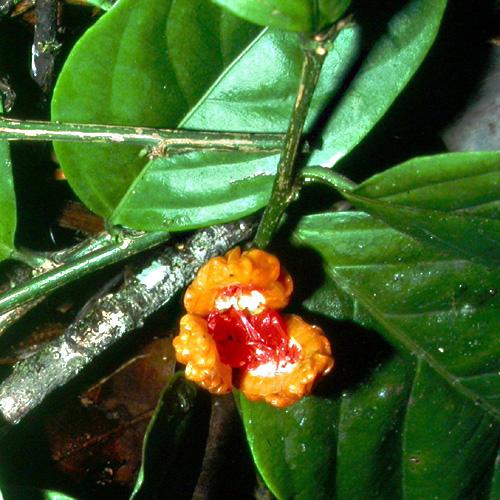
Casearia is a plant genus in the family Salicaceae. The genus was included in the Flacourtiaceae under the Cronquist system of angiosperm classification, and earlier in the Samydaceae.
Species
General: In New Guinea, Casearia is found in a variety of habitats
via · Kew POWO
Museum specimens
- Specimen records
- 5,985
- With media
- 2,550
- Family
- Salicaceae
- Collections
- IBUNAM, CICY, ECOSUR, UNICACH, UJAT, INECOL
- Recorded in
- Mexico
Research
257 papers- Casearia Essential Oil: An Updated Review on the Chemistry and Pharmacological Activities.Chemistry & biodiversity · 2023
- Clerodane Diterpenes from Casearia corymbosa as Allosteric GABA(A) Receptor Modulators.Journal of natural products · 2022
- 16,17-dinor-abietane diterpenoids from Casearia kurzii.Fitoterapia · 2023
- Casearia sylvestris Essential Oil Degradation Products Generated by Leaf Processing.Chemistry & biodiversity · 2021
- Casearia tomentosa fruit extracts exposed larvicidal activity and morphological alterations in Culex quinquefasciatus and Aedes albopictus under in vitro and semi field conditions.BMC research notes · 2024
via PubMed
Wikidata facts
- Instance of
- taxon
- Parent taxon
- Salicaceae
- Image
- Casearia tomentosa Bra31.png
Show 6 more facts
- topic's main category
- Category:Casearia
- taxon name
- Casearia
- taxon rank
- genus
- Commons category
- Casearia
- taxon common name
- 脚骨脆属
Sources (3)
via Wikidata · CC0
~1 min read
Encyclopedic overview
3 sectionsContents
- Selected species
- References
- External links
Casearia is a plant genus in the family Salicaceae. The genus was included in the Flacourtiaceae under the Cronquist system of angiosperm classification, and earlier in the Samydaceae.
They are sometimes employed as honey plants, notably C. decandra and C. sylvestris. The latter species is occasionally used as food by the caterpillars of the two-barred flasher (Astraptes fulgerator). Several species are becoming rare due to deforestation. Some appear close to extinction, and C. quinduensis of Colombia and C. tinifolia from Mauritius seem to be extinct since some time in the 20th century and about 1976, respectively.
Excerpted from Wikipedia’s “Casearia” article, available under the CC BY-SA 4.0 licence.