Castro de Ulaca
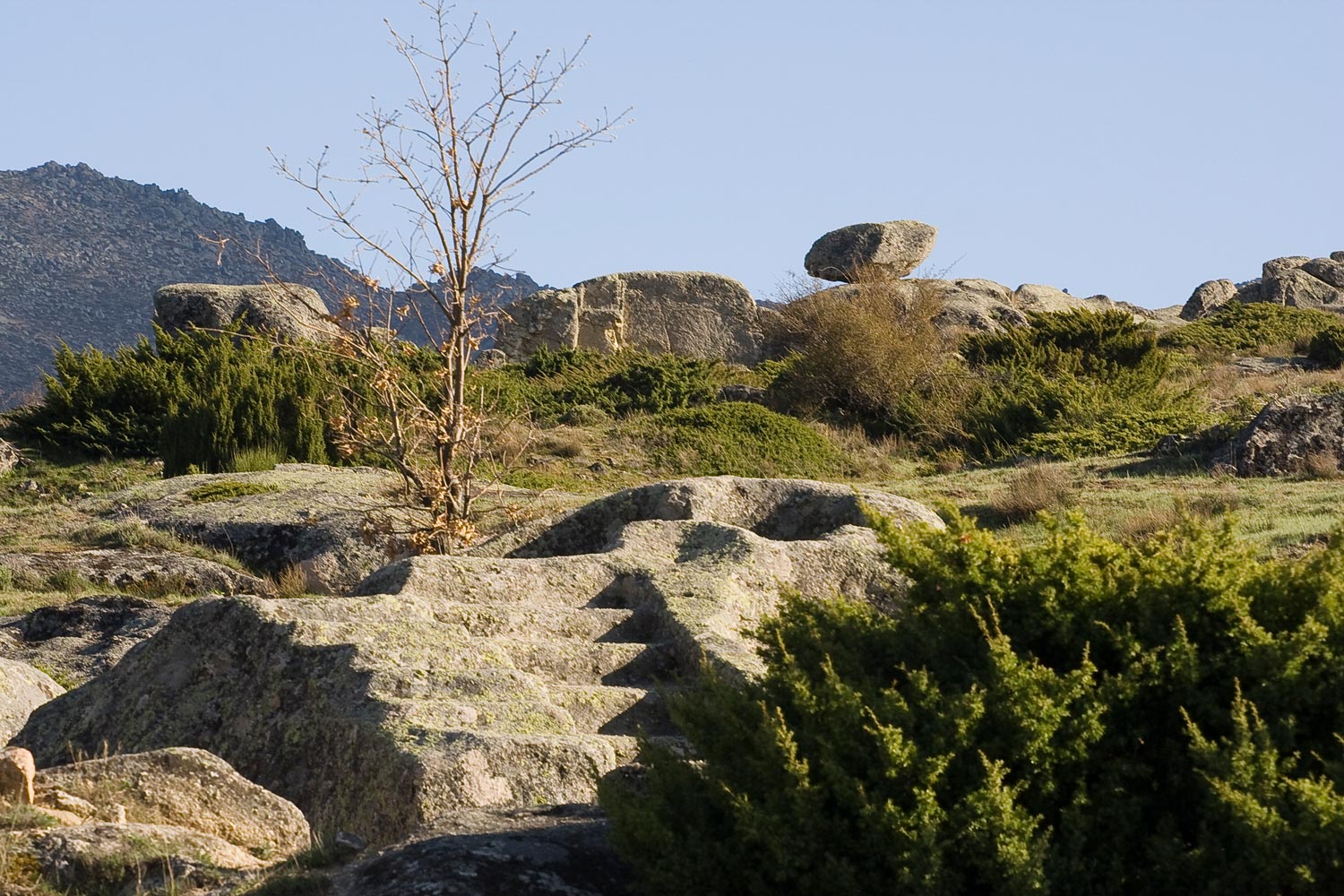
Sign in to saveUlaca was a hill fort settlement or oppidum (also known as a castro) where Vettones people lived at the end of the Iron Age (third–first centuries BC). Some ruins are visible after archaeological excavations have taken place. It is located in the municipality of Solosancho in the province of Ávila in Spain.
In the Vinony graph
Within Vinony's link graph, Castro de Ulaca is referenced by 1 other article, and connects out to geographic coordinate system, Iron Age and Province of Ávila.
The entry is geolocated on the map, across 2 mapped points.
It sits within the topics Archaeological sites in Castile and León, Buildings and structures in the Province of Ávila and Oppida.
Its subject is documented across 4 Wikipedia language editions.
Described at
Castro de Ulaca - Yacimiento Arqueológico Vetón
Yacimiento arqueológico de origen vetón, situado en Villaviciosa, en la provincia de Ávila.
castroulaca.es →Link to a page describing this subject · 4,799 chars · not written by Vinony
Wikidata facts
- Instance of
- monument
- Country
- Spain
- Located in
- Solosancho
- Image
- Castro de Ulaca 10 by-dpc.jpg
Show 3 more facts
- Commons category
- Castro de Ulaca
- heritage designation
- bien de interés cultural
- described at URL
- www.castroulaca.es
via Wikidata · CC0
~2 min read
Encyclopedic overview
1 sectionsContents
- References
Ulaca was a hill fort settlement or oppidum (also known as a castro) where Vettones people lived at the end of the Iron Age (third–first centuries BC). Some ruins are visible after archaeological excavations have taken place. It is located in the municipality of Solosancho in the province of Ávila in Spain.
thumb|The 16m by 8m sanctuary with two entries from the South-West. Some 2m enclosure walls (D) still remain. In the corner there is an Altar (A) with steps (B) to climb it and notches (C). Note the concavities (1–4) to allow the fluid to flow.
Excerpted from Wikipedia’s “Castro de Ulaca” article, available under the CC BY-SA 4.0 licence.
On the map
2 mapped locations