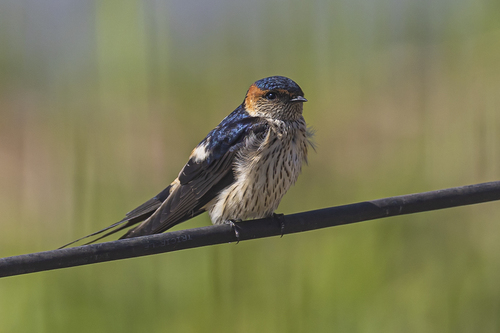
(c) matthewkwan, some rights reserved (CC BY-ND), uploaded by matthewkwan · cc-by-nd
Cecropis
Sign in to saveCecropis is a genus of large swallows found in Africa and tropical Asia. The red-rumped swallow's range also extends into southern Europe, and (in small numbers) into Australia. This genus is frequently subsumed into the larger genus Hirundo.
Species
Eastern Red-rumped Swallow
GENUS
- KingdomAnimalia
- PhylumChordata
- ClassAves
- OrderPasseriformes
- FamilyHirundinidae
via GBIF
Wikidata facts
- Instance of
- taxon
- Parent taxon
- Hirundinidae
- Image
- Red-rumped swallow in Calpe, Spain - May 2018 01.jpg
Show 6 more facts
- Commons category
- Cecropis
- taxon rank
- genus
- topic's main category
- Category:Cecropis
- taxon name
- Cecropis
- Commons gallery
- Cecropis
- taxonomic type
- Greater Striped Swallow
Sources (1)
via Wikidata · CC0
~3 min read
Encyclopedic overview
2 sectionsContents
- Species
- References
Cecropis is a genus of large swallows found in Africa and tropical Asia. The red-rumped swallow's range also extends into southern Europe, and (in small numbers) into Australia. This genus is frequently subsumed into the larger genus Hirundo.
The swallow family Hirundinidae consists of 92 bird species which typically hunt insects in flight. The two river martins have long been recognised as very distinctive, and are placed in a separate subfamily, Pseudochelidoninae, leaving all other swallows and martins in the Hirundininae. DNA studies suggest that there are three major groupings within the Hirundininae subfamily, broadly correlating with the type of nest built. The groups are the "core martins" including burrowing species like the sand martin, the "nest-adopters", with birds like the tree swallow which use natural cavities, and the "mud nest builders". The Cecropsis species construct a closed mud nest and therefore belong to the latter group. It is believed that the evolutionary sequence is from species that make open cup nests (Hirundo and Ptyonoprogne), through Delichon house martins with closed nests, to Cecropis and Petrochelidon, which have retort-like closed nests with an entrance tunnel.
Excerpted from Wikipedia’s “Cecropis” article, available under the CC BY-SA 4.0 licence.
Gallery (10)
Available in 24 languages
- Español
- Français
- 中文
- Português
- Bahasa Indonesia
- Breton
- Catalan
- Cebuano
- Egyptian Arabic
- Esperanto
- Estonian
- Finnish
- Hungarian
- Latvian
- Lithuanian
- Nederlands
- Polski
- Romanian
Show 5 more
via Wikidata sitelinks · CC0