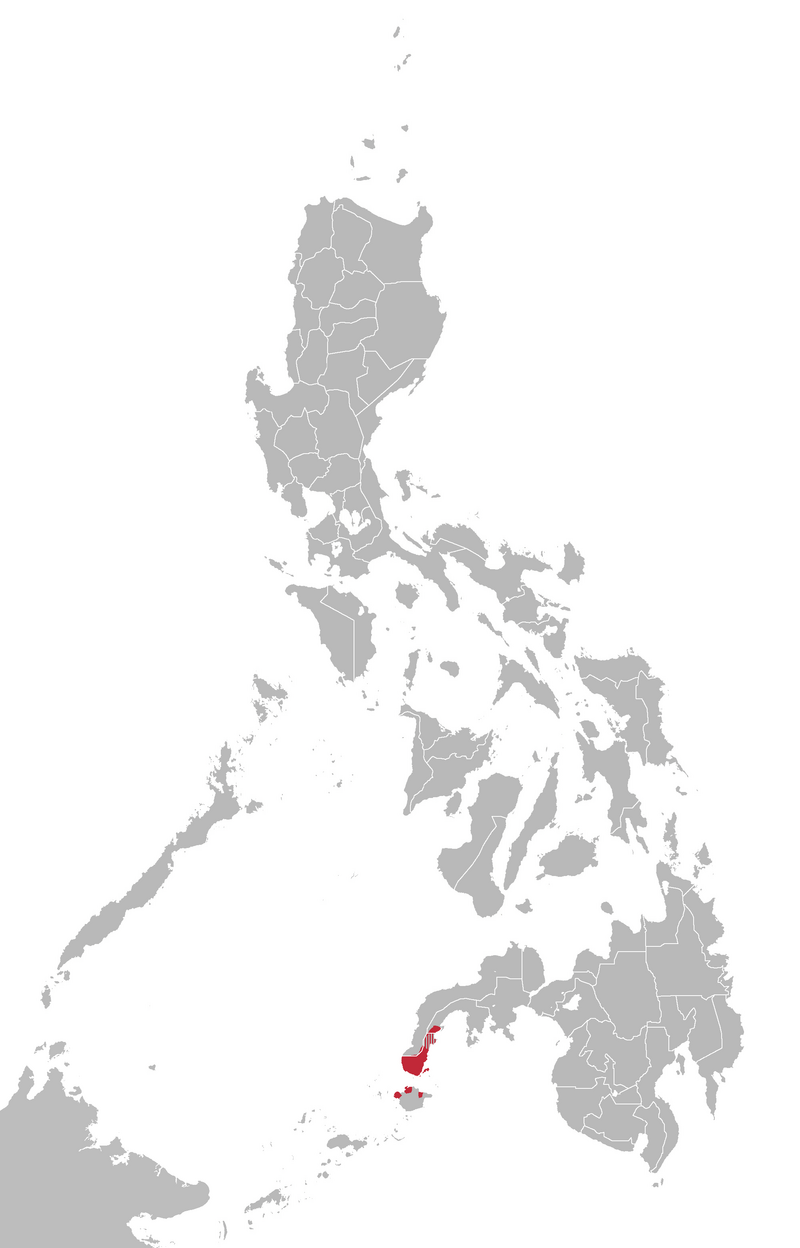
File:Chavacano_language_map.png · Wikimedia Commons · See Wikimedia Commons
Chavacano
Sign in to saveAlso known as Chabacano, Chavacano language, Chabacano language, Zamboangueño language, Zamboangueño
Chavacano or Chabacano () is a group of Spanish-based creole language varieties spoken in the Philippines. The variety spoken in Zamboanga City, located in the southern Philippine island group of Mindanao, has the highest concentration of speakers. Other currently existing varieties are found in Cavite City and Ternate, located in the Cavite province on the island of Luzon. Chavacano is the only Spanish-based creole in Asia. The 2020 Census of Population and Housing counted 106,000 households generally speaking Chavacano.
Chavacano is a Spanish-based creole language spoken in the Philippines, with the largest community in Zamboanga City in Mindanao, and smaller groups in Cavite province on Luzon. It is notable as Asia's only Spanish-based creole language, with approximately 106,000 households speaking it as of the 2020 census.
AI-generated from the Wikipedia summary — may contain errors.
Key facts
- Language.name
- Chavacano
- Language.altname
- Chabacano
- Language.states
- Philippines
- Language.speakers
- 700,000 native speakers of Zamboangueño; 1.2 million of Zamboangueño as a second language;
- Language.date
- 1992
- Language.familycolor
- Creole
- Language.fam1
- Spanish-based creole
- Language.region
- Zamboanga City and Basilan (Zamboangueño and Basileño), Cavite City (Caviteño) and Ternate, Cavite (Ternateño/Bahra)
- Language.nation
- Regional language in the Philippines
- Language.agency
- Komisyon sa Wikang Filipino
- Language.iso3
- cbk
- Language.glotto
- chav1241
- Language.glottorefname
- Chavacano
- Language.lingua
- 51-AAC-ba
- Language.script
- Latin (Spanish alphabet)
- Language.map
- Chavacano language map.png
- Language.notice
- IPA
via Wikipedia infobox
Wikidata facts
- Instance of
- basilect
- Subclass of
- Spanish-based creole languages
- Country
- Philippines
- Image
- Ternatejf5766 19.JPG
Show 8 more facts
- Wikimedia language code
- cbk-zam
- writing system
- Spanish alphabet
- native label
- Chabacano
- number of speakers, writers, or signers
- 431000
- indigenous to
- Zamboanga Sibugay
- topic's main category
- Category:Chavacano language
- Commons category
- Chavacano language
via Wikidata · CC0
~70 min read
Encyclopedic overview
51 sectionsContents
- Distribution and variants
- Varieties
- Characteristics
- Demographics
- Social significance
- Terminology
- Historical background
- Monogenetic theory
- Parallel-development theory
- Zamboangueño
- Caviteño/Ternateño{{anchor|Caviteño}}
- Samples
- Zamboangueño
- Another sample of Zamboangueño Chavacano
- Ermiteño
- Caviteño/Ternateño
- Another sample of Caviteño Chavacano
- Castellano Abakay (Davaoeño Chavacano)
- Castellano Abakay Chino
- Castellano Abakay Japon
- Pledge of Allegiance to the Philippine Flag
- Zamboangueño
- Spanish
- English
- Vocabulary
- Forms and style
- Writing system
- Alphabet
- Letters and letter names
- Other sounds
- Sounds from English
- Diphthongs
- Grammar
- Simple sentence structure (verb–subject–object word order)
- Declarative affirmative sentences in the simple present, past, and future tenses
- Declarative negative sentences in the simple present, past, and future tenses
- Nouns and articles
- Singular nouns
- Plural nouns
- Pronouns
- Personal (nominative/subjective case) pronouns
- Possessive pronouns (Zamboangueño Chavacano, Castellano Abakay)
- Verbs
- Verb tenses – simple tenses
- Perfect constructions
- Passive and active voice
- Archaic Spanish words and false friends
- See also
- References
- Bibliography
- External links
Chavacano or Chabacano () is a group of Spanish-based creole language varieties spoken in the Philippines. The variety spoken in Zamboanga City, located in the southern Philippine island group of Mindanao, has the highest concentration of speakers. Other currently existing varieties are found in Cavite City and Ternate, located in the Cavite province on the island of Luzon. Chavacano is the only Spanish-based creole in Asia. The 2020 Census of Population and Housing counted 106,000 households generally speaking Chavacano.
The one responsible for this Spanish creole was Don Sebastian Hurtado de Corcuera, then governor of Panama, who was also responsible for settling Zamboanga City by employing Peruvian soldiers and colonists. There was an Asian-American route, which led to traders and adventurers carrying silver from Peru through Panama to reach Acapulco, Mexico before sailing to Manila, Philippines using the famed Manila galleons.
Excerpted from Wikipedia’s “Chavacano” article, available under the CC BY-SA 4.0 licence.