
File:Barnum_&_Bailey_clowns_and_geese2.jpg · Wikimedia Commons · See Wikimedia Commons
circus
Sign in to saveAlso known as circus troupe, circus company
A circus is a company of performers who put on diverse entertainment shows that may include clowns, acrobats, trained animals, trapeze acts, musicians, dancers, hoopers, tightrope walkers, jugglers, magicians, ventriloquists, and unicyclists as well as other object manipulation and stunt-oriented artists. The term "circus" also describes the field of performance, training, and community which has followed various formats through its 250-year modern history.
A circus is a traveling company of performers that entertains audiences with diverse acts such as acrobatics, clowning, trained animals, trapeze work, and various other skilled performances. The term also refers to the broader field of circus performance and training that has evolved over its 250-year modern history.
AI-generated from the Wikipedia summary — may contain errors.
Key facts
- Performing art.name
- Circus
- Performing art.image
- Barnum & Bailey clowns and geese2.jpg
- Performing art.caption
- Advertisement for the Barnum & Bailey Circus, 1900
- Performing art.types
- Classical Circus, New Circus, Contemporary circus, Social Circus
- Performing art.ancestor
- Drama
via Wikipedia infobox
Described at
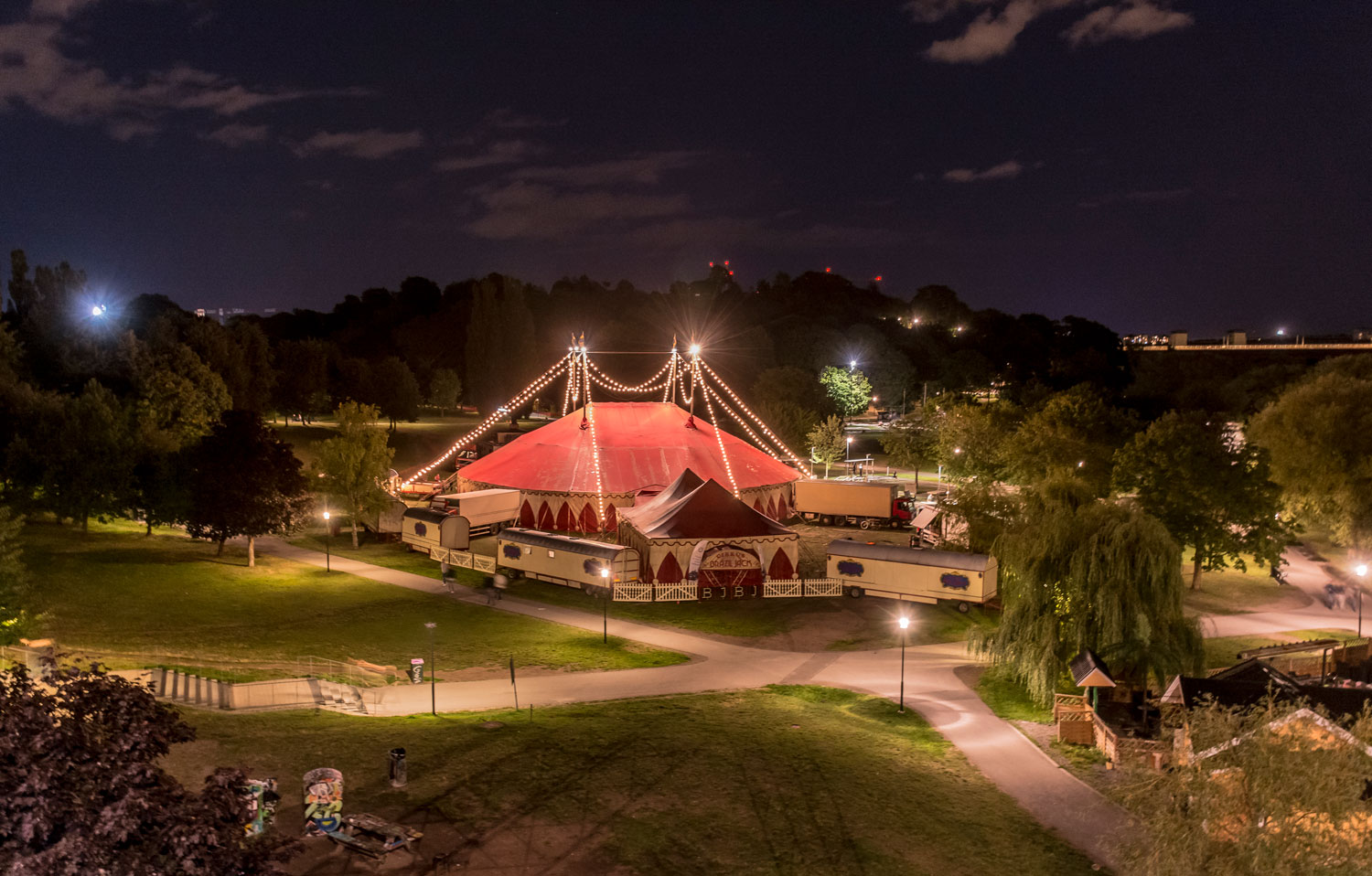
Turnerande klassisk cirkus - Levande kulturarv
Cirkusar har turnerat i Sverige sedan i slutet av 1700-talet. I början av 1900-talet fanns det ett tjugotal cirkusar i Sverige, men antalet har varierat.
levandekulturarv.se →Link to a page describing this subject · 21,337 chars · not written by Vinony
Wikidata facts
- Field of work
- circus arts
- Image
- Circus Ronaldo door Dirk Annemans.jpg
Show 7 more facts
- Unicode character
- 🎪
- Commons category
- Circus
- topic's main category
- Category:Circuses
- Commons gallery
- Circus
- different from
- Cerc
- on focus list of Wikimedia project
- Wikipedia:Vital articles/Level/4
Sources (7)
via Wikidata · CC0
~25 min read
Encyclopedic overview
25 sectionsContents
- Etymology
- History
- Origin
- Modern format
- Astley and early British circus
- Ricketts and the first American circus
- Expansion of the American format
- Touring
- Russia
- China
- New Circus
- Contemporary Circus
- Social Circus
- Performance
- Acts
- Animal acts
- Controversy and laws
- Buildings
- International awards
- See also
- Notes
- References
- Footnotes
- Further reading
- External links
A circus is a company of performers who put on diverse entertainment shows that may include clowns, acrobats, trained animals, trapeze acts, musicians, dancers, hoopers, tightrope walkers, jugglers, magicians, ventriloquists, and unicyclists as well as other object manipulation and stunt-oriented artists. The term "circus" also describes the field of performance, training, and community which has followed various formats through its 250-year modern history.
Although not the inventor of the medium, Newcastle-under-Lyme born Philip Astley is credited as the father of the modern circus. In 1768, Astley, a skilled equestrian, began performing exhibitions of trick horse riding in an open field called Ha'penny Hatch on the south side of the Thames River, England. In 1770, he hired acrobats, tightrope walkers, jugglers, and a clown to fill in the pauses between the equestrian demonstrations and thus chanced on the format which was later named a "circus". Performances developed significantly over the next 50 years, with large-scale theatrical battle reenactments becoming a significant feature. The format in which a ringmaster introduces a variety of choreographed acts set to music, often termed "traditional" or "classical" circus, developed in the latter part of the nineteenth century and remained the dominant format until the 1970s.
Excerpted from Wikipedia’s “circus” article, available under the CC BY-SA 4.0 licence.
Gallery (48)
Available in 87 languages
- Español
- Français
- Deutsch
- 中文
- 日本語
- Русский
- Português
- Italiano
- العربية
- हिन्दी
- Afrikaans
- Armenian
- Assamese
- Asturian
- Azerbaijani
- Bahasa Indonesia
- Bangla
- Bashkir
Show 68 more
- Basque
- be_x_old
- Belarusian
- Breton
- Bulgarian
- Burmese
- Catalan
- Croatian
- Czech
- Danish
- Egyptian Arabic
- Esperanto
- Estonian
- Fijian
- Filipino
- Finnish
- Galician
- Georgian
- Greek
- Guarani
- Hebrew
- Hungarian
- hyw
- Ido
- Irish
- Kazakh
- Kyrgyz
- Latin
- Latvian
- Lithuanian
- Macedonian
- Malay
- Malayalam
- Mongolian
- Nederlands
- Norwegian
- Norwegian Nynorsk
- Occitan
- Picard
- Polski
- Romanian
- Rusyn
- Santali
- Serbian
- Serbian (Latin)
- Sicilian
- simple
- Svenska
- Tajik
- Tamil
- Tatar
- Telugu
- Tiếng Việt
- Türkçe
- Ukrainian
- Urdu
- Uzbek
- Venetian
- Waray
- Welsh
- Western Panjabi
- Wu Chinese
- Yiddish
- zh_min_nan
- zh_yue
- فارسی
- ไทย
- 한국어
via Wikidata sitelinks · CC0