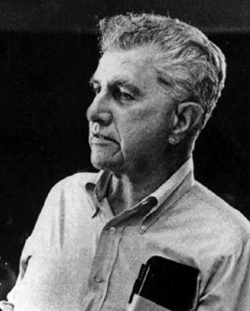
File:Merton_Miller.jpg · Wikimedia Commons · See Wikimedia Commons
Clark Gregg
Sign in to saveAlso known as Merton Howard Miller, Miller Merton, MILLER MERTON HOWARD
American economist (1923–2000)
Person · Open Library
- Works
- 1
Top works
- How to tie flies
via Open Library + Wikidata
Key facts
- Born
- ( 1923-05-16 ) May 16, 1923, Boston , Massachusetts , U.S.
- Died
- June 3, 2000 (2000-06-03) (aged 77), Chicago , Illinois , U.S.
- Education
- Harvard University , Johns Hopkins University
- Doctoral advisor
- Fritz Machlup
- Discipline
- Economics
- School or tradition
- Chicago School of Economics
- Institutions
- Carnegie Mellon University , University of Chicago , London School of Economics
- Doctoral students
- Eugene Fama , William Poole
- Notable ideas
- Modigliani–Miller theorem
- Awards
- Nobel Memorial Prize in Economic Sciences (1990)
- Website
- Information at IDEAS / RePEc
via Wikipedia infobox
Nobel Prize
- The Sveriges Riksbank Prize in Economic Sciences in Memory of Alfred Nobel1990
“for their pioneering work in the theory of financial economics”
Shared · 1/3 portion
Wikidata facts
- Instance of
- human
- Family name
- Miller
- Gender
- male
- Citizenship
- United States
- Place of birth
- Boston
- Place of death
- Chicago
- Occupation
- writer
- Educated at
- Harvard University
- Languages spoken
- English language
- Doctoral advisor
- Fritz Machlup
- Field of work
- economics
Show 7 more facts
- date of birth
- 1923-01-01
- date of death
- 2000-01-01
- Erdős number
- 4
- member of
- Econometric Society
- name in native language
- Merton H. Miller
- maintained by WikiProject
- WikiProject Mathematics
- interested in
- economics
via Wikidata · CC0
~4 min read
Encyclopedic overview
Merton Howard Miller (May 16, 1923 – June 3, 2000) was an American economist, and the co-author of the Modigliani–Miller theorem (1958), which proposed the irrelevance of debt-equity structure. He shared the Nobel Memorial Prize in Economic Sciences in 1990, along with Harry Markowitz and William F. Sharpe. Miller spent most of his academic career at the University of Chicago's Booth School of Business.
Biography
Excerpted from Wikipedia’s “Clark Gregg” article, available under the CC BY-SA 4.0 licence.