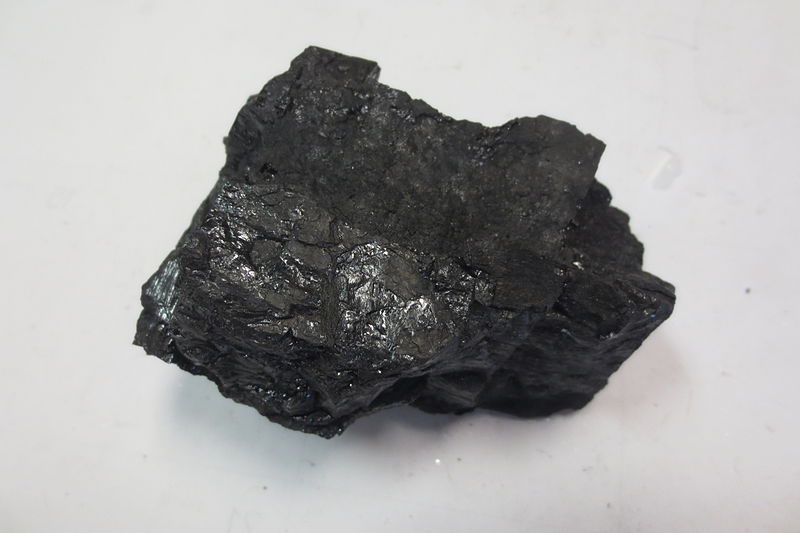
File:Bituminous_Coal.JPG · Wikimedia Commons · See Wikimedia Commons
coal
Sign in to saveAlso known as carbone
Coal is a combustible black or brownish-black sedimentary rock, formed as layers called coal seams. Coal is mostly carbon with variable amounts of other elements, chiefly hydrogen, sulfur, oxygen, and nitrogen. It is a fossil fuel, formed when plants decay into peat which is converted into coal by the heat and pressure of deep burial over millions of years. Vast deposits formed from wetlands called coal forests that covered much of the tropics during the late Carboniferous and early Permian.
Coal is a dark, combustible rock formed from ancient plants that decayed into peat and were transformed by heat and pressure over millions of years, composed mainly of carbon along with hydrogen, sulfur, oxygen, and nitrogen. It matters because it is a fossil fuel that has historically been a major energy source, though vast deposits from prehistoric tropical wetlands took millions of years to form and are now being consumed much more rapidly than they were created.
AI-generated from the Wikipedia summary — may contain errors.
Key facts
- Rock.name
- Coal
- Rock.type
- Sedimentary
- Rock.image
- Bituminous Coal.JPG
- Rock.image_caption
- Bituminous coal, the most common coal grade
- Rock.image_size
- 258px
- Rock.composition
- carbon
via Wikipedia infobox
Research
44,374 papersvia PubMed
Wikidata facts
- Subclass of
- sedimentary rock
- Has part
- maceral
- Image
- Coal (Anthracite).JPG
- Has use
- fuel
Show 11 more facts
- topic's main category
- Category:Coal
- Commons category
- Coal
- Commons gallery
- Coal
- color
- black
- different from
- Carbón
- OpenStreetMap tag
- resource=coal
- on focus list of Wikimedia project
- Wikipedia:Vital articles/Level/4
- studied by
- economic geology
- exact match
- purl.obolibrary.org/obo/ENVO_02000091
- topic has template
- Template:Coal
- has cause
- climate change
Sources (8)
via Wikidata · CC0
~45 min read
Encyclopedic overview
36 sectionsContents
- Etymology
- Formation of coal
- Chemistry of coalification
- Macerals
- Types
- History
- Composition
- Uses
- Electricity generation
- Coke
- Production of chemicals
- Liquefaction
- Gasification
- Coal industry
- Mining
- As a traded commodity
- Market trends
- Damage to human health{{anchor|Health_effects}}
- Damage to the environment
- Climate change
- Underground fires
- Pollution mitigation and carbon capture
- Precombustion treatment
- Post combustion approaches
- Carbon capture and storage
- "Clean coal" and "abated coal"
- Economics
- Subsidies
- Stranded assets
- Politics
- Cultural usage
- See also
- Notes
- References
- Further reading
- External links
Coal is a combustible black or brownish-black sedimentary rock, formed as layers called coal seams. Coal is mostly carbon with variable amounts of other elements, chiefly hydrogen, sulfur, oxygen, and nitrogen. It is a fossil fuel, formed when plants decay into peat which is converted into coal by the heat and pressure of deep burial over millions of years. Vast deposits formed from wetlands called coal forests that covered much of the tropics during the late Carboniferous and early Permian.
Coal is used primarily as a fuel. While coal has been known and used for thousands of years, its usage was limited until the Industrial Revolution. With the invention of the steam engine, coal consumption increased. In 2020, coal supplied about a quarter of the world's primary energy and over a third of its electricity. Some iron and steel-making and other industrial processes burn coal.
Excerpted from Wikipedia’s “coal” article, available under the CC BY-SA 4.0 licence.
Gallery (50)
Available in 129 languages
- Español
- Français
- Deutsch
- 中文
- 日本語
- Русский
- Português
- Italiano
- العربية
- हिन्दी
- Afrikaans
- Albanian
- Aragonese
- Armenian
- Assamese
- Asturian
- Aymara
- Azerbaijani
Show 110 more
- Bahasa Indonesia
- Bangla
- Banjar
- Basque
- be_x_old
- Belarusian
- Betawi
- Bhojpuri
- Bikol
- Bosnian
- Breton
- Bulgarian
- Burmese
- Catalan
- Central Kurdish
- Cheyenne
- Chuvash
- Croatian
- Czech
- Danish
- eml
- Esperanto
- Estonian
- Faroese
- Filipino
- Finnish
- Friulian
- Galician
- Georgian
- Greek
- Haitian Creole
- Hakka Chinese
- Hebrew
- Hungarian
- hyw
- Icelandic
- Ido
- Irish
- Javanese
- Kannada
- Kashmiri
- Kazakh
- Kyrgyz
- Lao
- Latin
- Latvian
- lbe
- Ligurian
- Limburgish
- Lithuanian
- Lombard
- Macedonian
- Malagasy
- Malay
- Malayalam
- Marathi
- Minangkabau
- Mongolian
- nah
- Navajo
- Nederlands
- Nepali
- Newari
- Northern Frisian
- Norwegian
- Norwegian Nynorsk
- Occitan
- Ossetic
- Pashto
- Pennsylvania German
- Picard
- Polski
- Punjabi
- Quechua
- roa_rup
- Romanian
- Rusyn
- Scottish Gaelic
- Serbian
- Serbian (Latin)
- Sicilian
- simple
- Slovak
- Slovenian
- Somali
- Sundanese
- Svenska
- Swahili
- Tajik
- Tamil
- Telugu
- Tiếng Việt
- Türkçe
- Ukrainian
- Urdu
- Uzbek
- Venetian
- Walloon
- Waray
- Wayuu
- Welsh
- Western Panjabi
- Wu Chinese
- Yakut
- zh_classical
- zh_min_nan
- zh_yue
- فارسی
- ไทย
- 한국어
via Wikidata sitelinks · CC0